

Hose Crimper – Manual & Electric, Precision & Durable
The Real-World State of Hose Crimpers: Trends, Specs, and What Buyers Keep Asking
Let’s talk about the Hose Crimper—the unglamorous workhorse that can make or break uptime in a hydraulic shop. I’ve spent enough time on factory floors (including a visit to Liuzhuang Village industrial zone, Chaheji Township, Bazhou city, Hebei province) to know: getting the crimp right is half science, half feel. And, to be honest, operators still trust their ears and fingertips almost as much as the spec sheet.
What’s trending (and what’s actually useful)
In 2025, shops are asking for smarter, quieter machines: closed-loop crimp control, die ID recognition, and calibration reminders. IoT dashboards are nice—but most maintenance teams still judge value by cycle consistency, die repeatability, and whether a Hose Crimper can handle both skived and non-skived assemblies without drama. Surprisingly, noise reduction is a big purchase driver; long shifts are loud enough already.
Quick specs that matter on the shop floor
| Spec (typical pro-grade) | Value (≈ real-world) |
|---|---|
| Crimp force | ≈ 2000–3000 kN (R15/6-spiral capable) |
| Max hose size | 2" ID (4SP/4SH); some models 2.5" |
| Die range | ≈ 10–160 mm, with step dies |
| Control | PLC touch, ±0.05 mm target crimp |
| Cycle time | 8–14 s typical, depends on OD |
| Noise | ≈ 68–75 dB(A), shop conditions |
Factory integration: why coil handling matters
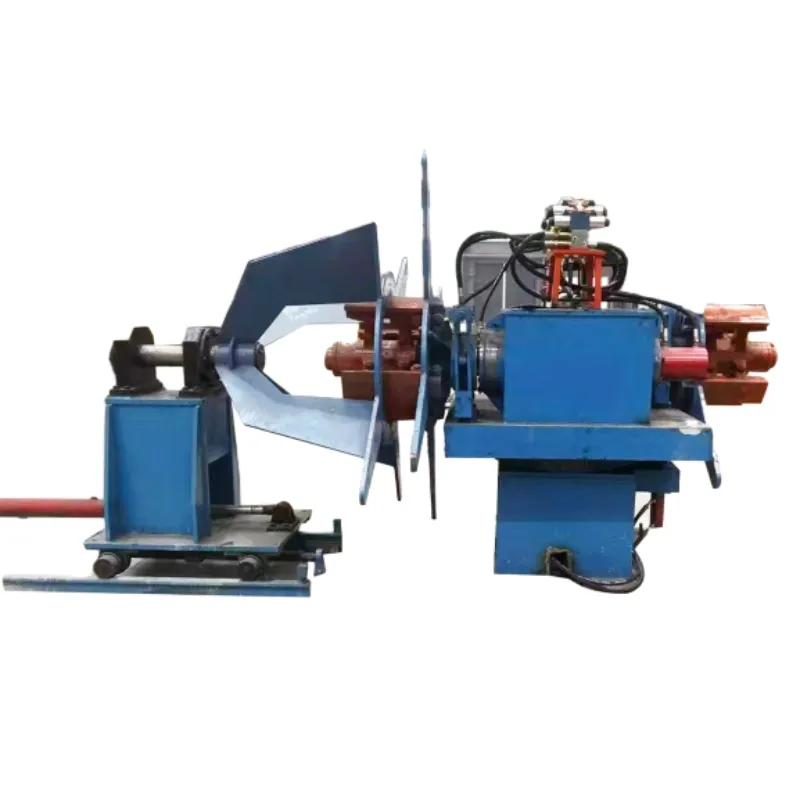
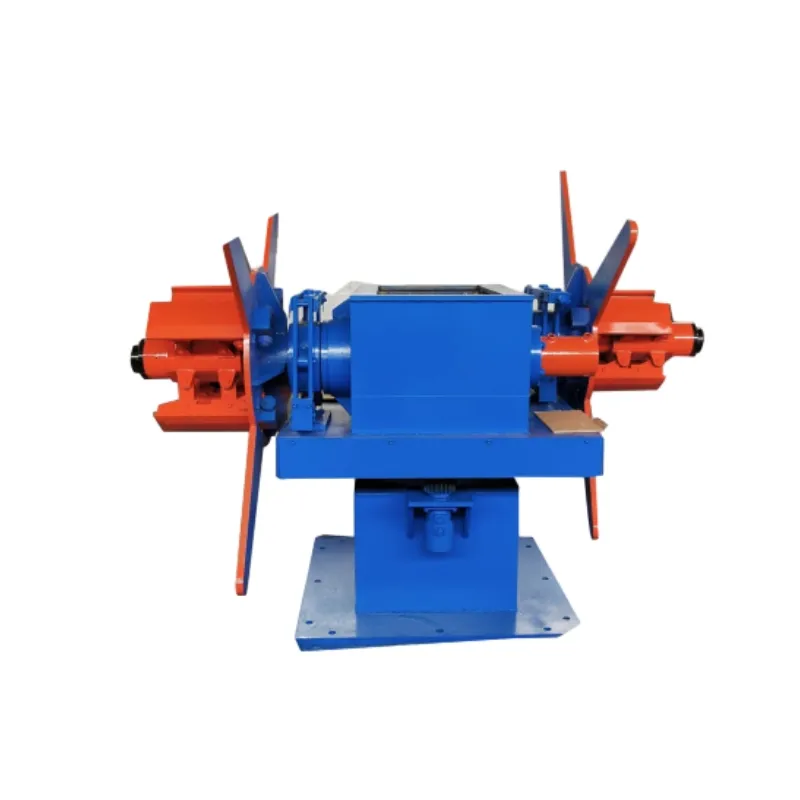
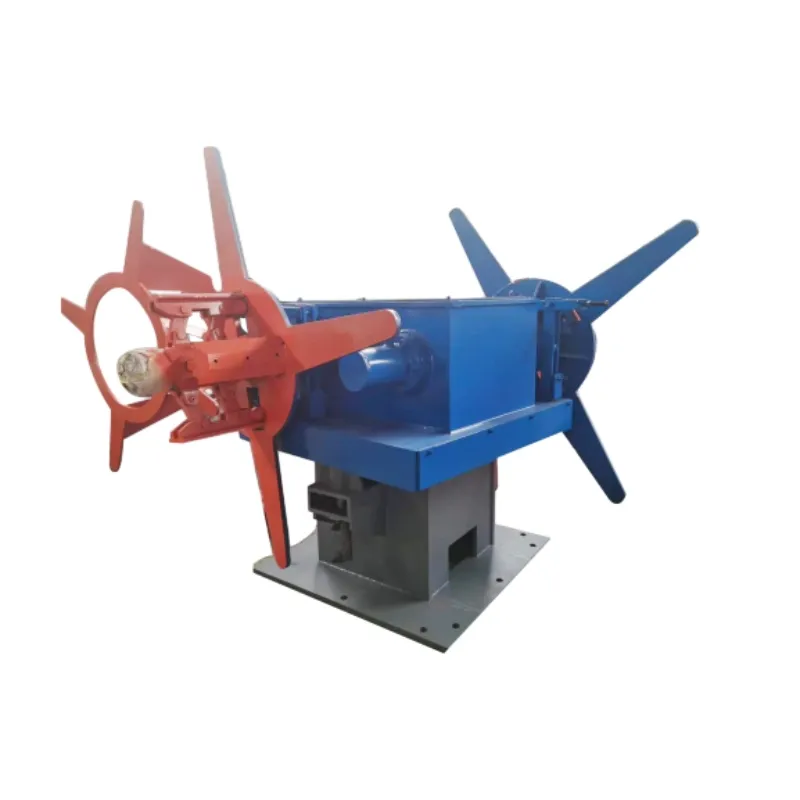
People forget the upstream gear that supports a dependable Hose Crimper program. For example, dual-station hydraulic rising open machines—like the 76-unit unwinder I saw in Hebei—keep steel rolls secure on a turntable, tighten, lift, and feed safely at speed. That stability reduces noise and lowers operator strain, which, indirectly, helps the whole hose-assembly cell run smoother. The safety factor boost is obvious once you watch a coil changeover—no drama, no scramble.
Process flow (shop-proven)
- Materials: carbon steel ferrules, stainless 304/316 for corrosive lines; hoses to SAE J517 (R1, R2, 4SP/4SH, R13, R15).
- Methods: cut → clean → optional skive → lube → insert fitting → crimp to target diameter → mark and log.
- Testing: proof at 2× WP, burst per SAE J343, impulse per ISO 6803; conductivity per ISO 8031 when required.
- Service life: ≈ 200k–600k impulse cycles at 133% WP (depends on hose family, temperature, bend radius).
- Industries: construction equipment, steel mills, agriculture, mining, marine, energy, and MRO.
Vendor landscape (what buyers compare)
| Vendor/Model | Crimp range | Power | Notable | Price band (≈) |
|---|---|---|---|---|
| Parker Parkrimp | up to 2" | Electric/Hydraulic | Die-less centering, strong ecosystem | $$$ |
| Gates GC Series | up to 2" | Electric | Good recipe database | $$–$$$ |
| UNIFLEX HM series | 2"–2.5" | Electric | Sturdy frame, low maintenance | $$$ |
| Finn-Power (Lillbacka) | up to 2.5" | Electric | Fast cycles, robust control | $$$ |
Customization and compliance
Most shops order custom die sets (narrow/wide, stepped), recipe lockouts, and barcode scan-to-crimp. For regulated sectors, look for CE, ISO 9001 QMS, and adherence to ISO 4413 safety. A good Hose Crimper logs each crimp diameter, lot number, and operator ID—it’s not just QA, it’s liability coverage.
Case notes from the field
A northern China OEM scaled to 300 hoses/day by pairing a 2" spiral-capable Hose Crimper with a dual-station coil unwinder for their metal components. Operators reported ≈15% quicker setups and noticeably lower ambient noise. Customer feedback? “Fewer re-crimps, cleaner ends.” It seems the little things—die lubrication routines, calibrated micrometers—moved the needle.
Testing snapshots (shop data, representative)
- Burst: 4SP 1.5" assemblies averaged 4× WP (SAE J343 method).
- Impulse: R13 1" reached ≈ 400k cycles at 133% WP (ISO 6803), oil at 100°C.
- Dimensional: target crimp Ø ±0.05–0.07 mm; ovality within 0.15 mm.
Bottom line: buy for repeatability, die ecosystem, and service access—then backstop it with a sane upstream material flow. A well-chosen Hose Crimper plus safer coil handling is the quiet productivity win most teams overlook.
References
- SAE J517: Hydraulic Hose
- SAE J343: Test and Test Procedures for Hydraulic Hose and Hose Assemblies
- ISO 4413: Hydraulic fluid power — General rules and safety requirements
- ISO 6803: Rubber or plastics hoses — Hydraulic impulse test
- ISO 8031: Rubber and plastics hoses — Determination of electrical resistance and conductivity
-
Comprehensive Guide to hdpe Making Machines: Global Impact, Features & TrendsNewsDec.02,2025
-
Comprehensive Guide to Garden Pipe Manufacturing Machine – Features, Benefits, and TrendsNewsDec.02,2025
-
Comprehensive Guide to Garden Pipe Making Machines: Features, Trends & BenefitsNewsDec.02,2025
-
Comprehensive Guide to Galvanized Pipe Making Machine – Durability & Innovation in Steel PipesNewsDec.02,2025
-
What Is an Extrusion Pipe Machine? Global Importance, Applications & BenefitsNewsDec.02,2025
-
Comprehensive Guide to ERW Tube Mill Machine: Global Insights and Industry ApplicationsNewsDec.02,2025
