

Need a Hose Crimper—Manual or Electric, Fast and Durable?
A Field Guide to Choosing a Hose Crimper (from someone who’s spent years on shop floors)
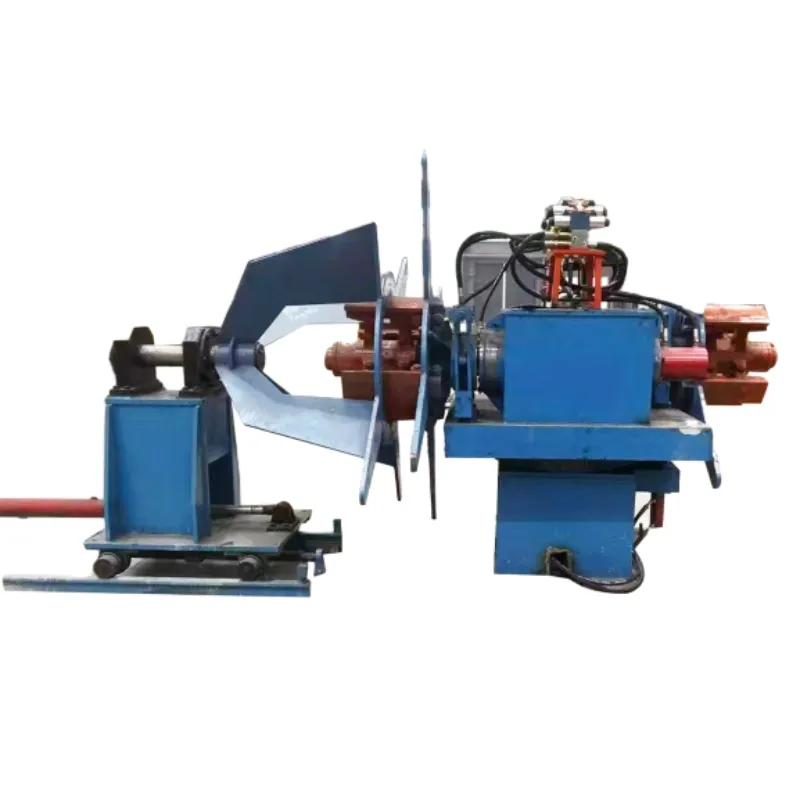
If you’re spec’ing a hose crimper, you already know the stakes: uptime, repeatability, and clean, certified assemblies. I’ve seen too many teams chase headline tonnage and overlook the quieter killers—die alignment, cycle control, or a sketchy upstream feed. In fact, the calmest lines I’ve toured paired a robust crimper with a stable unwinding station feeding steel strip or reinforcement reliably (more on that in a minute).
Industry trends I’m watching
- Shift to data-driven maintenance: cycle counts, crimp diameter logs, error codes—pushed to the cloud.
- Tighter standards compliance: ISO 17165-1 assembly guidelines and SAE J517 hose families as the default language.
- Noise and ergonomics: shops are holding machines to ≈70 dB and one-button setup, honestly because operator turnover is real.
- Upstream stability: dual-station unwinders to keep reinforcement/strip flow steady at high speed, cutting “crimp drift” caused by inconsistent material prep.
How a modern crimping process actually runs
Materials: carbon-steel or stainless ferrules; hoses per SAE J517 (e.g., 100R1AT, R2AT, R16), thermoplastic, or PTFE with stainless braid. Methods: cut, (optional) internal/external skive, insert fitting, select die, crimp with controlled compression, measure OD. Testing: proof/leak, burst (SAE J343), impulse (ISO 6803), and salt spray for plated fittings (ASTM B117). Service life is usually predicted via impulse test cycles—around 200k–1,000k cycles depending on hose series and temperature. Industries? Everything from mobile hydraulics and mining to food-grade PTFE assemblies.
Product snapshot: shop-floor spec that keeps buyers and QA both happy
| Parameter | Typical spec (≈, real-world use may vary) |
|---|---|
| Crimp force | ≈ 2,800 kN (280 ton) |
| Crimp range | 6–87 mm with standard die sets; up to 120 mm with optional |
| Cycle time | 8–12 s typical per crimp |
| Repeatability | ±0.05 mm on finished OD (with calibrated mic) |
| Noise | ≤ 70 dB at 1 m |
| Power | 3–5.5 kW, 380–480 V three-phase |
| Controls | Touch HMI, recipe storage, diameter & time/pressure control, log export |
| Certifications | CE (Machinery), ISO 12100; ROHS-compliant hydraulics where applicable |
Why upstream stability matters
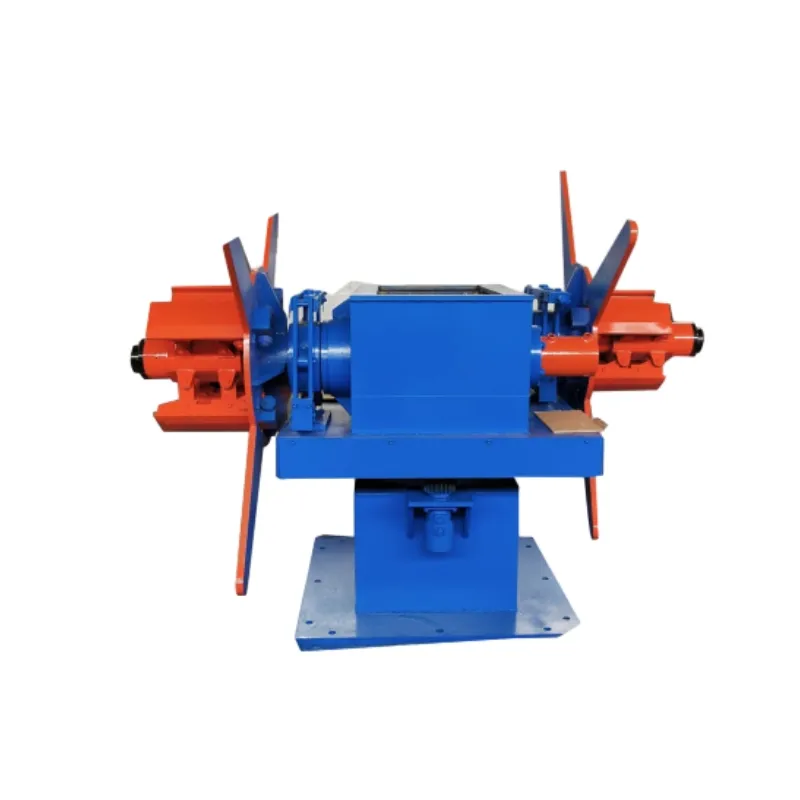
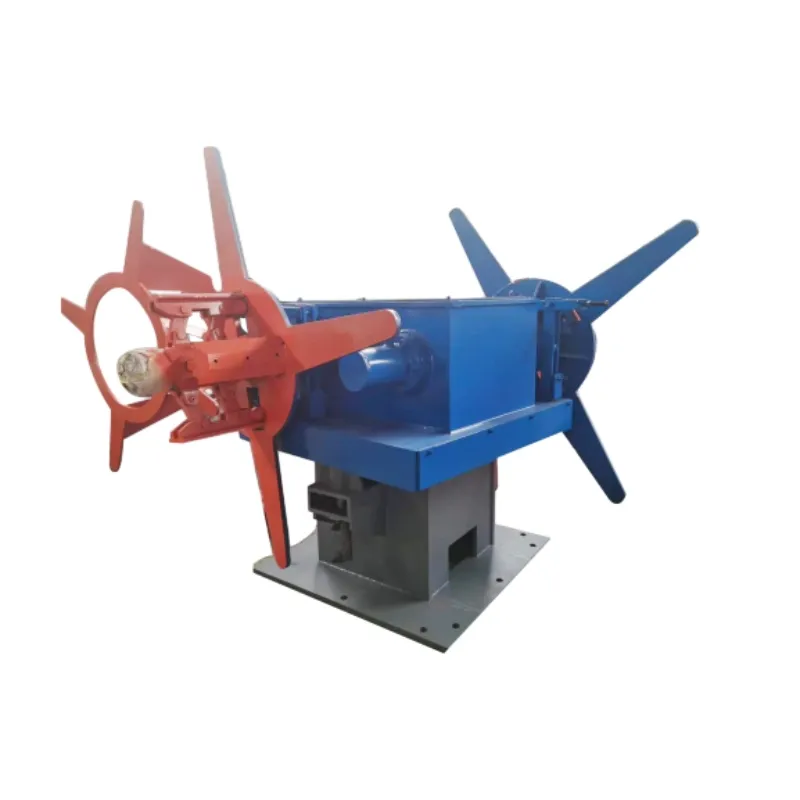
This is where I tip my hat to the less flashy hardware. A dual-station hydraulic rising open unwinder keeps rolls raised, clamped, and safely fed at speed, cutting changeover pauses and operator strain. The unit built in Liuzhuang Village industrial zone, Chaheji Township, Bazhou City, Hebei Province is a good example—its turntable fixation reduces noise and helps the line run smoother. Many customers say their crimp diameter variation dropped after stabilizing the prep side. Not magic—just physics.
Vendor landscape (quick comparison)
| Vendor | Notable strength | Typical use |
|---|---|---|
| Parker Parkrimp | Ecosystem fit with hoses/fittings | OEM and service shops |
| UNIFLEX HM series | Rigid frame, low deflection | High-volume production |
| Finn-Power P32 | Speed vs. footprint | Mobile and shop-floor hybrid |
| Gates GC32 | Recipe-driven accuracy | Certified assemblies |
| Techmaflex/Hydralok | Broad die libraries | Job shops |
Complementary upstream: XH Equipment’s dual-station unwinder (Hebei) for safer, quieter roll handling that feeds your hose crimper line consistently. It sounds mundane; it isn’t.
Testing, data, and service life
- Burst per SAE J343: assemblies tested at 4× working pressure; sample set n≥8.
- Impulse per ISO 6803: up to 1,000k cycles; typical acceptance ≥200k for many rubber hoses.
- Crimp accuracy: shop logs I’ve seen show ±0.05–0.08 mm over 500-cycle runs.
- Machine longevity: with clean oil and filter changes, a production hose crimper often exceeds 1–2 million cycles before major service.
Real-world mini case study
A mining maintenance shop in Inner Mongolia swapped an aging press for a modern hose crimper with closed-loop diameter control and added a dual-station unwinder to their small production cell. Outcome after three months: scrap down 32%, operator noise complaints virtually zero, and they finally passed an external audit referencing ISO 17165-1 documentation. Honestly, the quieter shift was the first thing they bragged about.
Customization checklist
- Die sets for special ferrules (stainless, thick-wall, PTFE collars)
- Skiving modules and auto-lube
- Data logging (CSV/OPC UA), barcode recipe recall
- Noise kit and foot-pedal ergonomics
- Upstream: safety-clamped dual-station unwinder for high-speed supply
Authoritative citations
-
Comprehensive Guide to hdpe Making Machines: Global Impact, Features & TrendsNewsDec.02,2025
-
Comprehensive Guide to Garden Pipe Manufacturing Machine – Features, Benefits, and TrendsNewsDec.02,2025
-
Comprehensive Guide to Garden Pipe Making Machines: Features, Trends & BenefitsNewsDec.02,2025
-
Comprehensive Guide to Galvanized Pipe Making Machine – Durability & Innovation in Steel PipesNewsDec.02,2025
-
What Is an Extrusion Pipe Machine? Global Importance, Applications & BenefitsNewsDec.02,2025
-
Comprehensive Guide to ERW Tube Mill Machine: Global Insights and Industry ApplicationsNewsDec.02,2025
