High Precision Roll Molds from Reliable fuel pipe manufacturers
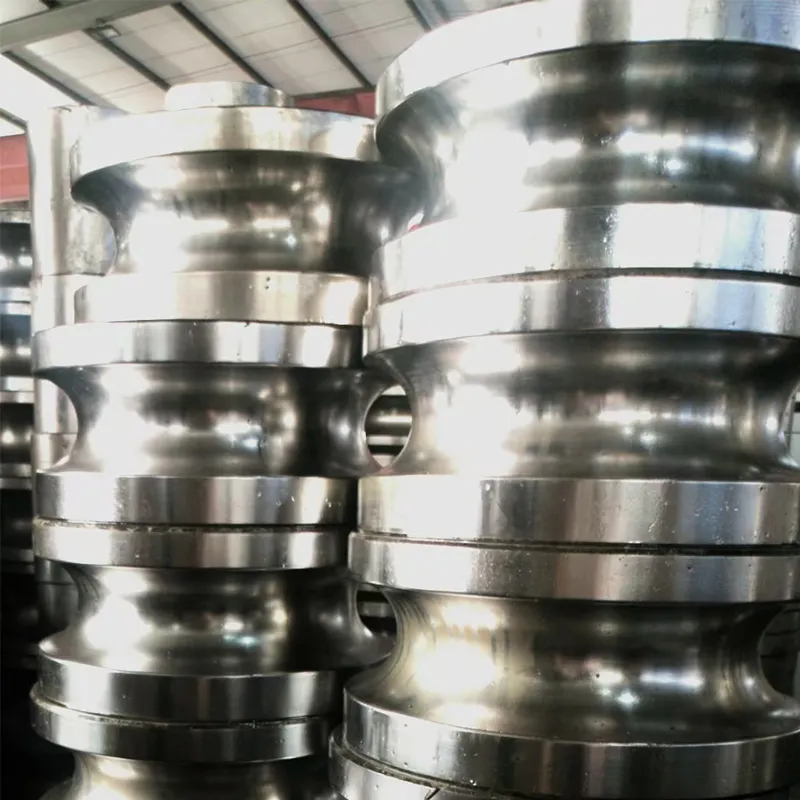
Achieving consistent precision in welded pipe production requires more than just machinery; it demands high-performance tooling that can withstand extreme thermal and mechanical stress. For those sourcing from fuel pipe manufacturers, the critical link in the production chain is the roll mold. These components are responsible for the final shaping and dimensional accuracy of the pipe, meaning any failure in mold hardness or structural integrity directly translates to defective products and increased waste.
Our approach focuses on the intersection of advanced metallurgy and precision machining. By implementing a rigorous five-step manufacturing process—ranging from controlled forging ratios to low-temperature tempering—we ensure that every roll mold delivers exceptional wear resistance and geometric stability. This technical depth allows pipe producers to reduce downtime and maintain tighter tolerances across high-volume production runs.

The Metallurgy of Durability: Advanced Forging and Heat Treatment
The longevity of a roll mold is determined long before it reaches the finishing lathe. It begins with a precise forging ratio, typically maintained between 3:2 and 2.5, to ensure the internal grain structure of the metal is optimized for strength. The raw material undergoes a primary heating phase between 850°C and 1000°C, followed by repeated forging cycles (usually 2 to 4 times). This iterative process refines the organizational structure of the steel, significantly enhancing its inherent wear resistance.
Post-forging, the material enters a critical stabilization phase where it is heated to between 780°C and 830°C for a duration of 72 hours. This prolonged thermal treatment eliminates internal stresses that could otherwise lead to warping or cracking during the high-pressure operation of the pipe mill. By controlling the cooling and heating curves, we create a foundation that supports the extreme hardness required for industrial forming.

Precision Engineering: From Rough Machining to Final Finishing
Once the material properties are stabilized, the workpiece undergoes a multi-stage machining process. Initial rough processing defines the basic shape and inner hole dimensions, leaving a calculated margin for final finishing according to technical drawings. This stage is where the essential geometry—including logos and identification marks—is precisely positioned to ensure traceability and professional branding on the tooling.
The final stage of the process involves high-precision finishing. This includes planar finishing of the faces and meticulous honing of the inner holes. By focusing on these fine details, we minimize friction and vibration during the pipe rolling process, which is essential for achieving a smooth surface finish on the final pipe product. Every dimension is verified against the original design specs to guarantee seamless integration into the customer's existing machinery.
Hardening Strategies for Maximum Operational Life
The most critical phase for operational performance is the quenching and tempering sequence. Workpieces are placed in quenching furnaces and gradually warmed to 930-980°C. The subsequent physical cooling creates a hard, martensitic structure. However, because initial quenching can leave the metal brittle or unstable, a low-temperature tempering process is applied to bring the material to the exact hardness standard required for industrial use.
To validate this process, every single roll undergoes rigorous hardness detection. We target a hardness range of 58° to 62° HRC. This specific window ensures the mold is hard enough to resist the abrasive forces of the steel strip but tough enough to avoid catastrophic fracturing under load. Only after these benchmarks are met and verified by professional quality inspectors is the product cleared for shipment.
Technical Selection Criteria for Roll Molds
| Evaluation Factor | Standard Requirement | Impact on Production | Verification Method |
|---|---|---|---|
| Forging Ratio | 3:2 - 2.5 | Internal Grain Strength | Material Certification |
| Thermal Stability | 72h @ 780-830°C | Dimensional Stability | Process Log Audit |
| Surface Hardness | 58° - 62° HRC | Wear Resistance | Hardness Tester |
| Tolerance Level | As per Drawing | Pipe Roundness | CMM Inspection |
| Material State | Repeated Forged | Structural Integrity | Microstructure Analysis |
Integrating Automation into Pipe Tooling Workflows
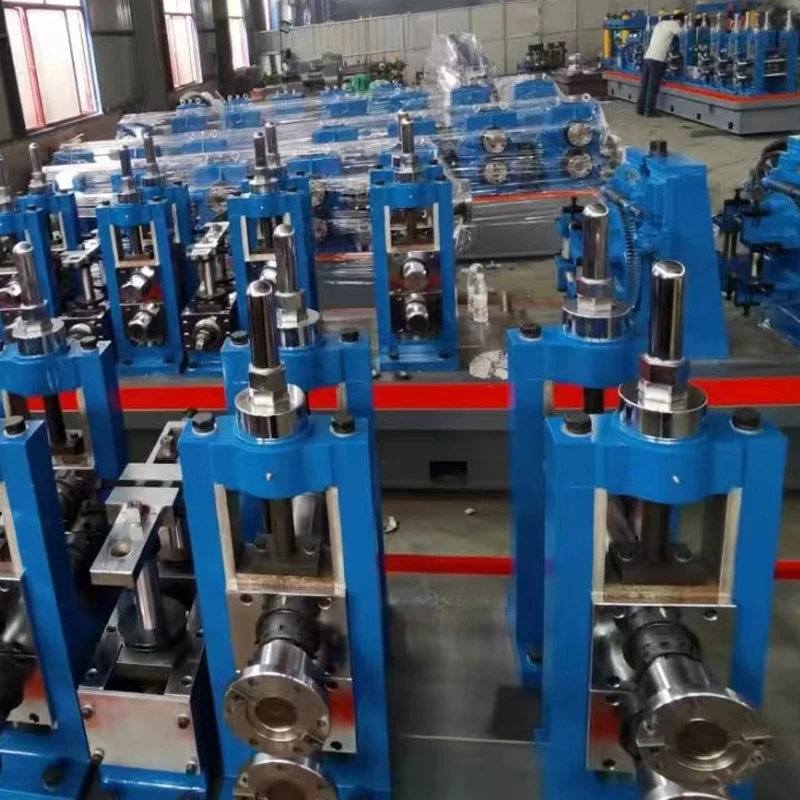
Modern pipe manufacturing is shifting toward full automation to solve staffing challenges and reduce labor intensity. By combining high-precision roll molds with automatic shearing, welding, and cold cutting flying saws, enterprises can significantly increase their throughput. The synergy between the tooling's precision and the machine's automation determines the overall efficiency of the production line.
We emphasize the importance of supporting auxiliary machines, such as straightening machines and feeding sections, which ensure that the raw material enters the roll molds in an optimal state. When the tooling is perfectly matched to the automation sequence, the result is a drastic reduction in manual adjustment time and a consistent output that meets international quality standards.
Strategic Procurement for Long-Term Production Stability
When evaluating a supplier, procurement managers should look beyond the initial cost and focus on the total cost of ownership. This includes analyzing the supplier's R&D capabilities, their adherence to ISO9001 standards, and their ability to provide a full range of solutions. A supplier that manages the entire process—from forging and heat treatment to final assembly—offers far more reliability than a simple machining shop.
For enterprises aiming to scale, investing in "Specialized and New" small and medium-sized enterprise technology is key. Utilizing patented innovation in roll mold design can lead to better material utilization and lower energy consumption. We recommend a partnership approach where the tooling is customized to the specific steel grades and wall thicknesses used in your facility to maximize tool life.
Technical and Procurement FAQ
Why is the forging ratio critical for roll molds?
A forging ratio of 3:2 to 2.5 ensures that the steel's internal grain structure is sufficiently refined, which directly increases the tool's strength and resistance to deformation under high pressure.
What is the purpose of the 72-hour heating phase?
This phase, occurring between 780°C and 830°C, is designed to stabilize the material organization and relieve internal stresses, preventing the mold from warping during later machining or operational use.
How do you ensure the hardness is consistent across the mold?
We use a controlled quenching process followed by low-temperature tempering, and every finished piece is verified using hardness detection tools to ensure it falls within the 58° to 62° HRC range.
Can these molds be customized for specific pipe specifications?
Yes, we produce molds according to custom technical drawings, including specific inner hole sizes, shapes, and customized logos in designated positions.
What certifications should I look for in a tooling manufacturer?
Look for ISO9001 Quality Management System Certification and designations such as "High-tech Enterprise" or "Specialized and New SME," which indicate a commitment to quality and innovation.
How does roll mold quality affect the final pipe?
High-precision molds ensure better roundness, a smoother surface finish, and tighter dimensional tolerances, which are critical for the performance of high-pressure fuel or industrial piping.
Industry Technical References
- ISO 9001 Quality Management Standards
- ASTM International Material Specifications
- ASME Boiler and Pressure Vessel Code
- Industrial Metallurgy and Heat Treatment Guides
Selecting the right tooling is a strategic decision that impacts every meter of pipe produced. By prioritizing metallurgical integrity and precision finishing, you ensure a production line that is efficient, reliable, and capable of meeting the strictest industry standards.
Related Technical Insights