

Belling Machine: Fast, Precise, Automatic Pipe Forming
Belling Machine Buyer’s Guide 2025: Specs, Trends, and Real-World Notes
If you’re scaling a plastics pipe line, the first thing I ask is simple: how mature is your belling machine setup? It’s the quiet hero after extrusion—no drama, just precise sockets, hour after hour. To be honest, most production bottlenecks I see sit right here: heating profiles, mandrel changeovers, and downstream handling.
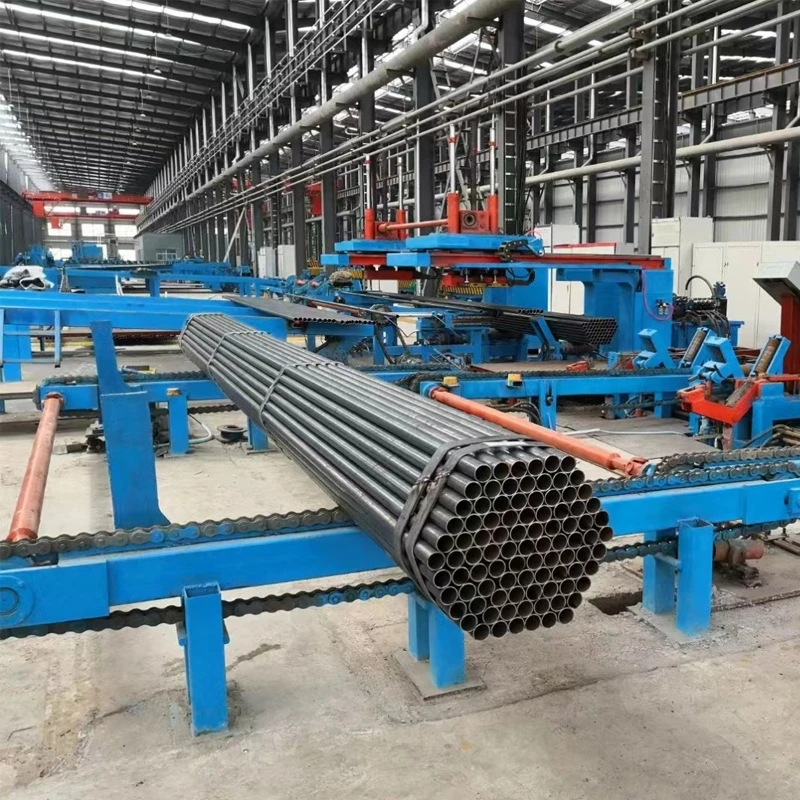
What it does (and why it matters)
A belling machine forms the socket at one end of a pipe—PVC-U, PP-R, HDPE, even structured-wall—so joints seal under pressure or gravity flow. You’ll see three common modes: plain/solvent sockets, rubber-ring (Rieber-style in-socket gasket forming), and double-socket couplers. Actually, the right choice hinges on market: municipal sewer favors EN 1401/EN 13476 sockets; building drainage may lean to ASTM D3034; pressure systems often drive tighter ovality control.
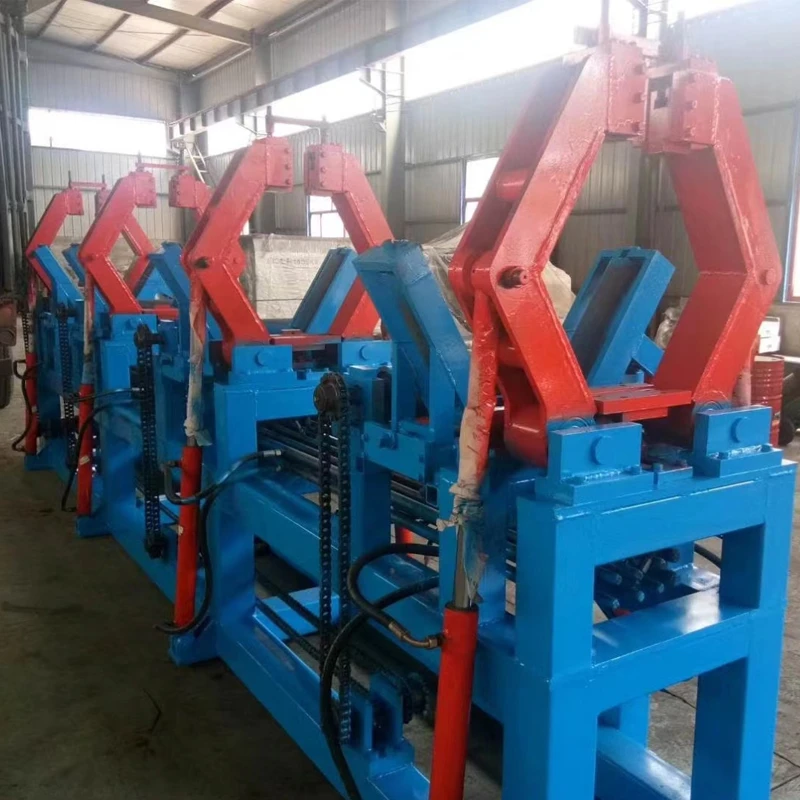
Industry trends I’m seeing
- Servo-driven positioning and closed-loop heating (IR + hot air) for consistent sockets and lower scrap.
- Quick-change mandrels and recipe management; changeovers in ≈10–20 minutes instead of an hour.
- Inline QC: camera ovality checks, leak pre-tests, and EN 1277 vacuum routines (spot checks) built in.
- Energy focus—heat recovery and better insulation. Some plants report 8–12% power savings after upgrade.
- Downstream automation: automatic stacking, counting, and banding to eliminate forklifts hovering around the line.
Typical process flow and standards
Materials: PVC-U, PP-R, PE100, PP-B, structured-wall composites. Methods: pipe infeed → preheat → socket forming on mandrel → calibration/cooling → gasket insertion (if any) → marking → inline inspection → stacking/packaging. Testing standards I’d benchmark: EN 1277 (leaktightness of elastomeric ring joints), ISO 1167 (hydrostatic strength of thermoplastics pipes), ISO 1452/EN 1401/ASTM D3034 (dimensional quality), ISO 2505 (heat reversion), ISO 9969 (ring stiffness, where relevant). With proper maintenance, machine service life is commonly 8–12 years; I’ve seen older units still running, though accuracy drifts.
Spec snapshot (representative)
| Parameter | Typical Value (≈, real-world use may vary) |
|---|---|
| Diameter range | Ø50–630 mm (modules for smaller/larger available) |
| Cycle time | 6–12 s/socket (material, socket type dependent) |
| Heating | IR + hot-air tunnels, closed-loop PID |
| Cooling | Spray + mandrel vacuum calibration |
| Accuracy | Ovality/length repeatability ±0.2 mm typical |
| Utilities | 18–45 kW, air 0.6–0.8 MPa |
| Changeover | ≈10–20 min with quick-change mandrels |
| Certifications | CE, ISO 9001-ready documentation |
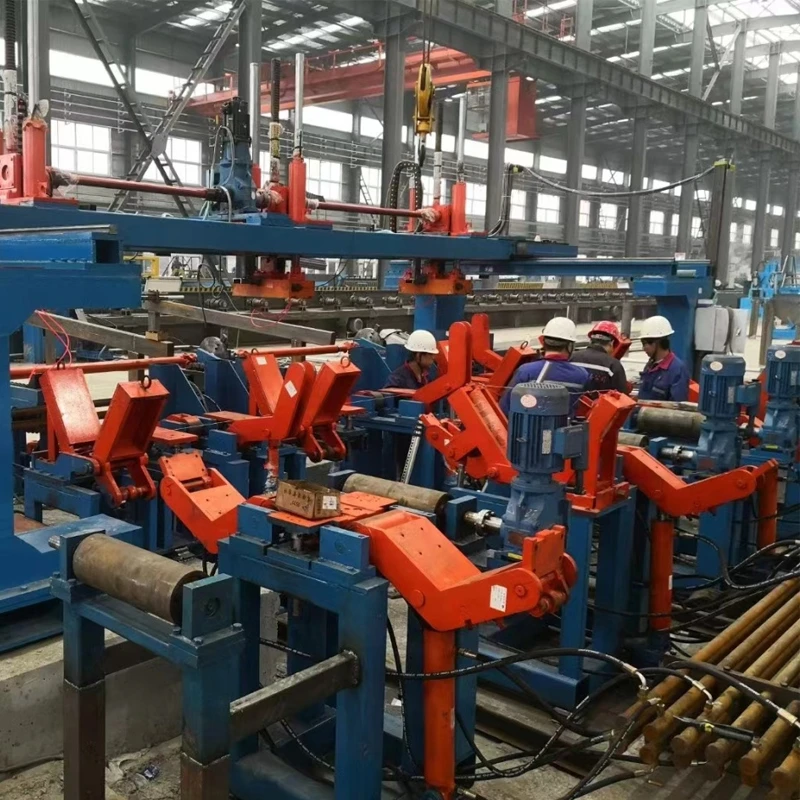
Vendors: how they stack up (my field notes)
| Vendor Type | Strengths | Watch-outs | Best for |
|---|---|---|---|
| XH Equipment (Hebei) | Solid value, quick-change designs, downstream automation pairing | Lead times can stretch in Q4 | Mid-to-large PVC/PE lines needing ROI ≤18 months |
| Overseas Tier-1 | Premium controls, deep service networks | Pricey; spares can be slow | 24/7 plants, pharma/utility-grade compliance |
| Budget OEM | Lowest capex | Variability in heating control; limited QC options | Seasonal or low-mix production |
Customization and integration
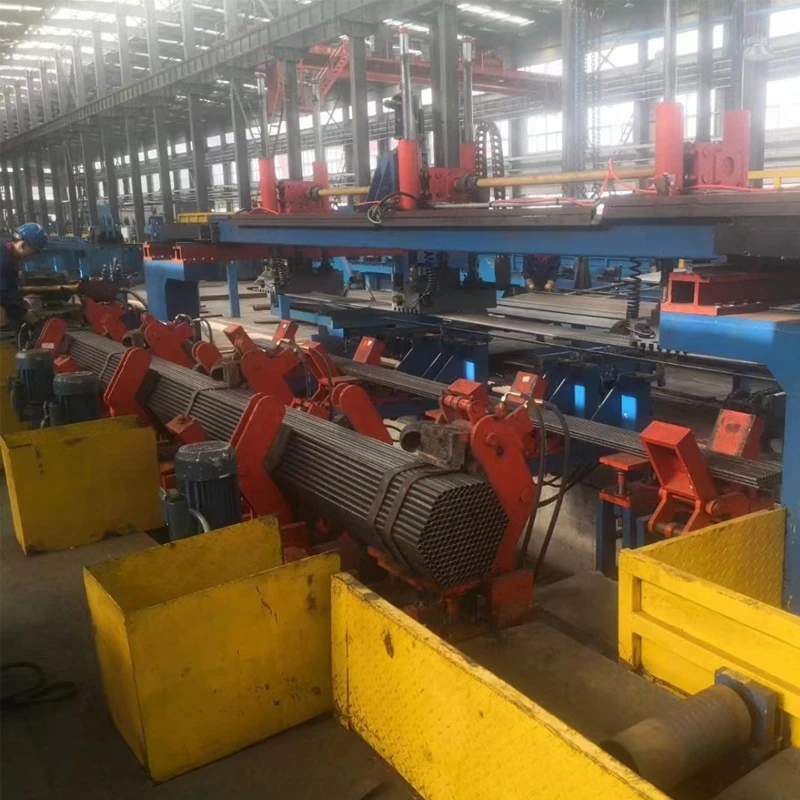
XH’s “Stacking Machine Products” (origin: Liuzhuang Village industrial zone, Chaheji Township, Bazhou, Hebei) pair neatly with a belling machine line. The fully automatic coding/packaging setup evenly feeds steel pipes, uses hydraulic + motor sensing to control palletizing count and pattern, then transfers neatly into the packaging head where belt pre-tension fixes the bundle shape. In practice, that saves one operator per shift and standardizes pallets for export.
Where it’s used, and what users say
- Municipal sewer/drainage (EN 1401/ASTM D3034), potable cold water (ISO 1452), cable duct, corrugated HDPE.
- Feedback: “Cycle time dropped from ~11s to 8.5s after IR tuning,” a maintenance lead told me; another noted scrap cut by ≈30% with inline vacuum socket checks.
Quick case notes
Nordic sewer pipe plant: upgraded to servo heating control; EN 1277 vacuum failures fell from 3.2% to 0.6% month-over-month. GCC corrugated line: added auto-stacking; OEE rose ≈7% thanks to fewer downstream stops.
Buying checklist (short version)
- Standards fit: EN 1277 leak tests, ISO 1452/EN 1401/ASTM D3034 dimensional compliance.
- Heating stability: log temperature profiles across shifts; look for ±2°C stability.
- Changeover predictability: time it live with your largest mandrel set.
- Downstream: integrate stacking/packaging early; it dictates real throughput.
Citations
- ISO 1452: Plastics piping systems for water supply and drainage — PVC-U. https://www.iso.org/standard/73869.html
- EN 1277: Plastics piping systems — Sealing rings for socket joints — Leak tightness tests. https://standards.cen.eu
- ASTM D3034: Standard Specification for Type PSM Poly(Vinyl Chloride) Sewer Pipe. https://www.astm.org/d3034
- ISO 1167: Thermoplastics pipes — Resistance to internal pressure. https://www.iso.org/standard/66253.html
- EN 1401: Plastics piping systems for non-pressure underground drainage and sewerage — PVC-U. https://standards.cen.eu
-
Comprehensive Guide to hdpe Making Machines: Global Impact, Features & TrendsNewsDec.02,2025
-
Comprehensive Guide to Garden Pipe Manufacturing Machine – Features, Benefits, and TrendsNewsDec.02,2025
-
Comprehensive Guide to Garden Pipe Making Machines: Features, Trends & BenefitsNewsDec.02,2025
-
Comprehensive Guide to Galvanized Pipe Making Machine – Durability & Innovation in Steel PipesNewsDec.02,2025
-
What Is an Extrusion Pipe Machine? Global Importance, Applications & BenefitsNewsDec.02,2025
-
Comprehensive Guide to ERW Tube Mill Machine: Global Insights and Industry ApplicationsNewsDec.02,2025
