

Expert Roll Forming: Precision Dies, 3D & Cold Forming
Introduction to Precision Roll Forming
Roll forming is a continuous metal forming process where long strips of sheet metal (typically coiled steel) are passed through successive sets of rolls, each performing an incremental part of the bend, until the desired cross-sectional profile is achieved. This method is highly valued in industrial manufacturing for its efficiency, precision, and ability to produce complex profiles with consistent dimensions over long lengths. It represents a fundamental pillar in the production of components across diverse sectors, including automotive, construction, HVAC, and solar energy, offering significant advantages over traditional stamping or brake bending methods.
The demand for high-strength, lightweight, and complex-shaped profiles continues to drive innovation in the roll forming industry. Modern advancements, particularly in areas like 3D roll forming, allow for the creation of components with variable cross-sections and intricate geometric designs, meeting the stringent requirements of advanced engineering applications. Our expertise lies in delivering sophisticated Roll Mold solutions that underpin these advanced manufacturing capabilities.
Detailed Roll Forming Process Flow
The manufacturing process for precision roll forming involves several critical stages, each contributing to the final quality and integrity of the component. Understanding this flow is crucial for optimizing production and ensuring product performance.
1. Material Selection & Preparation
- Material Types: Common materials include various grades of steel (e.g., carbon steel, stainless steel, high-strength low-alloy steel), aluminum alloys, copper, and brass. The selection depends on the application’s mechanical, corrosion resistance, and aesthetic requirements.
- Coil Handling: Raw material arrives in coils, which are loaded onto an uncoiler. Precision tensioning and leveling systems ensure the strip is flat and properly aligned before entering the forming stages.
2. Roll Forming Die Manufacturing (Roll Mold Production)
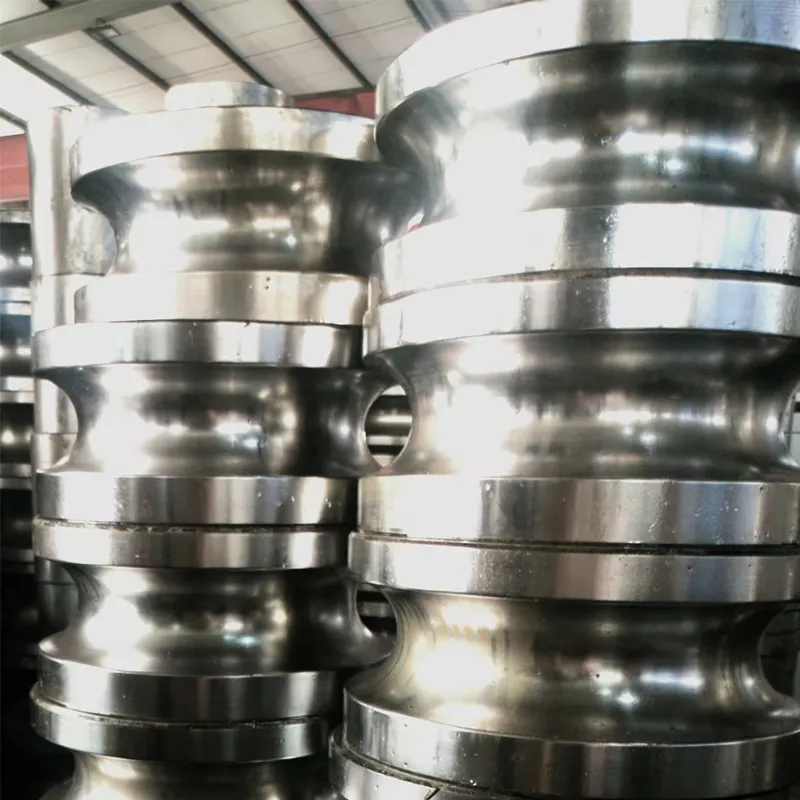
The heart of the roll forming process lies in the quality of the roll forming die, or Roll Mold.
- Design: Utilizing advanced CAD/CAM software, our engineers design the multi-stage roll profiles. This critical phase dictates the final part geometry, material flow, and stress distribution.
- Material for Molds: Typically, high-grade tool steels (e.g., D2, SKD11) are used for their hardness, wear resistance, and toughness. For applications requiring superior wear resistance, materials like hardened alloy steels or even carbide inserts are employed.
-
Manufacturing Processes:
- Casting/Forging: Initial rough shapes for large or complex rolls can be cast or forged to optimize grain structure and material properties.
- CNC Machining: Precision machining is performed using multi-axis CNC lathes and milling machines to achieve the exact profile contours, often with tolerances down to ±0.01mm.
- Heat Treatment: Rolls undergo specific heat treatments (e.g., quenching, tempering) to achieve the required hardness (typically HRC 58-62) and wear resistance.
- Grinding & Polishing: Final surface finishing ensures optimal material flow and extends mold life, reducing friction and minimizing surface defects on the formed product.
- Testing Standards: Our Roll Molds adhere to stringent international standards such as ISO 9001 for quality management and internal metallurgical testing protocols. Dimensional accuracy is verified against ANSI or JIS standards as required by client specifications.
- Service Life: Depending on the material being formed and production volume, a well-maintained Roll Mold can achieve a service life of millions of linear meters, minimizing downtime and replacement costs.
3. Forming Stages
The strip passes through a series of roll stands, each progressively bending the metal closer to the final profile. The number of stands varies based on profile complexity and material properties.
Schematic Representation of Forming Stages:
- Uncoiling & Leveling: Flat strip introduced.
- Entry Guide: Ensures precise alignment.
- Pre-Forming Stands (Stages 1-5): Gentle initial bends.
- Intermediate Forming Stands (Stages 6-10): Profile definition.
- Finishing Stands (Stages 11-15): Final dimension and shape.
- Sizing & Straightening: Corrects any distortion.
- Cut-off: Hydraulic or flying cut-off to desired lengths.
- Stacking & Packaging: Finished product.
4. Post-Forming Operations
Depending on requirements, products may undergo punching, welding, painting, or galvanizing after forming.
Target Industries and Advantages
Our roll forming solutions cater to a broad spectrum of target industries, including:
- Petrochemical: Manufacturing of structural supports, cable trays, and specialized pipe components requiring high corrosion resistance.
- Metallurgy: Producing various profiles for furnaces, conveyors, and structural elements that withstand extreme temperatures and harsh environments.
- Water Supply & Drainage: Creation of robust and corrosion-resistant profiles for conduits, channels, and supports crucial for infrastructure longevity.
- Construction: From lightweight steel framing to roofing and cladding profiles, offering energy-saving benefits through improved thermal performance.
- Automotive: Producing high-strength, lightweight chassis components, door frames, and bumper reinforcements for enhanced safety and fuel efficiency.
Advantages in typical application scenarios include significant energy saving through optimized material usage and reduced process steps, and superior corrosion resistance when appropriate materials and post-treatment processes are selected.
Industry Trends and Innovations in Roll Forming
The roll forming industry is in a constant state of evolution, driven by demands for greater efficiency, precision, and sustainability. Key trends include:
- Advanced Automation and Robotics: Integration of AI-driven control systems, robotic handling, and automated tooling changes is enhancing production speed, accuracy, and reducing labor costs.
- 3D Roll Forming (Flexible Roll Forming): This cutting-edge technique allows for the production of profiles with varying cross-sections along their length, opening new possibilities for complex structural components in automotive and aerospace. Unlike traditional cold roll forming, 3D methods can introduce curvature in multiple planes.
- High-Strength Steel and Lightweight Alloys: The increasing use of UHSS (Ultra-High Strength Steels) and aluminum alloys requires specialized roll forming die designs and processes to manage springback and maintain material integrity.
- Integrated Processing: Lines are increasingly integrating punching, notching, welding, and even laser cutting directly into the forming process, streamlining production and reducing post-processing steps.
- Sustainability: Focus on energy-efficient machines, reduced material waste, and the ability to process recycled materials contributes to a greener manufacturing footprint.
These trends underline the industry's commitment to delivering higher-performance, more cost-effective solutions for diverse applications.
Technical Specifications of Roll Mold
Our Roll Molds are engineered to meet the most demanding industrial specifications, ensuring superior performance and longevity. Below are typical parameters for our high-precision roll forming die sets.
Roll Mold Product Specifications
| Parameter | Specification | Notes |
|---|---|---|
| Material Hardness | HRC 58-62 | Optimal for wear resistance and durability |
| Surface Roughness (Ra) | ≤ 0.8 µm | Minimizes friction, enhances material flow |
| Dimensional Tolerance | ±0.01mm (on profile) | High precision for critical applications |
| Roll Material Options | SKD11, D2, Cr12MoV, WC | Selected based on application and material to be formed |
| Max Strip Width | Up to 1500mm | Dependent on machine capabilities |
| Min/Max Material Thickness | 0.3mm to 12mm | Specific to profile and material yield strength |
| Design Software | COPRA®, Auto-CAD, SolidWorks | Industry-leading tools for precision design |
Application Scenarios and Technical Advantages
The versatility of roll forming technology makes it indispensable across numerous industries. Its inherent advantages offer substantial benefits in performance and cost-efficiency.
Key Application Scenarios:
- Automotive Industry: Production of intricate components such as bumper beams, door impact beams, seat slides, and chassis stiffeners. The ability to use advanced high-strength steels in cold roll forming significantly contributes to vehicle safety and lightweighting initiatives, directly impacting fuel efficiency.
- Construction & Infrastructure: Manufacturing of structural profiles like C-channels, Z-purlins, roofing panels, and guardrails. Our solutions enable the creation of durable, corrosion-resistant profiles for critical infrastructure projects, from highway barriers to specialized profiles for water treatment facilities.
- Solar Energy Sector: Production of precise frame components for solar panels and mounting structures. The consistency and integrity of roll forming tube and other profiles are vital for the long-term stability and performance of solar installations.
- HVAC & Appliance: Fabrication of ductwork, shelving supports, and framework components. The high-volume, low-cost nature of the process is ideal for these sectors.
- Storage Solutions: Manufacturing of shelving, racking systems, and drawer slides, where consistent strength and precise interlocking profiles are paramount.
Technical Advantages:
- High Production Speed: Continuous operation allows for rapid production rates, often reaching speeds of 30-100 meters per minute, making it suitable for high-volume orders.
- Excellent Dimensional Accuracy: The progressive forming action minimizes springback and ensures tight tolerances, leading to highly consistent part geometries.
- Superior Surface Finish: As the material is gradually formed, surface damage is minimized, resulting in a smooth, unmarred finish that often requires no secondary finishing.
- Material Efficiency: Near net-shape production generates minimal scrap, making it a highly material-efficient process. Complex profiles can be produced from a flat strip, reducing waste compared to machining or welding multiple pieces.
- Ability to Process Pre-Coated Materials: Painted or galvanized strips can be formed without damaging the coating, preserving corrosion resistance and aesthetic qualities.
- Cost-Effectiveness for Long Runs: While tooling costs can be higher initially, the unit cost for large production volumes is significantly lower due to speed, automation, and material efficiency.
These advantages collectively position roll forming as a preferred method for manufacturers seeking high-quality, high-volume, and cost-effective metal profile production.
Vendor Comparison for Roll Forming Solutions
Selecting the right partner for roll forming solutions, particularly for custom roll forming die and machinery, is critical. Key differentiators often include expertise, quality, and support.
Comparative Factors for Roll Forming Vendors
| Feature/Criterion | Our Company (XHEquipment) | Generic Competitor A | Generic Competitor B |
|---|---|---|---|
| Design Expertise | 20+ years, specialized in complex profiles & advanced materials (e.g., UHSS, SS) | 10-15 years, good for standard profiles | Newer entrant, basic profile design |
| Manufacturing Precision | CNC machined to ±0.01mm, ISO 9001 certified | CNC machined to ±0.03mm, internal QC | Conventional machining, ±0.05mm |
| Customization Capability | Full bespoke design, 3D roll forming, integrated solutions | Moderate customization, minor profile adjustments | Limited to standard configurations |
| Material Versatility | Carbon steel, stainless steel, aluminum, copper, pre-painted | Primarily carbon steel, some aluminum | Basic steel grades only |
| After-Sales Support | Global support, dedicated engineers, 24/7 hotline | Regional support during business hours | Limited remote assistance |
| Certifications | ISO 9001:2015, CE compliant | Some internal quality standards | None specified |
Our position as a leading provider of roll forming solutions is built on a foundation of deep technical expertise, unwavering commitment to precision, and a proactive approach to customer collaboration. We have partnered with major corporations across several continents, underscoring our authoritative standing in the industry.
Customized Roll Forming Solutions
Understanding that no two manufacturing challenges are identical, we specialize in delivering highly customized roll forming solutions. This bespoke approach ensures that our clients receive systems and roll forming die sets perfectly tailored to their unique production requirements, material specifications, and desired output profiles.
Our customization process involves:
- Initial Consultation & Feasibility Study: We work closely with clients to understand their specific product design, material properties (e.g., yield strength, tensile strength, elongation), production volume targets, and budget constraints. This includes analyzing complex profiles for potential 3D roll forming applications.
- Advanced Engineering & Simulation: Utilizing sophisticated finite element analysis (FEA) and specialized roll design software, our engineers simulate the forming process to predict material behavior, springback, and potential defects. This ensures optimal roll forming die design before physical manufacturing.
- Tailored Machine Design: Beyond the roll sets, we can custom-design complete cold roll forming lines, including decoilers, straighteners, pre-punching units, flying cut-off systems, and stacking solutions to integrate seamlessly with existing factory layouts and automation systems.
- Material-Specific Tooling: For specialized materials like ultra-high-strength steels or specific aluminum alloys, our tooling is designed with precise radii, material clearances, and stage progression to prevent cracking, work hardening, or surface imperfections.
- Integrated Value-Added Processes: Custom solutions can incorporate inline operations such as welding (e.g., for producing roll forming tube with precise seams), notching, embossing, or post-coating applications, reducing overall manufacturing lead times and costs.
This meticulous approach ensures that every customized solution not only meets but exceeds operational expectations, providing a competitive edge through enhanced efficiency and product quality.
Application Case Studies
Our track record of successful implementations demonstrates our capability to deliver high-performance roll forming solutions across diverse industries.
Case Study 1: High-Strength Automotive Frame Component
- Client: Leading Automotive Tier-1 Supplier
- Challenge: Produce a complex, variable cross-section frame component from DP980 Dual-Phase Ultra-High Strength Steel, requiring exceptional dimensional accuracy and minimal springback. Traditional stamping methods led to high scrap rates and inconsistent part quality.
- Solution: We designed and delivered a customized 3D roll forming line with advanced tool steel roll forming die sets. The line incorporated active roll gap adjustment and real-time springback compensation, along with an inline laser cutting unit for precise feature punching.
- Results: The client achieved a 15% reduction in material usage, a 95% reduction in scrap rate, and improved part consistency within ±0.02mm, significantly enhancing vehicle safety and reducing production costs. Production capacity increased by 30%.
Case Study 2: Large-Scale Solar Panel Frame Production
- Client: Global Solar Energy Manufacturer
- Challenge: High-volume production of aluminum solar panel frames (6000 series alloy) requiring precise corner geometry, structural integrity, and resistance to environmental degradation. Output needed to scale rapidly.
- Solution: We engineered a dedicated cold roll forming line optimized for aluminum, featuring specialized high-wear polymer rolls in critical stages to prevent scratching and surface defects. The line integrated a flying press for end-notching and an automated stacking system.
- Results: The client successfully scaled production to 10,000 frames per day with a material yield improvement of 5%, ensuring consistent high quality for outdoor applications. The line has been operating reliably for over 5 years with minimal maintenance.
These cases exemplify our commitment to delivering robust, efficient, and innovative roll forming solutions that directly address our clients' most pressing manufacturing needs.
Commitment to Trust and Support
At XHEquipment, we understand that investment in industrial machinery and tooling requires not just technical excellence but also unwavering trust and reliable support. Our commitment to Google standards is embedded in every aspect of our operations.
Frequently Asked Questions (FAQ)
Q: What is the typical lead time for a custom roll forming die set?
A: Lead times for custom Roll Mold sets typically range from 8-12 weeks, depending on the complexity of the profile and current production schedule. Standard tooling for common profiles may be available sooner.
Q: How do you ensure the precision and quality of your roll forming dies?
A: We adhere to ISO 9001:2015 certified processes, utilize advanced CNC machining with tolerances down to ±0.01mm, conduct comprehensive material inspections, and perform multi-stage quality checks. Each roll forming die undergoes rigorous testing and validation.
Q: Can your roll forming solutions handle different material thicknesses and types?
A: Yes, our systems are designed for versatility. We can engineer solutions for materials ranging from 0.3mm to 12mm thick, including various grades of steel (carbon, stainless, high-strength), aluminum, copper, and specialized alloys. Specific material compatibility is determined during the design phase.
Q: What kind of warranty do you offer on your Roll Molds?
A: We offer a comprehensive 12-month warranty on our Roll Molds against manufacturing defects, effective from the date of installation. Extended warranty options and service contracts are also available.
Lead Time & Fulfillment
Our streamlined order-to-delivery process ensures efficiency. For custom roll forming lines, typical fulfillment ranges from 4-6 months, including design, manufacturing, testing, and installation. For individual Roll Mold sets, lead times are as specified in the FAQ. We provide transparent project timelines and regular updates throughout the production cycle. Global shipping and on-site commissioning services are integral to our fulfillment strategy.
Warranty Commitments
Beyond the standard warranty, our commitment extends to ensuring long-term operational reliability. All major components of our roll forming equipment and Roll Molds are guaranteed for their designed performance parameters under normal operating conditions. Our warranty covers material defects and workmanship, providing peace of mind for your investment. Detailed warranty terms are provided with every quotation and order.
Customer Support & After-Sales Service
Our dedicated customer support team is available globally to assist with technical queries, maintenance schedules, and spare parts. We offer:
- 24/7 Technical Hotline: For immediate operational assistance.
- On-site Engineer Support: For complex troubleshooting, routine maintenance, and training.
- Remote Diagnostics: Leveraging IoT capabilities for real-time performance monitoring and predictive maintenance.
- Comprehensive Training Programs: For your operators and maintenance staff to maximize equipment lifespan and efficiency.
- Genuine Spare Parts: Readily available to ensure minimal downtime.
Our long-standing relationships with clients, many spanning over a decade, are a testament to our consistent quality and unparalleled customer service.
Conclusion
The evolution of roll forming technology, from traditional cold roll forming to advanced 3D roll forming, continues to redefine precision metal fabrication. As a cornerstone of modern manufacturing, it delivers unparalleled advantages in speed, efficiency, and component integrity. Our dedication to innovation, stringent quality control, and comprehensive customer support positions us as the ideal partner for your high-performance metal profiling needs. Trust in our expertise to transform your manufacturing capabilities and drive your industry leadership.
Authoritative References
- International Organization for Standardization (ISO) - ISO 9001:2015 Quality Management Systems.
- ASM International - Handbook of Metalforming Processes, Volume 14B.
- Roll Forming Magazine - Industry insights and technical articles on advanced roll forming techniques.
- Journal of Materials Processing Technology - Research papers on material behavior during cold roll forming.
-
Comprehensive Guide to hdpe Making Machines: Global Impact, Features & TrendsNewsDec.02,2025
-
Comprehensive Guide to Garden Pipe Manufacturing Machine – Features, Benefits, and TrendsNewsDec.02,2025
-
Comprehensive Guide to Garden Pipe Making Machines: Features, Trends & BenefitsNewsDec.02,2025
-
Comprehensive Guide to Galvanized Pipe Making Machine – Durability & Innovation in Steel PipesNewsDec.02,2025
-
What Is an Extrusion Pipe Machine? Global Importance, Applications & BenefitsNewsDec.02,2025
-
Comprehensive Guide to ERW Tube Mill Machine: Global Insights and Industry ApplicationsNewsDec.02,2025
