

Precision Roll Forming | Custom Dies & Efficient Cold Forming
Industry Trends in Precision Profile Manufacturing
The global manufacturing landscape is continuously evolving, driven by demands for higher precision, greater material efficiency, and reduced production costs. In this environment, roll forming stands out as a critical manufacturing process, offering unparalleled advantages in producing uniform cross-sectional profiles from metal sheets, strips, or coiled stock. This technique is gaining increasing traction across diverse sectors, largely due to its scalability and the ability to produce complex profiles with consistent quality over long runs.
Current industry trends highlight a significant shift towards more automated and intelligent roll forming systems. Innovations in 3D roll forming, for instance, are enabling the creation of intricate, non-linear profiles that were once considered impossible or cost-prohibitive with traditional methods. This advanced capability opens up new design possibilities in automotive, aerospace, and construction industries, where lightweighting and structural integrity are paramount. Furthermore, there's a growing emphasis on integrating advanced sensor technology, AI-driven process optimization, and predictive maintenance within roll forming lines, enhancing operational efficiency and reducing downtime.
The market for roll-formed products is projected to expand significantly, driven by infrastructure development, growth in electric vehicles (EVs), and increased demand for specialized components in renewable energy systems. According to industry reports, the global roll forming market is expected to reach approximately USD 35 billion by 2027, demonstrating a compound annual growth rate (CAGR) of over 4% from 2022. This growth underscores the importance of robust, high-performance roll forming dies and machinery to meet escalating industrial requirements.
The Precision-Driven Roll Forming Process Flow
The manufacturing process of roll forming is an intricate sequence of operations designed to incrementally shape metal into a desired cross-section. It is fundamentally a cold-forming process, which enhances the material's mechanical properties through work hardening. Below is a detailed breakdown of the typical process flow:
Key Process Steps:
- Material Preparation: The process begins with coiled metal stock, typically steel (galvanized, stainless, high-strength low-alloy), aluminum, or copper alloys. The coil is loaded onto an uncoiler, and the leading edge is often flattened or sheared for initial feeding. Material thickness, tensile strength, and yield strength are critical parameters that influence subsequent forming stages.
- Feeding and Guiding: The strip is precisely fed into the roll forming line. An entry guide system ensures accurate alignment and prevents lateral movement, which is crucial for maintaining profile consistency.
- Roll Stands and Dies: The core of the process involves a series of successive roll stands, each equipped with a pair of custom-designed roll forming dies. These dies are manufactured with extreme precision, often through CNC machining of high-grade tool steels (e.g., D2, M2, or hardened alloy steels) after initial casting or forging. Each roll stand progressively bends the metal strip into the final desired profile without changing its thickness. The number of stands depends on the complexity of the profile, ranging from 6-8 for simple shapes to over 40 for intricate designs.
- Forming Progression: Each set of rollers applies incremental deformation. This gradual shaping minimizes stress on the material, preventing cracking or excessive thinning, and ensures high dimensional accuracy. For profiles like roll forming tube, the process involves closing the strip into a circular or polygonal shape before welding.
- In-line Operations: Many roll forming lines integrate secondary operations. This can include punching, notching, embossing, or even welding (for tube or closed-section profiles) while the material is still in the line. This significantly reduces post-processing costs and improves overall efficiency.
- Cutting/Shearing: Once the desired profile length is achieved, a flying cutoff shear or saw precisely cuts the continuous profile to the specified length without stopping the line.
- Stacking and Packaging: Finished parts are then collected, stacked, and prepared for shipment.
Manufacturing Processes for Roll Molds:
The quality of the final roll-formed product is directly dependent on the precision and durability of the roll molds. Our Roll Mold production involves:
- Material Selection: High-grade tool steels (e.g., SKD11, Cr12MoV, 42CrMo) known for their excellent wear resistance and toughness.
- Forging/Casting: Initial material shaping to reduce machining time and enhance grain structure.
- CNC Machining: Precision profiling of the die contours using advanced 5-axis CNC machines to achieve micron-level accuracy.
- Heat Treatment: Hardening and tempering processes to achieve optimal hardness (e.g., 58-62 HRC) for extended service life.
- Grinding and Polishing: Fine finishing to ensure smooth surfaces and precise dimensions, minimizing friction during forming.
Testing Standards & Service Life:
Our products adhere to stringent quality control standards, including ISO 9001:2015 for quality management and relevant ANSI/ASTM standards for material specifications and dimensional tolerances. Each roll forming die undergoes rigorous testing, including hardness tests, dimensional inspection using CMM (Coordinate Measuring Machine), and trial runs to ensure optimal performance. With proper maintenance and material selection, our roll molds offer a service life typically ranging from 5 to 10 years or more, depending on the material formed and production volume, often exceeding 1 million meters of product before requiring refurbishment.
Target Industries & Advantages:
The versatility of cold roll forming makes it indispensable across a multitude of sectors:
- Petrochemical: Production of corrosion-resistant tubing, support structures, and cable trays.
- Metallurgy: Creation of structural sections, façade components, and specialized profiles for material handling.
- Water Supply & Drainage: Manufacturing of high-integrity pipes, channels, and support components that offer superior corrosion resistance and extended service life, leading to energy savings in pumping systems due to smoother internal surfaces.
- Automotive: Lightweight structural components, bumper beams, and seat rails, contributing to energy efficiency and vehicle safety.
- Construction: Framing, roofing, siding, and door/window profiles, known for their structural integrity and ease of assembly.
- Solar Energy: Racking systems and structural supports for photovoltaic panels, providing long-term durability in outdoor environments.
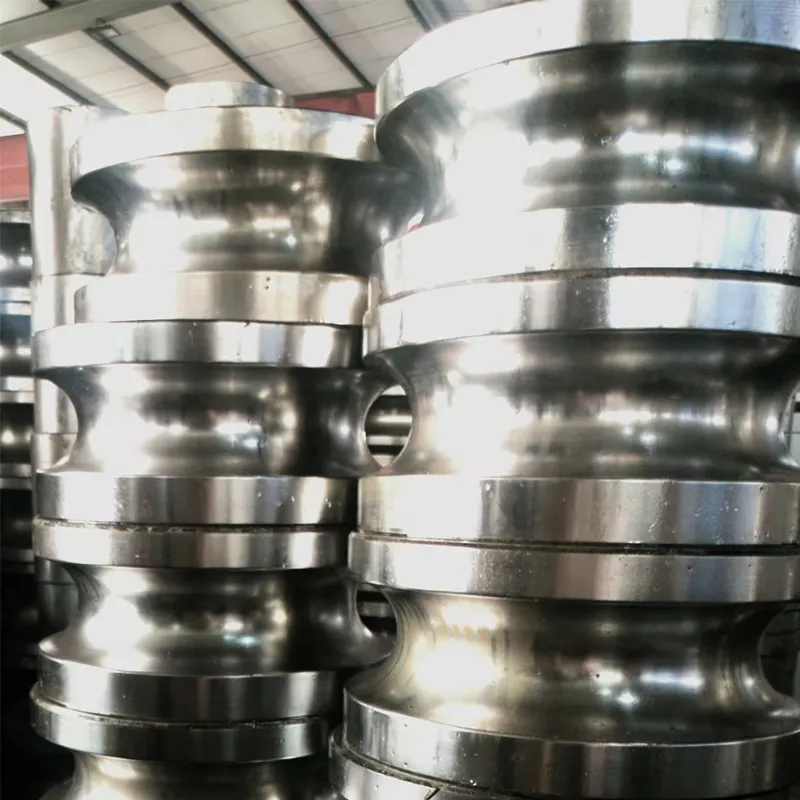
Precision roll forming dies are essential for producing complex profiles with accuracy.
Technical Specifications and Parameters
Understanding the technical parameters of roll forming machinery and tooling is crucial for optimizing production and ensuring product quality. Our roll molds and associated systems are engineered to meet rigorous performance benchmarks.
Typical Roll Forming Machine Specifications:
| Parameter | Description / Value Range |
|---|---|
| Material Thickness | 0.3 mm to 6.0 mm (standard) |
| Coil Width | 50 mm to 1500 mm |
| Line Speed | 10 m/min to 60 m/min (up to 120 m/min for specialized applications) |
| Number of Roll Stands | 8 to 40 (depending on profile complexity) |
| Material Yield Strength | Up to 700 MPa (for High-Strength Steels) |
| Profile Dimensional Tolerance | ±0.2 mm to ±0.5 mm (standard, can be tighter for precision parts) |
| Max Profile Height | Up to 200 mm |
Roll Mold Material Specifications:
| Parameter | Description / Value |
|---|---|
| Typical Materials | SKD11 (JIS), D2 (AISI), Cr12MoV, 42CrMo |
| Hardness (HRC) | 58-62 HRC (after heat treatment) |
| Surface Roughness (Ra) | Typically < 0.8 μm (critical areas < 0.4 μm) |
| Precision Class | IT5 to IT7 (International Tolerance Grade) |
| Manufactured Using | CNC Machining, EDM, Heat Treatment, Grinding |
These specifications underscore the need for advanced engineering and manufacturing precision in all aspects of roll forming technology.
Diverse Application Scenarios
The adaptability of roll forming allows it to serve a vast array of industries, providing solutions for complex and high-volume component manufacturing. Its ability to process various materials and produce intricate cross-sections makes it a preferred method for critical applications.
- Automotive Industry: From structural pillars (A, B, C-pillars) and bumper beams to seat rails and door frames, 3D roll forming is crucial for creating lightweight yet robust components that enhance fuel efficiency and passenger safety. The precise nature of the process allows for tailored blank solutions, minimizing waste and optimizing material usage, particularly for high-strength steel grades.
- Construction and Infrastructure: Roll-formed products are ubiquitous in building construction, including purlins, girts, roofing and siding panels, window and door frames, and guardrails. Their high strength-to-weight ratio and ability to be produced in long lengths make them ideal for large-scale projects, facilitating rapid assembly and reducing labor costs.
- Solar Energy Sector: The increasing global adoption of solar power has driven demand for durable and cost-effective mounting structures. Roll-formed profiles are extensively used for solar panel frames, racking systems, and support components, offering excellent corrosion resistance for outdoor installations and the required rigidity to withstand environmental loads.
- HVAC and Appliance Manufacturing: Ducts, freezer shelves, oven elements, and various structural components within heating, ventilation, air conditioning, and domestic appliances are frequently produced via roll forming. The process's precision ensures airtight seals and consistent fitment, vital for energy efficiency.
- Storage and Material Handling: Pallet racking systems, shelving units, conveyor system components, and guide rails benefit from the consistent profiles and high load-bearing capacity achievable with roll forming, ensuring safety and operational longevity in warehouses and industrial facilities.
- Tubing and Pipe Manufacturing: The production of various types of roll forming tube, including structural tubes, electrical conduit, and exhaust pipes, is a significant application. High-frequency induction welding (HFIW) is often integrated into the roll forming line to create continuous, strong, and defect-free seams.
These diverse applications underscore the critical role of custom-engineered roll molds and efficient roll forming machinery in modern industrial production.
Technical Advantages of Roll Forming
Compared to other metal forming techniques like press braking or extrusion, roll forming offers a distinct set of technical and economic advantages, particularly for high-volume production of intricate profiles.
- High Production Speed & Efficiency: Roll forming is a continuous process, allowing for very high production rates, often reaching speeds of 60 meters per minute or more. This dramatically reduces per-unit costs for large production runs.
- Exceptional Dimensional Accuracy & Repeatability: The incremental nature of the forming process, guided by precision roll forming dies, ensures consistent dimensions and tight tolerances across long lengths and over millions of parts. This is critical for assemblies where fit and function are paramount.
- Material Optimization & Reduced Waste: The process allows for optimal material utilization, with minimal scrap, especially when coupled with tailored blanking or in-line punching. Cold roll forming preserves material thickness and often enhances mechanical properties through work hardening, increasing yield and tensile strength.
- Versatility in Profile Design: Roll forming can produce a wide range of open or closed profiles, including complex, multi-bend cross-sections that would be difficult or impossible with other methods. Innovations like 3D roll forming further expand this capability to vary the profile along the length of the part.
- Variety of Materials: It can process a broad spectrum of metals, including various grades of steel (carbon, stainless, galvanized, high-strength), aluminum, copper, brass, and even titanium, catering to diverse application requirements.
- Integrated Secondary Operations: The ability to perform operations like punching, notching, welding, and cutting in-line minimizes secondary handling, reduces lead times, and improves overall manufacturing efficiency.
- Superior Surface Finish: As it's a cold forming process, it typically maintains or improves the surface finish of the base material, often eliminating the need for further finishing operations, especially for aesthetic components.
Vendor Comparison: Selecting the Right Roll Forming Partner
Choosing the right vendor for roll forming equipment and services is a strategic decision that impacts product quality, cost-efficiency, and project timelines. Key differentiation points among vendors typically revolve around technical expertise, customization capabilities, and after-sales support.
Key Comparison Criteria:
| Feature/Capability | Our Offering (XHEquipment) | Typical Competitor A | Typical Competitor B |
|---|---|---|---|
| Years in Service / Experience | 20+ years, specialized in complex dies | 10-15 years, general purpose | 5-10 years, emerging market focus |
| Design & Engineering Expertise | Advanced FEA & CAD/CAM, 3D roll forming simulation | Standard CAD, limited simulation | Basic CAD |
| Die Material Quality | Premium Tool Steels (SKD11, D2), specialized alloys | Standard Tool Steels (Cr12) | Economical steels |
| Manufacturing Precision | 5-axis CNC, CMM inspection, IT5 tolerance | 3-axis CNC, manual inspection, IT7 tolerance | Basic CNC, visual inspection |
| Customization & R&D | Full bespoke solutions, strong R&D, patent portfolio | Limited customization, focus on standard profiles | Minimal customization |
| Service Life (Dies) | 1M+ meters or 5-10+ years (with proper care) | 0.5M-1M meters or 3-5 years | <0.5M meters or <3 years |
| Certifications | ISO 9001, CE, specific industry approvals | Basic ISO 9001 | None stated/limited |
Our commitment at XHEquipment is to provide superior roll forming solutions by leveraging our deep expertise, advanced technology, and unwavering focus on quality, ensuring long-term value for our partners.
Customized Solutions and Bespoke Engineering
In the complex world of B2B manufacturing, off-the-shelf solutions rarely suffice for unique challenges. Our expertise lies in providing highly customized roll forming solutions, tailored to the specific needs and operational environments of our clients. This includes not only the design and manufacturing of specialized roll forming dies but also entire integrated production lines.
Our process for customized solutions involves a collaborative approach:
- Detailed Requirement Analysis: We engage closely with clients to understand their product specifications, material preferences, production volume, desired tolerances, and budget constraints. This initial phase is critical for defining the project scope and technical parameters.
- Conceptual Design & Simulation: Our engineering team utilizes advanced CAD software and Finite Element Analysis (FEA) to develop conceptual designs for the roll profiles and the forming sequence. We employ specialized roll forming simulation software to predict material flow, potential defects, and optimize the pass schedule before physical tooling is made, saving time and resources. This is particularly vital for intricate 3D roll forming applications.
- Prototype & Testing: For highly complex or novel profiles, we can produce prototypes and conduct comprehensive testing on our in-house test lines. This allows for fine-tuning of the roll forming process and adjustments to the die design, ensuring optimal performance before full-scale deployment.
- Full-Scale Production & Integration: Once the design is validated, we proceed with manufacturing the custom roll molds and integrating them into new or existing roll forming lines. Our project managers ensure seamless integration and commissioning, providing on-site support and training.
Our commitment to innovation and customer-centric design allows us to tackle even the most challenging cold roll forming projects, delivering solutions that provide a tangible competitive advantage.
Application Case Studies
Our extensive experience with roll forming has enabled us to partner with leading companies across various industries, delivering measurable improvements in efficiency, quality, and cost-effectiveness. Here are a few examples:
Case Study 1: High-Strength Automotive Bumper Beams
- Client: A major automotive OEM.
- Challenge: Produce complex, tapered bumper beams from ultra-high-strength steel (UHSS) with varying thickness, requiring 3D roll forming capabilities to achieve optimal crash performance while reducing vehicle weight. Traditional methods struggled with springback and inconsistent material properties.
- Solution: We designed a specialized roll forming line incorporating dynamic roll stands and adaptive control systems. Our custom roll forming die sets were developed using advanced simulation to counteract springback and ensure precise shaping of the UHSS.
- Results: The client achieved a 15% weight reduction per bumper beam, improved crash performance by 8%, and reduced material scrap by 12%. Production speed increased by 25% compared to previous methods, leading to significant cost savings.
Case Study 2: Corrosion-Resistant Profiles for Wastewater Treatment
- Client: A leading municipal infrastructure supplier.
- Challenge: Manufacturing large volumes of specialized channels and support structures from stainless steel for harsh wastewater treatment environments, requiring exceptional corrosion resistance and high structural integrity.
- Solution: We developed a robust cold roll forming line with unique die designs optimized for stainless steel, minimizing material galling and ensuring a pristine surface finish crucial for corrosion resistance. The line integrated in-line punching for precise bolt holes.
- Results: The project delivered a 40% increase in production output, a 30% reduction in post-processing steps, and produced profiles with superior surface quality, significantly extending the service life of components in corrosive environments.
Case Study 3: High-Precision Roll Forming Tube for HVAC Systems
- Client: A global HVAC manufacturer.
- Challenge: Produce a variety of high-precision, thin-walled roll forming tube profiles (e.g., rectangular, oval) for heat exchangers, requiring extremely tight dimensional tolerances and excellent weld integrity.
- Solution: We engineered a specialized multi-pass roll forming line with advanced HFIW (High-Frequency Induction Welding) capabilities and integrated eddy current testing. The custom roll forming die sets were designed to gradually form the delicate profiles without thinning or surface defects.
- Results: The client achieved a weld quality improvement of 99.8% and dimensional consistency within ±0.05 mm, significantly reducing leakage rates in their heat exchangers. Production throughput increased by 35%.
These cases exemplify our capability to deliver advanced roll forming solutions that address complex manufacturing needs and drive tangible business outcomes for our partners.
Frequently Asked Questions (FAQ)
Q1: What types of materials can be processed using roll forming?
A1: Roll forming is highly versatile and can process a wide range of ferrous and non-ferrous metals, including various grades of carbon steel, galvanized steel, stainless steel, high-strength low-alloy (HSLA) steels, aluminum alloys, copper, brass, and even some exotic materials like titanium. The specific material dictates the design of the roll forming dies and machine settings.
Q2: What are the primary benefits of cold roll forming compared to hot rolling or extrusion?
A2: Cold roll forming offers several distinct advantages: enhanced material strength and hardness due to work hardening, superior dimensional accuracy and tighter tolerances, excellent surface finish, and minimal material waste. It is ideal for high-volume production of intricate, thin-walled profiles where consistent quality is critical. Hot rolling is for bulk material reduction, and extrusion is often for solid profiles or limited-length hollows.
Q3: How does XHEquipment ensure the quality and longevity of its roll forming dies?
A3: Our commitment to quality begins with superior material selection (e.g., SKD11, D2 tool steels). We employ advanced manufacturing techniques, including precision 5-axis CNC machining, controlled heat treatment processes to achieve optimal hardness, and rigorous quality control checks such as CMM inspections and trial runs. This ensures our dies meet ISO 9001 standards and deliver extended service life, often exceeding 1 million meters of production.
Q4: Can XHEquipment provide customized roll forming solutions for unique profile designs?
A4: Absolutely. Customization is a core strength. We engage in a detailed collaborative process, starting with in-depth requirement analysis. Our expert engineering team leverages advanced CAD/CAM and FEA simulation, including 3D roll forming capabilities, to design bespoke roll molds and entire production lines that precisely match your unique profile requirements and operational goals.
Lead Time, Warranty, and Customer Support
At XHEquipment, we understand that timely delivery, reliable performance, and responsive support are paramount for our B2B clients.
Lead Time & Fulfillment:
Standard roll forming die sets typically have a lead time of 6-10 weeks from finalized design approval, depending on complexity and current production load. For complete roll forming lines or highly customized solutions, lead times can range from 16-24 weeks. We prioritize clear communication throughout the project lifecycle, providing regular updates on manufacturing progress and estimated delivery. Our efficient logistics network ensures timely and secure global delivery.
Warranty Commitments:
We stand behind the quality of our Roll Mold products with a comprehensive warranty. Our roll forming dies are warranted against manufacturing defects for a period of 12-24 months or a specified production volume (e.g., 500,000 meters), whichever comes first, under normal operating conditions and proper maintenance. Specific warranty terms will be detailed in individual contracts to reflect the bespoke nature of our solutions.
Customer Support & After-Sales Service:
Our commitment extends well beyond delivery. XHEquipment provides robust after-sales support, including:
- Technical Assistance: A dedicated team of engineers is available for technical consultations, troubleshooting, and optimization support.
- On-site Installation & Training: Our experts can provide on-site installation, commissioning, and comprehensive training for your operators and maintenance staff.
- Spare Parts Availability: We ensure the availability of genuine spare parts for our roll forming equipment and dies to minimize downtime.
- Maintenance & Refurbishment: We offer maintenance contracts and refurbishment services for roll forming dies to extend their service life and maintain peak performance.
Our goal is to be a long-term, trusted partner in your manufacturing success.
References
- Manufacturing Process Optimization: The Role of Cold Roll Forming in Advanced Manufacturing. International Journal of Metal Forming.
- Design and Analysis of Roll Forming Dies for High-Strength Steel. Journal of Materials Processing Technology.
- Innovations in 3D Roll Forming for Automotive Lightweighting. SAE International Technical Paper Series.
- Roll Forming Market Global Outlook and Forecasts. Grand View Research, Inc.
- Effect of Roll Forming Parameters on Mechanical Properties of Metal Sheets. Journal of Manufacturing Science and Engineering.
-
Comprehensive Guide to hdpe Making Machines: Global Impact, Features & TrendsNewsDec.02,2025
-
Comprehensive Guide to Garden Pipe Manufacturing Machine – Features, Benefits, and TrendsNewsDec.02,2025
-
Comprehensive Guide to Garden Pipe Making Machines: Features, Trends & BenefitsNewsDec.02,2025
-
Comprehensive Guide to Galvanized Pipe Making Machine – Durability & Innovation in Steel PipesNewsDec.02,2025
-
What Is an Extrusion Pipe Machine? Global Importance, Applications & BenefitsNewsDec.02,2025
-
Comprehensive Guide to ERW Tube Mill Machine: Global Insights and Industry ApplicationsNewsDec.02,2025
