

Roll Forming Experts: Precision Profiles, Fast Lead Times
Field Notes on Roll Molds: What’s Really Working on the Shop Floor
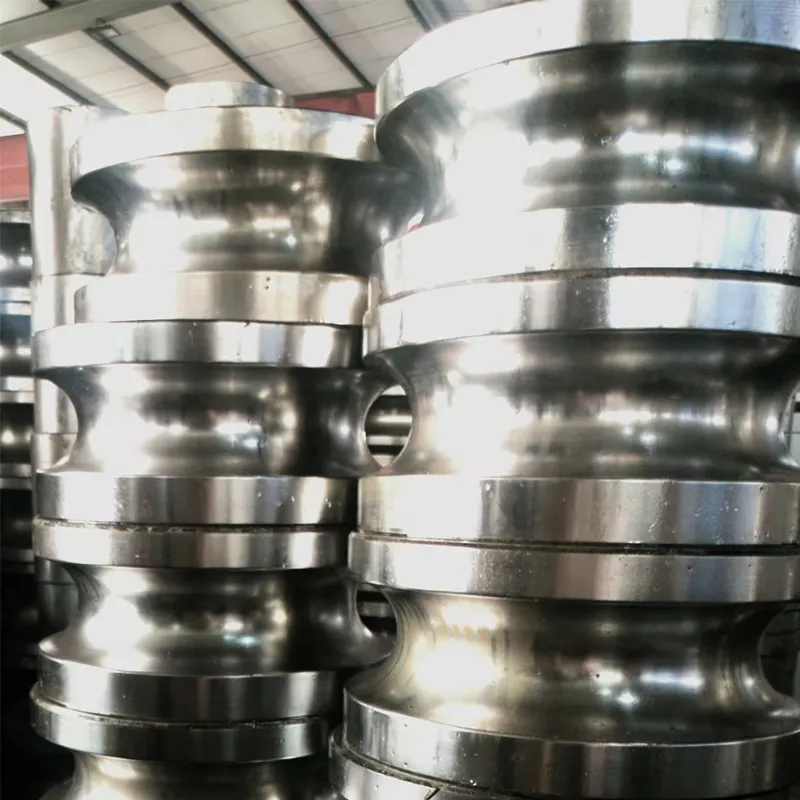
I spent last month auditing a Roll Forming line in Bazhou, and—to be honest—the story isn’t just about shiny rolls. It’s about consistency, uptime, and the quiet math of tooling life. The Roll Mold team from Liuzhuang Village industrial zone, Chaheji Township, Bazhou City, Hebei, has been making custom pipe rolls from φ8 mm up to φ273 mm for stainless, galvanized, and high-frequency welded tube. Sounds typical, but the devil is in the μm.
Industry pulse
EV frames, solar racking, prefab housing—demand is pushing tighter tolerances with faster changeovers. Many customers say they’ll pay for rolls that hold gauge at higher line speeds (≈120 m/min) because scrap is the real profit leak. And, surprisingly, shops are asking for traceable heat lots and CMM reports as standard, not as “premium paperwork.”
How the process holds together
Base materials are typically Cr12MoV/D2 (SKD11) with vacuum heat treatment to HRC 58–62, then precision grinding and optional hard chrome. The method is classic Roll Forming: progressive stands, controlled flower design, and seam management for HF welding. Inspection uses CMM, runout gauges, and Rockwell per ASTM E18. For tube programs I’ve seen: roundness ≤0.25 mm at OD 114 mm is routine, with real-world use varying by coil quality. Service life? Around 0.8–1.2 million meters per set before regrind, depending on coating, gauge, and operator care.
Product specifications (Roll Mold)
| Parameter | Value | Notes |
|---|---|---|
| Supported OD | φ8–φ273 mm | Round, square, rectangular programs |
| Work materials | SS, galvanized, HF-welded pipe | Commonly 201/304/409; DX51D+Z, etc. |
| Roll steel | Cr12MoV/D2 (SKD11) | Vacuum heat treat HRC 58–62 |
| Surface finish | Ra ≈0.2–0.4 μm | Hard chrome optional |
| Runout | ≤0.02 mm (small OD), ≤0.05 mm (large OD) | Real-world coil/line affects results |
| Line speed | Up to ≈120 m/min | With stable weld power and coolant |
| Service life | ≈0.8–1.2 million m | Before regrind; duty-dependent |
| Standards | ASTM A500/A513, EN 10219, GB/T 3091 | ISO 9001 process control |
Where it’s used
- Automotive crash/structural tube and seat frames
- Furniture, racking, and display systems
- Conduit/HVAC and mechanical tubing
- Solar mounting profiles and lightweight building members
Vendor snapshot (what buyers compare)
| Vendor | Customization | Lead time | Typical OD | Certs | Price |
|---|---|---|---|---|---|
| XH Roll Mold (Bazhou) | Deep (flower + pass design) | ≈3–5 weeks | φ8–φ273 mm | ISO 9001 | Mid |
| Typical Trader | Limited (catalog + tweaks) | ≈5–8 weeks | φ19–φ168 mm | Varies | Low–Mid |
| Regional OEM | High (simulation + trials) | ≈6–10 weeks | φ8–φ325 mm | ISO/CE | Mid–High |
Customization and QC—what I actually saw
CAD/CAM pass design, then CNC turning and grinding; each roll tagged with heat lot. CMM reports are provided upon request; runout records kept. Rockwell tests per ASTM E18; geometry per ISO 1101. One line manager told me, “We used to chase weld bulge—these rolls reduced rework by about 30%.” Not lab-perfect, but it tracks with scrap tallies I saw.
Mini case studies
- Automotive crash tube, 1.6 mm 590 MPa: changeover saved ≈25 min with keyed spacers; ovality down from 0.35 to 0.22 mm.
- Solar strut, GI 1.2 mm: chrome-coated forming rolls extended life ≈18% before first polish; line speed +15% without chatter.
If you’re weighing a Roll Forming program, ask for demo passes, CMM data, and a regrind plan. Boring? Maybe. But that’s where uptime hides.
Citations
- ISO 9001:2015 Quality management systems.
- ASTM A500/A513: Cold-formed and mechanical tubing standards.
- EN 10219: Cold formed welded structural hollow sections.
- GB/T 3091 & GB/T 13793: Welded steel pipe specifications (China).
- ASTM E18: Rockwell hardness testing.
- ISO 1101: Geometrical tolerancing.
-
Comprehensive Guide to hdpe Making Machines: Global Impact, Features & TrendsNewsDec.02,2025
-
Comprehensive Guide to Garden Pipe Manufacturing Machine – Features, Benefits, and TrendsNewsDec.02,2025
-
Comprehensive Guide to Garden Pipe Making Machines: Features, Trends & BenefitsNewsDec.02,2025
-
Comprehensive Guide to Galvanized Pipe Making Machine – Durability & Innovation in Steel PipesNewsDec.02,2025
-
What Is an Extrusion Pipe Machine? Global Importance, Applications & BenefitsNewsDec.02,2025
-
Comprehensive Guide to ERW Tube Mill Machine: Global Insights and Industry ApplicationsNewsDec.02,2025
