

Roll Forming: Precision, Custom Profiles, Fast Lead Times
Smarter Tooling for Tube and Profile Lines
If you’ve ever chased down chatter, scalloping, or that one stubborn weld seam, you know the truth: great Roll Forming starts with great tooling. I’ve walked more than a few mills where one upgraded roll set paid for itself in scrap savings inside a quarter—no magic, just better geometry and heat treatment.
Here’s the thing. Demand is shifting—EV brackets, solar racking, thin-wall HVAC tube, high-strength galvanized coil. Tooling has to flex. The Roll Mold solution out of Liuzhuang Village industrial zone, Chaheji Township, Bazhou city, Hebei province, keeps coming up in shop-floor chats. Not flashy, just practical: tight tolerances, consistent hardness, and sensible lead times. To be honest, that’s what most maintenance managers really want.
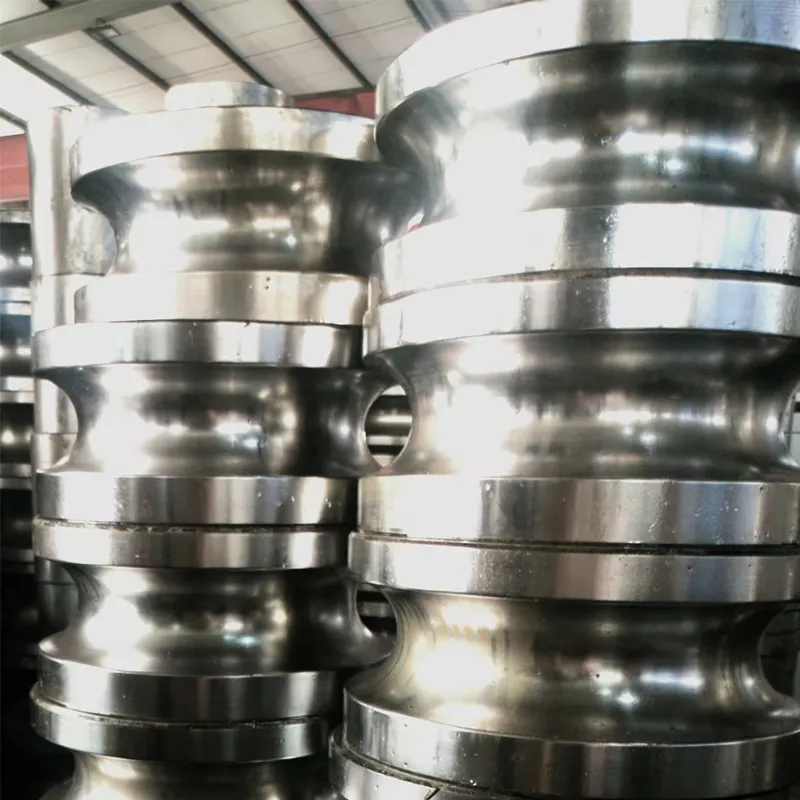
Product snapshot: Roll Mold for tube and pipe
Spec highlights (customizable, real-world use may vary):
| Applicable products | Stainless steel pipe, galvanized pipe, high-frequency solder pipe |
| Outer diameter range | φ8 mm – φ273 mm |
| Typical roll materials | Tool steels like D2 / Cr12MoV / SKD11; optional 9Cr2Mo; surface treatments on request |
| Hardness (after HT) | HRC 58–62 (≈, per ASTM E18) |
| Runout / profile tolerance | ≤ 0.02–0.05 mm typical, depending on OD and pass; GD&T ISO 1101 reference |
| Service life | Around 3–5 years or ≈ 1–3 million meters/pass, with proper lubrication and stock quality |
| Origin | Liuzhuang Village industrial zone, Chaheji Township, Bazhou city, Hebei province |
How the process comes together
- Design: pass progression for Roll Forming (breakdown, fin, sizing, turks-head), with FEA when needed.
- Materials: choose tool steel for target coil (304/316 per ASTM A269, DX51D+Z per ASTM A653).
- Machining: CNC turning/milling, then precision grinding; surface roughness Ra ≤ 0.4–0.8 μm (ISO 4287).
- Heat treatment: controlled quench and temper for toughness and wear balance.
- QA and testing: hardness (ASTM E18), coating thickness if plated (ISO 2178), dimensional checks to ISO 2768.
- Pilot run: witness samples, Cpk study when customers ask—many do now.
Where it’s being used
Automotive seat tracks and crash-management profiles, solar mounting channels, furniture/fixture tubing, HVAC round/oval ducts, and general mechanical tubing. One HVAC customer told me scrap fell by ≈18% after swapping to a tighter fin-pass set; noise dropped too—always a good sign in Roll Forming.
Why shops pick this route
- Stable weld seam geometry for high-frequency welding—less squeeze-out drama.
- Cleaner edges and more consistent ID/OD, which downstream cutting teams appreciate.
- Pragmatic lead times and regrind support; to be honest, support beats brochure polish.
Vendor snapshot (informal comparison)
| Vendor | Min–Max OD | Lead time | Certs | After-sales | Notes |
|---|---|---|---|---|---|
| Roll Mold (Bazhou) | φ8–φ273 mm | ≈ 2–5 weeks | ISO 9001 support docs on request | Regrind + pass optimization | Strong on galvanized and HF weld lines |
| Generic Import A | φ10–φ219 mm | ≈ 4–8 weeks | Varies | Email only | Lower entry price; mixed hardness consistency |
| Boutique B | Custom | ≈ 6–10 weeks | ISO 9001/14001 | On-site tuning | Top-tier finish; premium pricing |
Data above is indicative; real-world use may vary with material grade, lube, and line speed.
Mini case study
A Midwest furniture-tube line running 1.2 mm galvanized (ASTM A653) swapped in a revised breakdown/fin set. After a two-day tune, weld squeeze-out reduced ~22%, OD variation hit ≤0.04 mm at 65 m/min, and regrind wasn’t needed until 1.4 million meters. Operators said setup felt “less fussy,” which, frankly, is the best compliment a Roll Forming toolmaker can get.
Standards, testing, and documentation
- Hardness per ASTM E18; dimensional checks to ISO 2768; GD&T ISO 1101.
- Material conformity reports EN 10204 3.1 when requested.
- Typical coil specs: ASTM A269 (SS tube), ASTM A653 (galvanized).
If you’re chasing less scrap and more uptime, step one is usually better pass design. Step two is tooling that holds it—day in, day out. That’s where this set has been quietly earning repeat orders, at least from what I keep hearing on the floor.
References
- ASTM E18 – Standard Test Methods for Rockwell Hardness of Metallic Materials. https://www.astm.org/e0018
- ISO 2768 – General tolerances. https://www.iso.org/standard/38128.html
- ASTM A653 – Steel Sheet, Zinc-Coated (Galvanized). https://www.astm.org/a0653_a0653m
- ASTM A269 – Seamless and Welded Austenitic Stainless Steel Tubing. https://www.astm.org/a0269
- ISO 1101 – Geometrical tolerancing. https://www.iso.org/standard/67254.html
- EN 10204 – Metallic products: Types of inspection documents. https://standards.iteh.ai/catalog/standards/cen/1e4f9b71-1a1d-4776-b6b2-9d4cc3dd7c21/en-10204-2004
-
Comprehensive Guide to hdpe Making Machines: Global Impact, Features & TrendsNewsDec.02,2025
-
Comprehensive Guide to Garden Pipe Manufacturing Machine – Features, Benefits, and TrendsNewsDec.02,2025
-
Comprehensive Guide to Garden Pipe Making Machines: Features, Trends & BenefitsNewsDec.02,2025
-
Comprehensive Guide to Galvanized Pipe Making Machine – Durability & Innovation in Steel PipesNewsDec.02,2025
-
What Is an Extrusion Pipe Machine? Global Importance, Applications & BenefitsNewsDec.02,2025
-
Comprehensive Guide to ERW Tube Mill Machine: Global Insights and Industry ApplicationsNewsDec.02,2025
