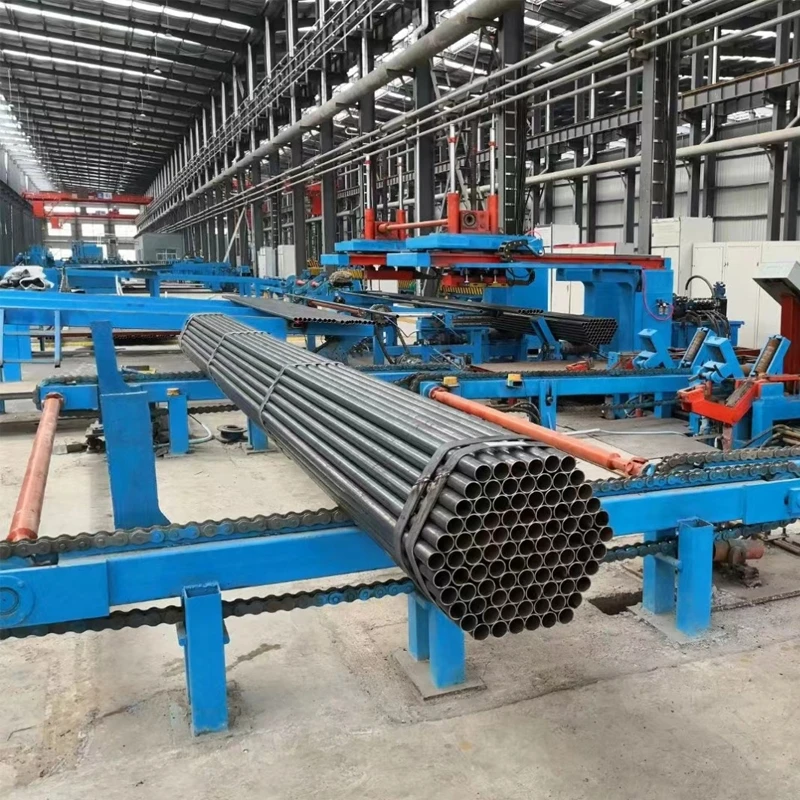
Dual Station Hydraulic Unwinding Machine and Shear Machine Price
Optimizing the feeding stage of a welded pipe production line requires more than just basic machinery; it demands a system that balances stability, safety, and operational speed. The dual station hydraulic expansion and contraction unwinding machine is engineered to address these critical needs by providing a robust mechanism for lifting and securing steel coils. By automating the clamping process, this equipment minimizes the risk of material slippage during high-speed feeding, which is a primary concern for operations managers seeking to reduce downtime and workplace noise. For those evaluating the overall shear machine price and line cost, investing in a high-efficiency uncoiler is essential to ensure the subsequent shearing and welding stages operate at peak productivity without manual bottlenecks.

Engineering the Dual-Station Advantage for Continuous Pipe Production
The core innovation of this unwinding system lies in its dual-station configuration. Traditional single-station uncoilers often create a "stop-and-load" bottleneck, where the entire production line must halt while a new coil is positioned and secured. By implementing two distinct stations, operators can clamp the next set of raw components in advance while the current station is still feeding the line. This semi-automatic mechanical operation effectively eliminates the tense working atmosphere typically found in high-pressure manufacturing environments.
From a technical perspective, the equipment utilizes a hydraulic expansion and contraction mechanism. This allows the machine to adapt to varying coil inner diameters, specifically within the 430-530mm range, ensuring a tight grip on the material. To further enhance stability, a hydraulic advance and retreat blocking device is installed on the working side. This prevents the material roll from loosening during high-speed rotation, which is critical for maintaining the precision of the strip feeding process and reducing the likelihood of material waste.

Technical Specifications and Material Integrity of the Unwinding Shaft
Reliability in heavy-duty machinery is determined by the materials used in high-stress components. The uncoiling shaft, with a diameter of 150mm and an inner hole of 65mm, is constructed from 42CrMo. This specific alloy belongs to the spring steel category, selected for its exceptional strength, hardenability, and toughness. This ensures that the shaft can withstand the immense radial pressure of heavy steel coils without permanent deformation, directly contributing to the long-term durability of the machine.
The mechanical transmission is equally robust. The rotation is driven by a hydraulic motor acting on a slewing support bearing, allowing for a 180-degree rotation. This enables a seamless transition from loading to feeding. The expansion process is handled by a sliding block driving a sliding sleeve, powered by a 140/60 105 long cylinder rod. Such precision in the hydraulic circuit ensures that the expansion force is distributed evenly across the coil, preventing damage to the inner edges of the raw material while maintaining a secure lock.
Operational Impact on Labor Intensity and Production Safety
One of the most significant challenges in metal forming is the physical strain placed on workers during the loading of heavy raw materials. By integrating hydraulic lifting and tightening, this machine transforms a laborious manual process into a controlled mechanical operation. The reduction in labor intensity is not just a matter of comfort; it is a safety imperative. Reducing the manual handling of steel coils significantly lowers the risk of workplace injuries and operational errors.
Moreover, the inclusion of a hydraulic motor and cylinder-driven feeding system allows the material head to be led out with minimal effort. This improves the success rate of the initial product run and reduces the noise pollution common in traditional loading zones. For factories operating under strict ISO9001 quality management standards, the consistency provided by this automated unwinding process is vital for achieving tight tolerances in the subsequent rolling and welding phases.
Technical Parameter Matrix for Hydraulic Unwinding Station
| Component / Feature | Technical Specification | Material / Model | Operational Function |
|---|---|---|---|
| Uncoiling Shaft | Dia 150mm / Inner 65mm | 42CrMo Spring Steel | Load Bearing & Expansion |
| Expansion Range | 430mm - 530mm | Hydraulic Sleeve | Coil Clamping |
| Drive System | Hydraulic Motor | BM3-500 J Shaft | 180° Rotation / Feeding |
| Strip Width Capacity | 60mm - 250mm | Application-Specific | Material Compatibility |
| Hydraulic Station | 7.5kw Motor / Vane Pump | 25 Displacement | System Power Supply |
Procurement Considerations for Integrated Pipe Production Lines
When integrating an unwinding machine into a production line, buyers must look beyond the initial purchase price. The true value lies in the "Total Cost of Ownership," which includes energy efficiency, maintenance intervals, and the impact on throughput. A dual-station system, while requiring a larger footprint than a single-station unit, pays for itself by eliminating idle time. When calculating the shear machine price for a complete line, the efficiency of the feeding section is the primary variable that determines the return on investment (ROI).
It is also critical to verify the compatibility of the hydraulic station. The use of vane pumps and speed-regulating motors allows for fine-tuning of the feeding speed, which is essential when switching between different material gauges. We recommend that procurement managers ensure the equipment is backed by a manufacturer with proven R&D capabilities in automation, as this ensures that the machine can be adapted to future upgrades in the production line.
Future Trends in Automated Metal Feeding Systems
The industry is moving toward fully autonomous material handling. The transition from semi-automatic to fully automatic systems involves the integration of sensors and PLC (Programmable Logic Controller) systems that can detect coil diameter and weight in real-time, automatically adjusting the hydraulic expansion pressure. This reduces the reliance on manual shims for large aperture materials and further enhances the precision of the feeding process.
Furthermore, there is an increasing demand for "smart" factories where the uncoiler communicates directly with the shearing and welding units. This synchronization prevents over-feeding and reduces material waste. For enterprises looking to improve their management level and production capacity, adopting these high-automation components is no longer optional but a requirement to remain competitive in the global steel pipe market.
Frequently Asked Questions Regarding Hydraulic Unwinding Machines
What is the main benefit of a dual-station uncoiler over a single-station one?
The dual-station design allows for "pre-clamping," meaning one coil can be loaded and secured while the other is still being fed into the production line. This eliminates the downtime associated with loading new materials and significantly increases the overall throughput of the pipe production line.
Why is 42CrMo steel used for the uncoiling shaft?
42CrMo is a high-strength alloy spring steel known for its excellent toughness and hardenability. It is used because it can withstand the extreme radial loads of heavy steel coils without bending or wearing down, ensuring the stability and safety of the machine over years of operation.
Can this machine handle coils with inner diameters larger than 530mm?
While the standard expansion range is 430-530mm, larger aperture raw materials can be accommodated by adding professional shims to the expansion mechanism, allowing the machine to be adjusted for specific material requirements.
How does the hydraulic blocking device improve safety?
The hydraulic advance and retreat blocking device prevents the steel coil from loosening or unraveling unexpectedly during high-speed feeding. This ensures that the material remains taut and controlled, reducing the risk of accidents and preventing production noise.
What should I consider when evaluating the price of an unwinding system?
Beyond the base cost, consider the quality of the hydraulic components (such as the pump and motor), the grade of the steel used in the shaft, and the efficiency gains from a dual-station setup. High-quality components reduce maintenance costs and prevent expensive production halts.
What is the typical maintenance requirement for the hydraulic station?
Regular maintenance involves checking hydraulic oil levels, inspecting the vane pump for wear, and ensuring that the seals on the expansion cylinders are intact to prevent pressure loss. Following these steps ensures the long-term durability of the 7.5kw system.
Technical References and Industry Standards
- ISO 9001 Quality Management Systems for Manufacturing
- ASTM International Standards for Alloy Steels
- Industrial Hydraulic System Engineering Guides
- Global Steel Processing Equipment Trends
For enterprises looking to optimize their production efficiency and reduce labor costs, integrating a high-precision hydraulic unwinding system is a strategic investment. Contact our engineering team to discuss the specific requirements of your welded pipe production line.
Industry Insights and Related Technology