When managing high-volume metal fabrication, the precision of the final cut often dictates the efficiency of the entire assembly line. For operators in the metal cutting and forming machine tool industry, the challenge is not just cutting through material, but doing so with minimal thermal distortion and high dimensional accuracy. This is where the integration of a production cold saw becomes a critical strategic asset, ensuring that raw materials are converted into precise components without the stress associated with high-heat cutting methods.
The impact of choosing a cold cutting process over traditional thermal methods is most evident in the quality of the cut surface and the reduction of secondary processing. In the context of Welded Pipe Equipment and high-precision Machining Mold production, the ability to maintain the metallurgical integrity of the edge is paramount. A production cold saw minimizes the heat-affected zone (HAZ), which prevents warping and ensures that the workpiece remains stable for subsequent forging or finishing steps, directly affecting the overall yield and quality of the end product.
Understanding the technical nuances of cold sawing—from blade metallurgy to clamping stability—allows manufacturers to optimize their throughput while reducing waste. By analyzing the relationship between cutting speed, feed rates, and material hardness, enterprises can significantly lower their operational costs. This guide explores the technical requirements and selection criteria for production cold saw systems, providing a framework for enhancing productivity in modern metalworking environments.


Cold sawing is a mechanical cutting process that utilizes a circular saw blade with teeth designed to remove chips through a shearing action rather than melting the material. Unlike abrasive sawing, which generates immense friction and heat, a production cold saw operates at lower speeds and higher torque. This allows the blade to penetrate the metal efficiently, carrying the heat away within the chips themselves, which preserves the physical properties of the workpiece.
The core of this technology lies in the geometry of the saw teeth and the rigidity of the machine frame. A high-rigidity frame prevents vibration, which is essential for maintaining a perpendicular cut and extending the life of the blade. In professional setups, such as those produced by Bazhou Xinghua Machinery Equipment Manufacturing Co., Ltd., the focus is on the synergy between the cutting motor's torque and the hydraulic clamping system to ensure the material does not shift during the stroke.
Achieving micron-level accuracy in a production cold saw environment requires the optimization of several interdependent variables. The first is blade selection; the TPI (Teeth Per Inch) must be matched to the wall thickness of the pipe or the cross-section of the mold material. If the TPI is too low, the teeth may snag; if too high, the gullets may clog with chips, increasing heat and causing blade deflection.
The critical success factor in cold sawing is the balance between feed rate and cutting speed. Excessive feed pressure can lead to blade bowing, while insufficient pressure causes rubbing, which hardens the material surface and dulls the carbide tips prematurely.
Furthermore, the cooling strategy is vital. While termed "cold" sawing, the process still generates localized heat. High-pressure coolant delivery directly to the cutting zone is necessary to lubricate the interface and flush out chips. In automated lines, the synchronization between the feeding section and the saw clamp ensures that the material is positioned consistently, eliminating cumulative errors in batch production.
The primary value of integrating a production cold saw into a fabrication workflow is the drastic reduction in secondary finishing. Because the cut is clean and square, the need for subsequent milling or grinding is often eliminated. This is particularly valuable when preparing workpieces for forging processes, where a precise starting ratio—such as the 3:2 to 2.5 forging ratio used in high-quality roll mold production—is required for optimal material flow.
From a lifecycle perspective, the efficiency of cold sawing reduces the overall energy consumption per cut compared to plasma or laser systems when processing thick-walled sections. The reliability of the mechanical cut also ensures that the edges are not brittle, which is a common failure point in heat-cut components subjected to high-stress industrial use.
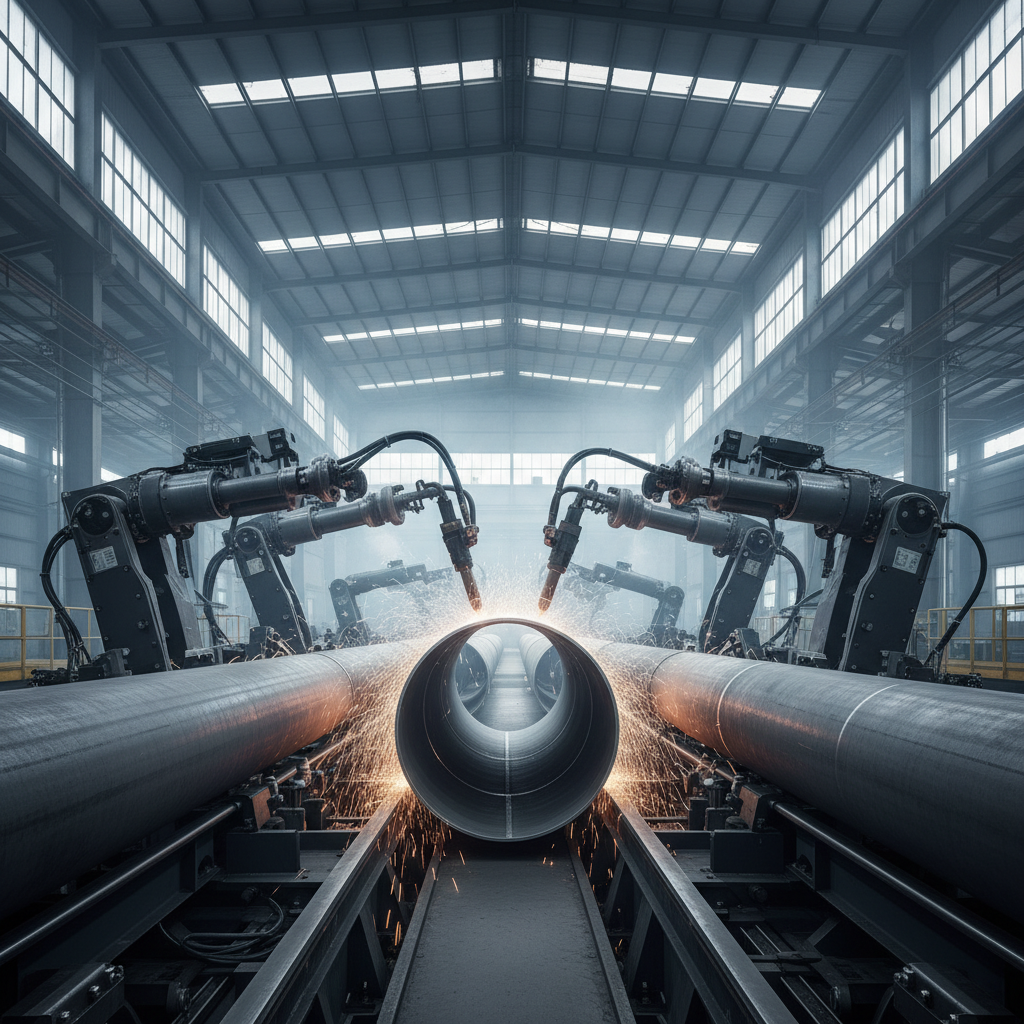
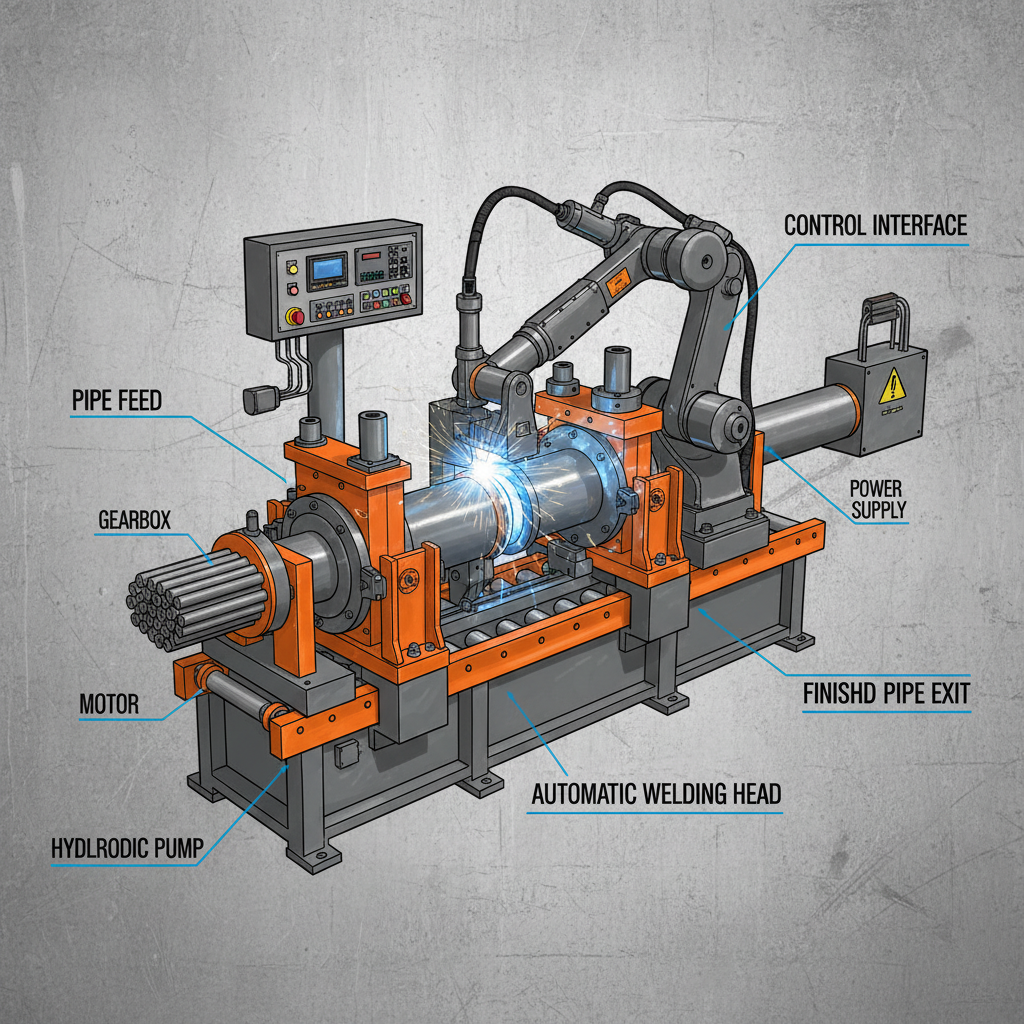
In the manufacture of welded pipes, the cutting stage is often the bottleneck. A production cold saw, specifically when implemented as a flying saw, allows for continuous production without stopping the extrusion or welding line. This seamless integration ensures that pipe lengths are consistent and the ends are perfectly flat, which is a prerequisite for high-quality chamfering and welding in downstream processes.
The use of automated feeding and straightening machines in conjunction with the cold saw ensures that the material is not only cut to length but is also free of internal stresses. For large-scale operations involving partners like Youfa Group or Zhengda Pipe Manufacturing, this level of automation reduces labor intensity and minimizes the risk of human error in measurement, significantly increasing the hourly output of the facility.
The industry is moving toward "intelligent cutting," where sensors monitor blade wear and vibration in real-time. Modern production cold saw systems are increasingly incorporating PLC (Programmable Logic Controller) systems that automatically adjust the feed rate based on the material hardness detected during the initial entry. This prevents blade breakage and optimizes the cutting cycle for different alloy grades.
Another significant trend is the development of multi-axis flying saws that can handle multiple pipe streams simultaneously. By integrating advanced servo motors and high-precision encoders, these machines can track the speed of the moving pipe with absolute precision, ensuring that the cut is perfectly square regardless of the line speed fluctuations.
As enterprises strive for ISO9001 certification and high-tech enterprise status, the focus has shifted from simple equipment procurement to the implementation of full-range solutions. This includes the integration of automatic shearing, welding, and cold cutting units into a single synchronized ecosystem to maximize Resource Efficiency (RE) and minimize material scrap.
One of the most persistent challenges in cold sawing is blade deflection, which occurs when the blade bends slightly under pressure, leading to non-perpendicular cuts. This is typically solved by utilizing higher-grade carbide-tipped blades and ensuring that the clamping pressure is evenly distributed across the workpiece. For thick-walled materials, a slower approach speed is recommended to ensure a clean entry.
Chip evacuation is another critical point of failure. When chips accumulate in the cutting zone, they can be "re-cut," which accelerates blade wear and can cause surface scoring on the workpiece. Implementing high-volume flood cooling or mist lubrication systems helps in clearing the gullets and maintaining a low temperature at the tool-material interface.
Finally, material hardness variations can lead to inconsistent cut times and tool failure. Professional quality inspectors must control each process, ensuring that the raw material's hardness—especially for components destined for heat treatment (such as those reaching 58°-62° HRC)—is documented and the machine settings are calibrated accordingly to prevent premature tool degradation.
| Challenge | Primary Cause | Technical Solution | Expected Result |
|---|---|---|---|
| Blade Deflection | Excessive Feed Rate | Reduce Feed / Increase Rigidity | Square Cut Ends |
| Rapid Tool Wear | Material Hardness | Carbide-Tipped Blades | Extended Tool Life |
| Surface Scoring | Poor Chip Removal | High-Pressure Coolant | Mirror-like Finish |
| Thermal Warping | Insufficient Lubrication | Optimized Cooling Cycle | Dimensional Stability |
| Dimensional Error | Clamping Slip | Hydraulic Auto-Clamping | Consistent Lengths |
| Burr Formation | Dull Tooth Geometry | Precision Blade Sharpening | Clean Edge Profile |
Cold sawing uses a circular blade that removes material through a shearing action at low speeds, keeping the workpiece temperature low. Hot sawing (such as abrasive cutting) relies on friction and high speed to melt through the metal. The primary advantage of the production cold saw is the absence of a heat-affected zone, which prevents material warping and ensures a much cleaner, more accurate cut surface that requires less secondary machining.
The selection depends on the material thickness. The general rule is that at least two to three teeth should be in contact with the material at all times. For thin-walled pipes, a higher TPI is required to prevent the teeth from catching and snapping. For thick sections, a lower TPI with larger gullets is necessary to efficiently evacuate larger chips and prevent the blade from overheating due to chip clogging.
Yes, provided that carbide-tipped blades are used and the machine possesses sufficient torque and rigidity. When cutting hardened steels, it is critical to reduce the cutting speed and optimize the feed rate to avoid thermal shock to the carbide tips. Proper coolant application is also mandatory to prevent the tool from overheating, as hardened materials generate significantly more friction during the shearing process.
Regular maintenance focuses on three areas: blade condition, lubrication systems, and clamping alignment. Blades should be inspected for chipped teeth and sharpened periodically to maintain efficiency. The coolant system must be filtered to remove metal fines that can cause abrasion. Finally, the hydraulic clamping system should be checked for leaks and pressure consistency to ensure the workpiece is held securely during every cut.
Cold sawing improves ROI by reducing the total cost per part. While the initial investment in a high-precision saw may be higher than abrasive alternatives, the savings come from the elimination of deburring and facing operations, lower scrap rates due to precision cutting, and reduced energy consumption. Furthermore, the increased speed of automated flying saws allows for higher line throughput, maximizing the utilization of the entire welded pipe unit.
Yes, automation is standard in modern industrial setups. Feeding sections, straightening machines, and automatic shearing units can be integrated via PLC to create a fully automated line. This removes the need for manual measurement and loading, significantly reducing labor intensity and increasing the repeatability of the cut lengths, which is essential for maintaining tight tolerances in large-scale production runs.
The transition to high-precision cold sawing is more than a tooling upgrade; it is a commitment to metallurgical quality and operational efficiency. By eliminating the thermal stresses associated with traditional cutting, manufacturers can ensure that every component—from complex machining molds to industrial welded pipes—meets the most stringent dimensional tolerances. The synergy of high-torque machinery, carbide tooling, and automated synchronization allows enterprises to scale their production without compromising the integrity of the material.
For organizations looking to optimize their metal cutting workflows and reduce secondary processing costs, investing in integrated automation is the most viable path forward. Whether upgrading a single workstation or designing a full production line, focusing on rigidity, cooling, and precision clamping is key. To explore tailored solutions for your specific fabrication needs, you are invited to visit www.xhequipment.com for professional guidance and equipment specifications.