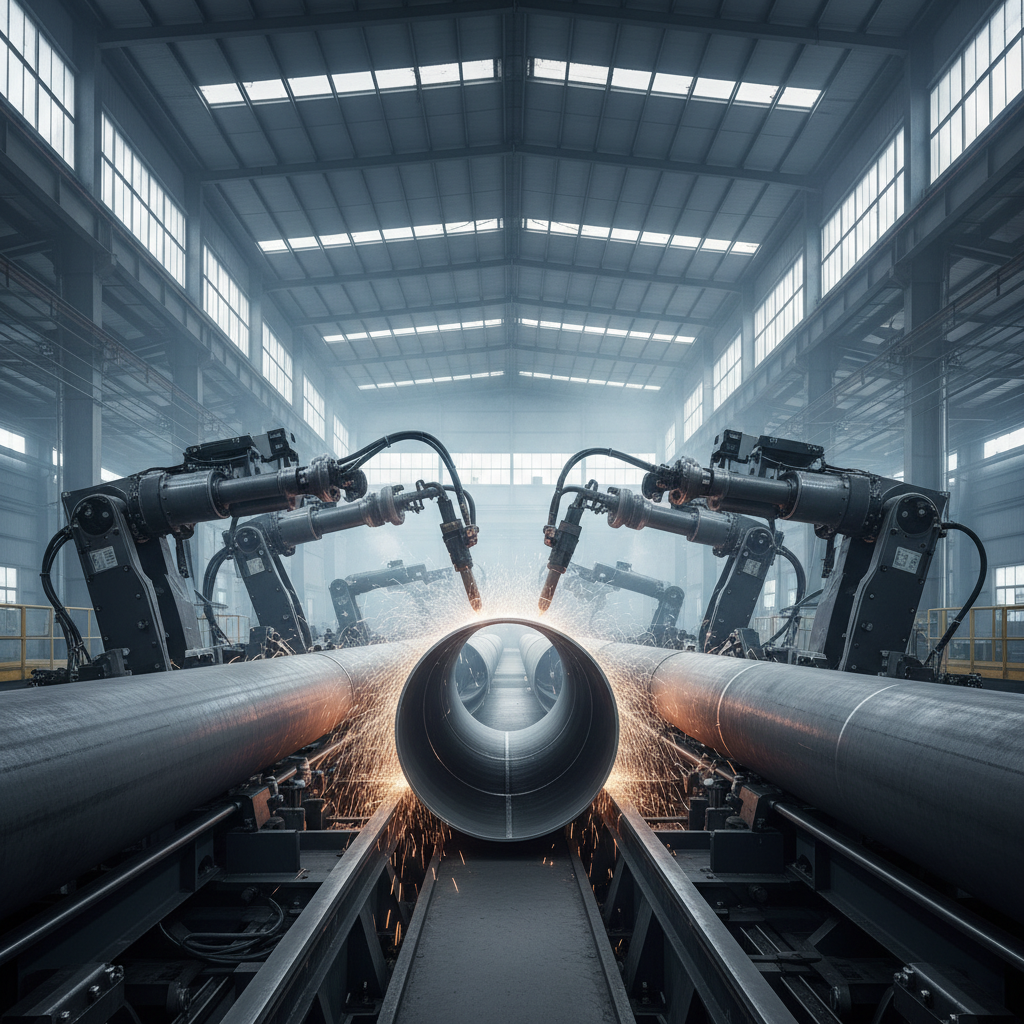
The global demand for robust and reliable infrastructure is constantly increasing, driving innovation in welding technologies. At the heart of many critical systems – from pipelines transporting essential resources to structural frameworks supporting modern construction – lies the round pipe welding machine. This technology isn’t simply about joining metal; it’s about ensuring safety, efficiency, and longevity in projects that underpin modern society. Understanding the intricacies of round pipe welding machines is crucial for engineers, technicians, and anyone involved in infrastructure development and maintenance.
The increasing complexity of industrial projects, combined with stricter safety regulations, demands welding solutions that are not only strong but also precise and repeatable. The round pipe welding machine addresses these needs by providing automated and semi-automated solutions for consistently high-quality welds. The application spans a multitude of sectors, including oil and gas, construction, automotive, and even aerospace. Investing in proficient round pipe welding capabilities translates directly into cost savings, reduced downtime, and enhanced product reliability.
The importance of the round pipe welding machine extends beyond economic considerations. In disaster relief scenarios, quickly establishing functional pipelines for water and sanitation is paramount. In remote areas lacking skilled labor, automated welding processes can enable local infrastructure development. Essentially, this technology empowers progress and resilience across the globe, making it a cornerstone of modern engineering.
Introduction to Round Pipe Welding Machine
A round pipe welding machine represents a significant advancement in joining technology, specifically designed for cylindrical workpieces. These machines automate and streamline the welding process, ensuring consistent quality and efficiency. They are crucial across diverse sectors, including the oil and gas industry, where pipelines require robust and leak-proof welds, and the construction sector, where structural integrity is paramount.
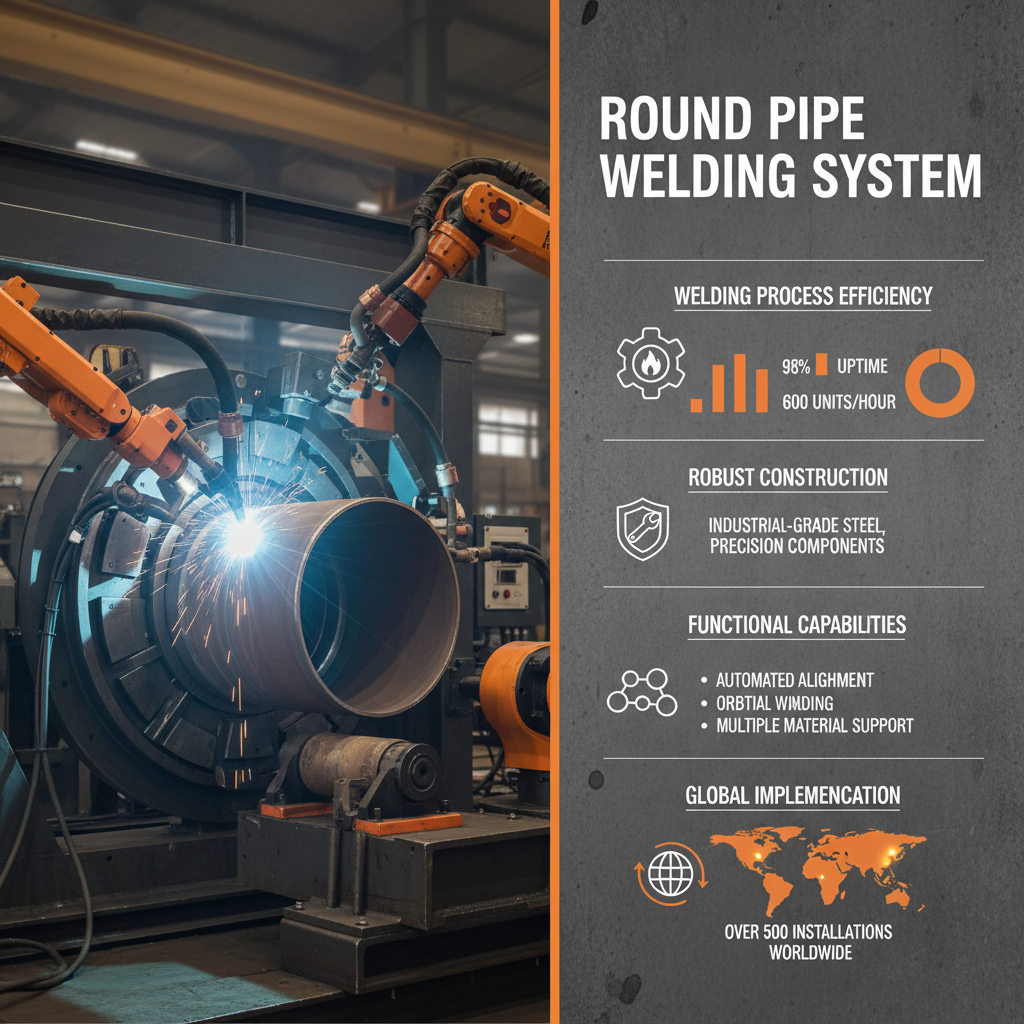
The modern round pipe welding machine isn’t a single device but rather a category encompassing a range of technologies. These range from fully automated systems utilizing robotic arms to semi-automatic machines requiring skilled operator input. Selecting the correct machine depends heavily on factors such as pipe diameter, material type, weld requirements, and production volume.
Defining Round Pipe Welding Machine Technology
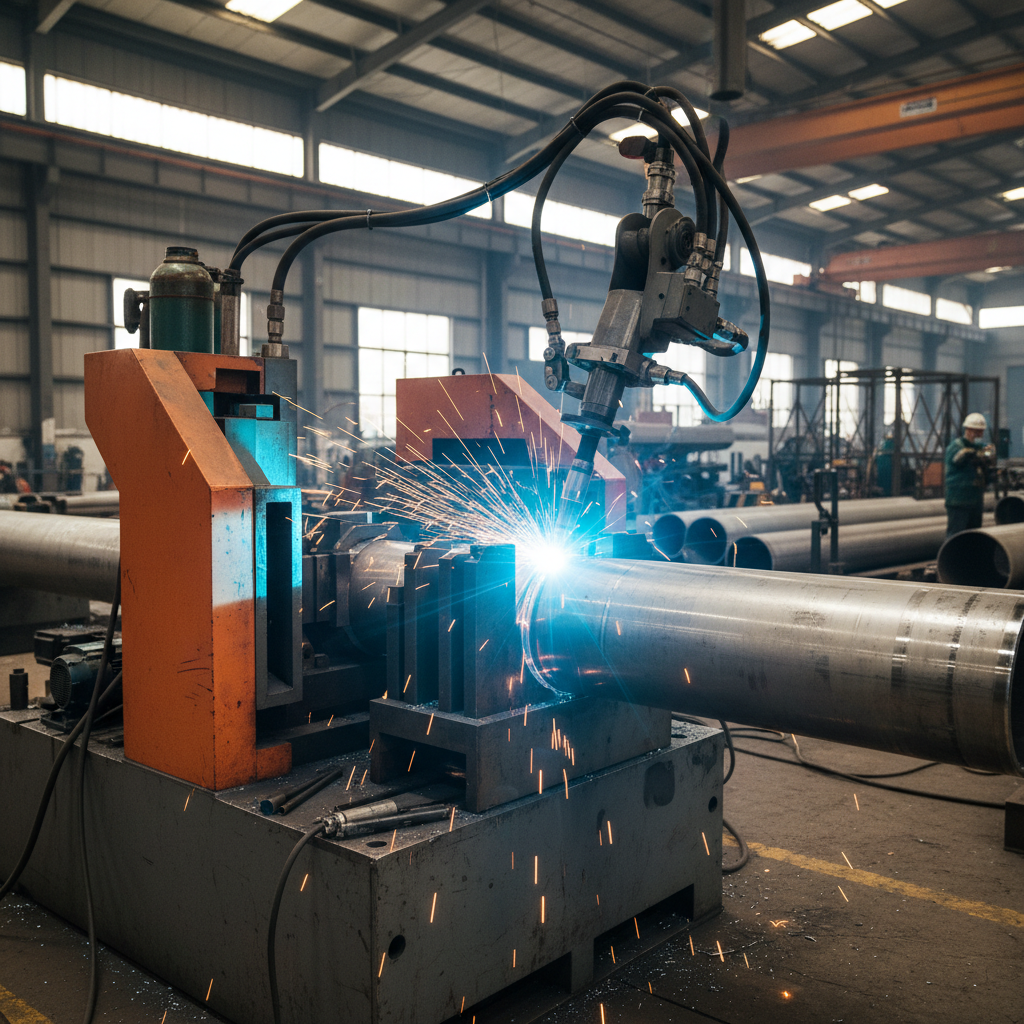
At its core, a round pipe welding machine is designed to facilitate the fusion of metallic materials forming a continuous, strong seam along the circumference of a pipe. Unlike manual welding, these machines employ controlled motion, precise heat input, and often shielding gases to produce welds with superior consistency and minimal defects. The key benefit lies in increased productivity and repeatability, particularly for large-scale projects.
The technology is fundamentally linked to the ongoing need for efficient and reliable infrastructure. Whether it’s transporting vital resources like oil and gas, delivering clean water, or constructing durable buildings, the integrity of welded joints is non-negotiable. Modern advancements in materials science and automation have significantly enhanced the capabilities of round pipe welding machines, allowing them to handle increasingly complex alloys and demanding applications.
The process leverages principles of metallurgy and heat transfer, meticulously controlling variables like welding current, voltage, travel speed, and shielding gas composition. These variables directly impact the weld’s strength, ductility, and resistance to corrosion, making precise control a hallmark of automated round pipe welding.
Core Components and Operational Factors
Several key components contribute to the functionality of a round pipe welding machine. These include the power source, welding head, pipe rotator, control system, and often, a seam tracking system. The power source provides the electrical energy needed to create the arc, while the welding head directs the arc onto the workpiece. The pipe rotator ensures a continuous and uniform weld along the circumference, and the control system manages the entire process.
Operational factors significantly impact weld quality. These include material preparation (cleaning and beveling), weld parameter selection (voltage, current, travel speed, gas flow rate), and proper alignment of the pipe. Insufficient preparation, incorrect parameter settings, or misalignment can lead to defects such as porosity, cracking, or incomplete fusion. Proper training and adherence to welding procedures are essential for achieving optimal results with a round pipe welding machine.
Furthermore, the choice of welding process – such as Gas Metal Arc Welding (GMAW), Gas Tungsten Arc Welding (GTAW), or Submerged Arc Welding (SAW) – also plays a crucial role. Each process has its own strengths and weaknesses, making it suitable for specific applications and materials. The selection of the appropriate process depends on factors like material thickness, weld position, and desired weld characteristics.
Global Applications of Round Pipe Welding Machines
Round pipe welding machines find extensive application in the oil and gas industry, particularly in the construction and maintenance of pipelines for transporting crude oil, natural gas, and refined products. These pipelines often span vast distances and require welds that can withstand extreme pressures and temperatures. They are also vital in the petrochemical industry, where they’re used in the fabrication of process piping.
The construction industry utilizes these machines for structural steel fabrication, creating robust frameworks for buildings, bridges, and other infrastructure projects. The automotive industry leverages them for exhaust systems and other tubular components. Furthermore, the food and beverage industry utilizes stainless steel pipe welding for hygienic processing lines. In post-disaster relief operations, portable round pipe welding machines can be deployed to quickly repair damaged water pipelines.
Globally, regions with extensive energy infrastructure, such as North America, the Middle East, and parts of Asia, represent significant markets for these machines. In remote industrial zones, automated welding solutions provide a cost-effective alternative to relying on a limited pool of skilled manual welders. The demand continues to grow in emerging economies undergoing rapid infrastructure development.
Round Pipe Welding Machine Process Comparison
Advantages and Long-Term Value Proposition
The advantages of utilizing a round pipe welding machine are multifaceted. Tangibly, it offers significant cost savings through increased production speed and reduced material waste. The consistency of automated welds minimizes the need for rework, further enhancing efficiency. Moreover, these machines improve worker safety by reducing exposure to hazardous welding fumes and arc radiation.
From a long-term perspective, the investment in a quality round pipe welding machine delivers a substantial return. The enhanced reliability of welded structures translates into reduced maintenance costs and extended service life. Embracing this technology fosters innovation within a company, demonstrating a commitment to quality and efficiency. It’s a strategic asset that builds trust with clients and positions the company for long-term success.
Future Trends in Round Pipe Welding
The future of round pipe welding is closely intertwined with advancements in automation, digitalization, and sustainable practices. Expect to see increased integration of artificial intelligence (AI) and machine learning (ML) for real-time weld monitoring, defect detection, and process optimization. Digital twin technology will enable virtual simulation of welding processes, allowing for proactive identification and mitigation of potential issues.
Furthermore, the development of new, high-strength, and lightweight materials will necessitate specialized welding techniques and equipment. Green welding technologies, such as laser beam welding and electron beam welding, will gain prominence due to their energy efficiency and reduced environmental impact. These innovations will pave the way for more sustainable and resilient infrastructure.
Challenges and Innovative Solutions
Despite the advancements, challenges remain in round pipe welding. Maintaining weld quality in challenging environments, such as offshore platforms or confined spaces, can be difficult. Dealing with variations in material thickness or surface condition also presents complexities. Ensuring the availability of skilled technicians capable of operating and maintaining these sophisticated machines is another critical concern.
Innovative solutions are emerging to address these challenges. Robotic welding systems equipped with advanced sensors and AI-powered control algorithms are capable of adapting to varying conditions and producing high-quality welds in complex geometries. Remote monitoring and diagnostics enable proactive maintenance and minimize downtime. Virtual reality (VR) and augmented reality (AR) training programs are proving effective in developing the next generation of skilled welding professionals.
The development of self-healing welds, utilizing nanomaterials embedded within the weld metal, represents a potentially groundbreaking solution. These materials can autonomously repair minor defects, extending the lifespan of welded structures and reducing maintenance requirements.
Round Pipe Welding Machine Performance Analysis
| Welding Process Type |
Material Compatibility |
Weld Quality Score (1-10) |
Operational Complexity |
| GMAW (Gas Metal Arc Welding) |
Carbon Steel, Stainless Steel |
8 |
Medium |
| GTAW (Gas Tungsten Arc Welding) |
Aluminum, Stainless Steel, Exotic Alloys |
9 |
High |
| SAW (Submerged Arc Welding) |
Carbon Steel, Low Alloy Steel |
7 |
Low |
| FCAW (Flux Cored Arc Welding) |
Carbon Steel, High Strength Steel |
8 |
Medium |
| SMAW (Shielded Metal Arc Welding) |
All Materials |
6 |
High |
| Laser Beam Welding |
Stainless Steel, Aluminum, Titanium |
10 |
Very High |
FAQS
Round pipe welding machines offer significant advantages over manual welding, including increased welding speed, improved weld quality and consistency, reduced material waste, and enhanced worker safety. Automation minimizes human error and ensures repeatable results, leading to lower overall costs and higher productivity. This is especially critical for large-scale projects requiring a high volume of welds.
A wide range of materials can be welded using a round pipe welding machine, depending on the chosen welding process. Common materials include carbon steel, stainless steel, aluminum, alloy steel, and various other metals. The selection of the appropriate welding process – such as GMAW, GTAW, or SAW – is crucial for achieving optimal results with specific materials and ensuring weld integrity.
The lifespan of a round pipe welding machine varies depending on factors such as the quality of the machine, the frequency of use, and the level of maintenance. With proper care and regular maintenance, a high-quality machine can easily last 10-15 years or even longer. Investing in a reputable brand and adhering to recommended maintenance schedules is crucial for maximizing the machine’s longevity.
Regular maintenance is essential for ensuring the reliable performance and longevity of a round pipe welding machine. Key maintenance tasks include cleaning the welding head, inspecting and replacing worn parts (such as nozzles and contact tips), checking and maintaining the pipe rotator, and ensuring proper lubrication. Following the manufacturer’s recommendations for maintenance schedules is critical.
Safety is paramount when operating a round pipe welding machine. Essential precautions include wearing appropriate personal protective equipment (PPE), such as welding helmets, gloves, and protective clothing. Proper ventilation is crucial to avoid inhaling welding fumes. Ensuring the work area is free of flammable materials and implementing lockout/tagout procedures during maintenance are also vital safety measures.
Selecting the right round pipe welding machine requires careful consideration of several factors, including the pipe diameter, material type, weld requirements, production volume, and budget. Consider the type of welding process best suited for the material and application. Consulting with a welding equipment specialist can help you assess your needs and choose the most appropriate machine for your specific requirements.
Conclusion
In conclusion, the round pipe welding machine stands as a pivotal technology driving efficiency, reliability, and safety across a broad spectrum of industries. From the energy sector to construction and beyond, these machines are indispensable for creating durable and robust infrastructure that underpins modern society. Understanding the core components, operational factors, and emerging trends associated with this technology is vital for professionals seeking to optimize their welding processes and achieve superior results.
Looking ahead, continued innovation in automation, digitalization, and sustainable welding practices will further enhance the capabilities and value proposition of round pipe welding machines. Investing in these technologies isn’t merely about acquiring equipment; it’s about embracing a future of improved quality, reduced costs, and increased sustainability. To explore how a round pipe welding machine can benefit your operations, visit our website at www.xhequipment.com.