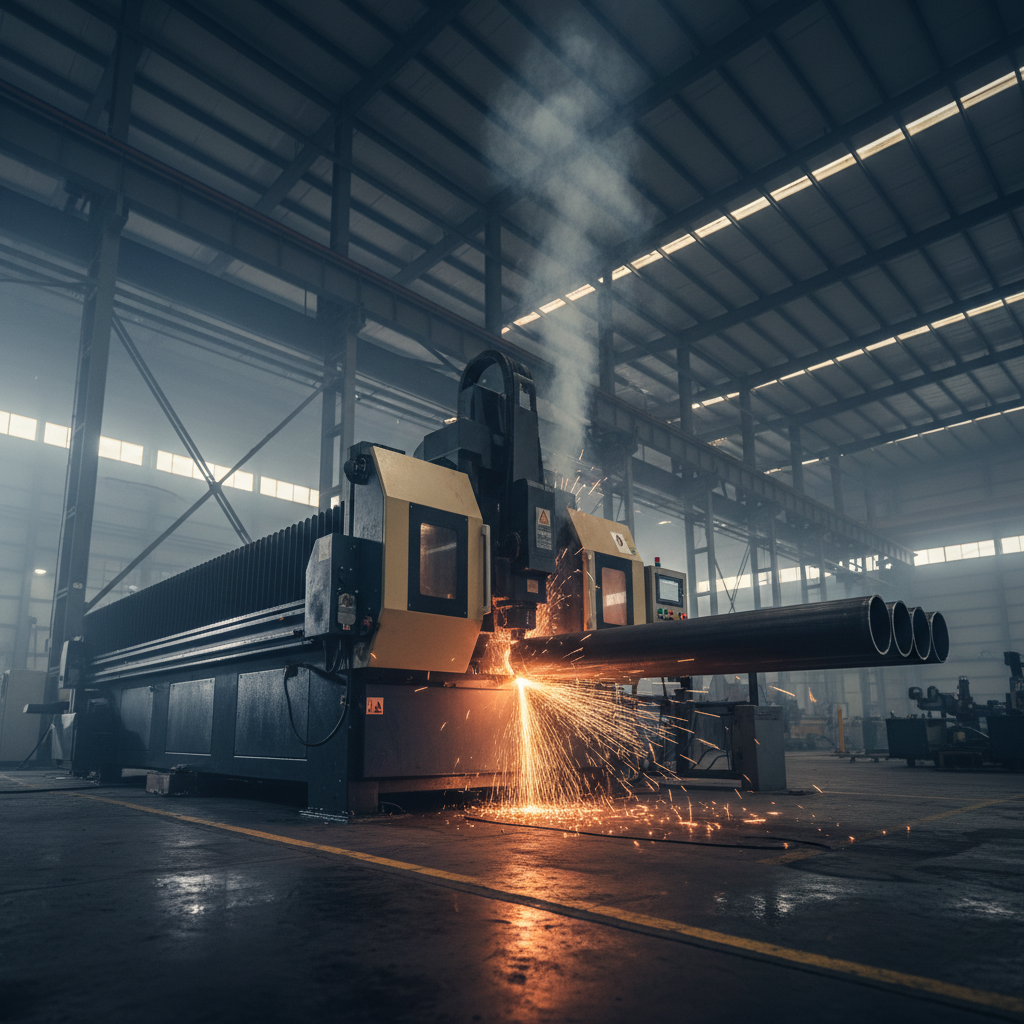
Corrugated Stainless Steel Tubing (CSST) has transformed the way gas infrastructure is deployed in both residential and industrial settings. Choosing the right csst gas line manufacturers is critical, as these systems must balance absolute safety with installation efficiency, utilizing materials that can withstand significant pressure and environmental stress.
Many procurement officers and engineers struggle with the trade-off between initial material costs and long-term durability. In the metal forming and machinery sector, the quality of the rolling and forging process directly impacts the tubing's resistance to fatigue and corrosion, making the manufacturer's technical capability a primary deciding factor.
This article provides a technical analysis of CSST production, evaluation criteria for selecting manufacturers, and a detailed look at how high-precision machining molds influence the final product quality, helping you make an informed decision for your next infrastructure project.

1Understanding CSST Manufacturing Standards

CSST manufacturing is a precise process involving the corrugation of stainless steel to provide flexibility without sacrificing structural integrity. Reputable csst gas line manufacturers adhere to strict international standards to ensure that the wall thickness remains consistent throughout the corrugation process, preventing weak points that could lead to leaks under high pressure.
The manufacturing sequence begins with high-quality raw material selection, followed by a series of rolling and forming stages. These stages are designed to create a precise geometry that allows the tube to bend easily around obstacles while maintaining a predictable flow rate for the gas.
Quality control involves hydrostatic testing and burst pressure verification. A failure in the manufacturing process, such as improper annealing or inconsistent corrugation depth, can compromise the entire system's safety, making the choice of a specialized manufacturer essential.
2Technical Core: The Role of Machining Molds
The precision of a CSST line is fundamentally determined by the machinery and molds used in its production. High-end manufacturers utilize a rigorous roll mold process involving forging and heat treatment. This includes heating raw materials to between 850°C and 1000°C, followed by repeated forging to improve the internal grain structure and wear resistance of the equipment.
After forging, the molds undergo rough processing and precise lathe cutting to align with technical drawings. The finishing process, which includes planar and inner hole finishing, ensures that the rolls producing the CSST are perfectly synchronized, eliminating surface irregularities in the tubing.
This level of detail in mold manufacturing directly translates to the tubing's reliability. When the molds are produced with high precision, the resulting CSST has a more uniform wall thickness and a more consistent corrugation pitch, which significantly reduces the risk of stress-induced cracking over time.
3Application Scenarios and Deployment Challenges
CSST is widely utilized in retrofitting older buildings where rigid piping would require extensive wall demolition. Because of its flexibility, it can be routed through existing voids, significantly reducing labor costs and project timelines. However, deployment is not without challenges, particularly regarding grounding and protection against physical damage.
In industrial settings, CSST is often used for connecting equipment that may experience vibration. The flexible nature of the tubing absorbs mechanical stress that would otherwise cause rigid joints to fail. This makes it an ideal choice for machinery connections and modular plant layouts.
The primary limitation occurs in environments with extreme abrasive contact. While stainless steel is corrosion-resistant, external mechanical abrasion can thin the walls. Therefore, the use of protective sleeving or strategic routing is mandatory for long-term operational safety.
4Performance Metrics of High-Grade CSST
When evaluating csst gas line manufacturers, performance is measured by several key KPIs: burst pressure, minimum bend radius, and longitudinal tensile strength. High-grade tubing maintains its integrity even when bent to the limit of its specified radius, ensuring no kinking occurs during installation.
The efficiency gains are most evident in installation speed. Compared to traditional black iron pipe, CSST can reduce installation time by up to 70%, as it requires fewer fittings and no threading processes. This efficiency is a critical factor for large-scale commercial developments.
csst gas line manufacturers Performance Metrics
Furthermore, the corrosion resistance of 304/316 stainless steel ensures a service life that often exceeds that of coated carbon steel. This long-term durability reduces the total cost of ownership by eliminating the need for frequent replacements or expensive anti-corrosion treatments.
5Procurement Guide for Industrial Gas Lines
Procuring CSST requires a focus on the manufacturer's end-to-end capability. A top-tier supplier should have integrated workshops for forging, rolling, assembly, and heat treatment. This integration ensures that the quality of the machining molds is directly aligned with the final tubing specifications.
Decision-makers should also evaluate the manufacturer's experience with large-scale pipe companies. Partners who have supplied to major industry groups typically have more robust quality management systems (such as ISO9001) and are more likely to provide consistent product batches.
Finally, consider the availability of supporting equipment. Manufacturers who can provide the full range of welded pipe units and auxiliary machines, such as straightening and chamfering equipment, offer a more complete solution, reducing the need to source from multiple vendors.
6Innovation Trends in Stainless Steel Tubing
The industry is currently moving toward increased automation in the corrugation process. AI-driven quality inspection systems are being integrated into production lines to detect wall thickness variations in real-time, allowing for immediate adjustments to the rolling molds.
Another significant trend is the development of hybrid coatings. Some manufacturers are adding specialized polymer layers to the exterior of the stainless steel to provide additional protection against chemical corrosion in highly acidic industrial environments.
Sustainability is also becoming a factor, with manufacturers focusing on the recyclability of stainless steel and reducing the energy consumption of the heat treatment process. This shift not only helps the environment but also lowers the long-term cost of production.
7Comparative Analysis: CSST vs. Rigid Piping
Choosing between CSST and rigid piping depends on the specific needs of the project. While rigid piping offers maximum structural strength, CSST provides unparalleled installation flexibility and resistance to seismic movement, making it superior in earthquake-prone regions.
The following table outlines the key differences from a procurement and engineering perspective, helping you determine the best fit for your application.
| Feature | CSST Tubing | Rigid Steel Pipe | Copper Tubing |
|---|---|---|---|
| Install Speed | Very High | Low | Medium |
| Flexibility | Excellent | None | Limited |
| Corrosion Resistance | High (Stainless) | Medium (Coated) | High |
| Labor Cost | Low | High | Medium |
| Seismic Stability | Excellent | Poor | Medium |
| Initial Material Cost | Medium-High | Medium | High |
In summary, while rigid pipes are still preferred for main external supply lines, CSST is the clear winner for internal distribution and equipment connections due to its installation efficiency and durability.
Frequently Asked Questions
Conclusion
Selecting the right csst gas line manufacturers is a balance of technical verification and strategic procurement. By focusing on the manufacturer's capability in mold production, heat treatment, and precision machining, engineers can ensure a gas distribution system that is both safe and efficient. The shift toward CSST represents a significant improvement in installation timelines and long-term durability compared to traditional piping methods.
For organizations looking to upgrade their gas infrastructure or source high-precision tubing solutions, evaluating the full production chain is the best way to mitigate risk. Those interested in reviewing technical specifications or exploring available equipment can find detailed information at www.xhequipment.com.