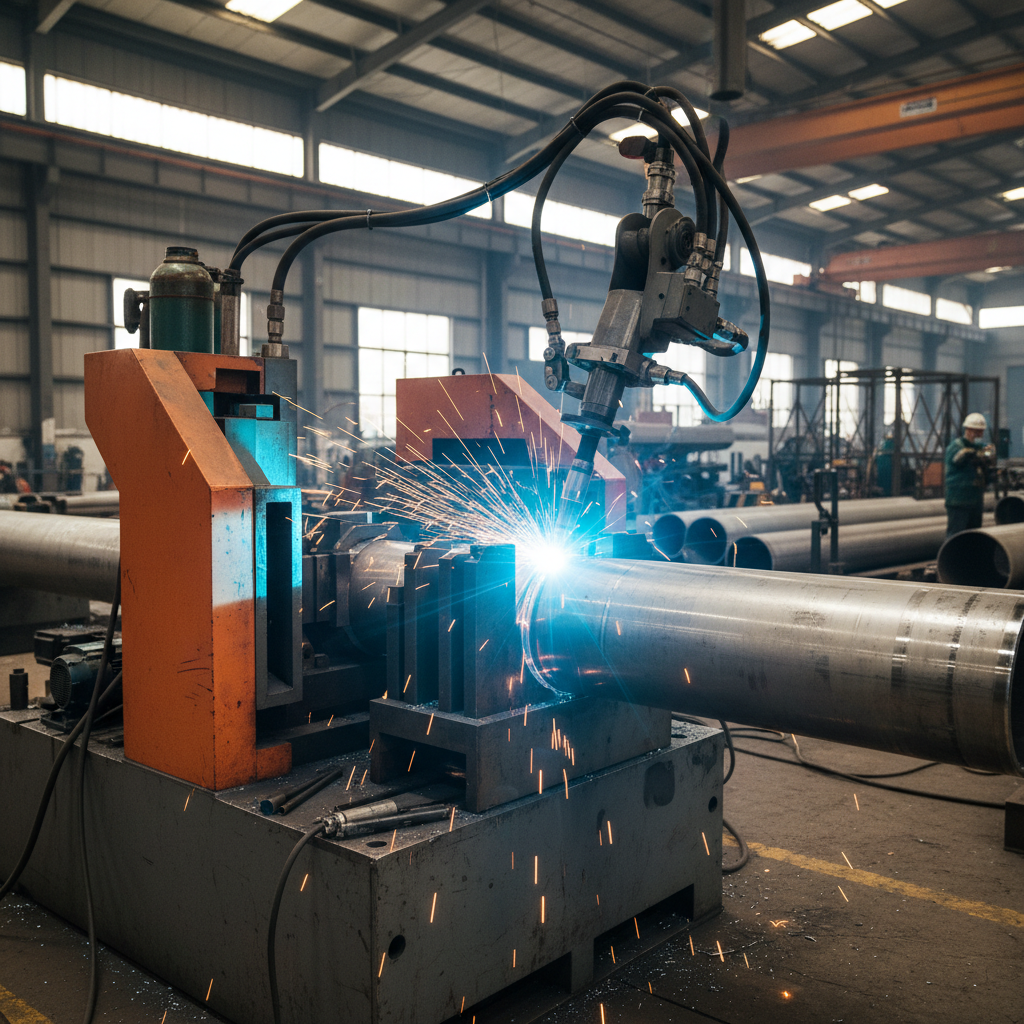
In the precision-driven world of metal fabrication, the preparation of joint edges is not merely a preliminary step but a critical determinant of structural integrity. A welding beveling machine serves as the cornerstone of this process, ensuring that pipe ends and plate edges are angled precisely to allow for full penetration and seamless fusion during the welding cycle. By replacing manual grinding with automated precision, these machines eliminate human error and significantly reduce the time required for joint preparation.
Across global industries—from oil and gas pipelines to aerospace components—the demand for flawless welds has never been higher. The integration of a professional welding beveling machine into the production line addresses the persistent challenge of inconsistency in bevel angles and surface roughness, which are common culprits in weld failure. When the geometry of the bevel is perfect, the welder can focus on the bead quality, resulting in joints that meet the most stringent ISO and ASME standards.
Understanding the nuances of beveling technology allows manufacturers to optimize their material usage and labor costs. Whether utilizing a portable unit for on-site repairs or a stationary CNC system for mass production, the goal remains the same: achieving a clean, burr-free edge that guarantees a high-strength bond. This guide explores the technical evolution, practical applications, and future trajectories of the welding beveling machine in modern machining mold and welded pipe equipment sectors.
Global Relevance of Welding Beveling Machines
The global infrastructure boom, characterized by the construction of massive liquefied natural gas (LNG) terminals and intercontinental pipelines, has placed an unprecedented premium on welding precision. According to international manufacturing standards, improper joint preparation can lead to a 30% increase in weld defects, including porosity and lack of fusion. The welding beveling machine has thus evolved from a luxury tool to a mandatory requirement for any facility aiming for ISO 9001 compliance.
In regions like Southeast Asia and the Middle East, where rapid industrialization is driving the demand for welded pipe equipment, the shift toward automated beveling is evident. The transition from manual flame cutting or hand-grinding to the use of a specialized welding beveling machine ensures that every joint is identical, regardless of the operator's skill level. This standardization is the only way to scale production while maintaining the safety margins required for high-pressure environments.
Defining the Modern Welding Beveling Machine
At its core, a welding beveling machine is a precision machining tool designed to remove a portion of the edge of a workpiece—typically a pipe or a plate—to create a V, U, or J-shaped groove. This groove acts as a reservoir for the filler metal during the welding process, allowing the arc to penetrate the full thickness of the material. Without this precise geometry, the weld would only be surface-deep, leading to catastrophic structural failure under load.
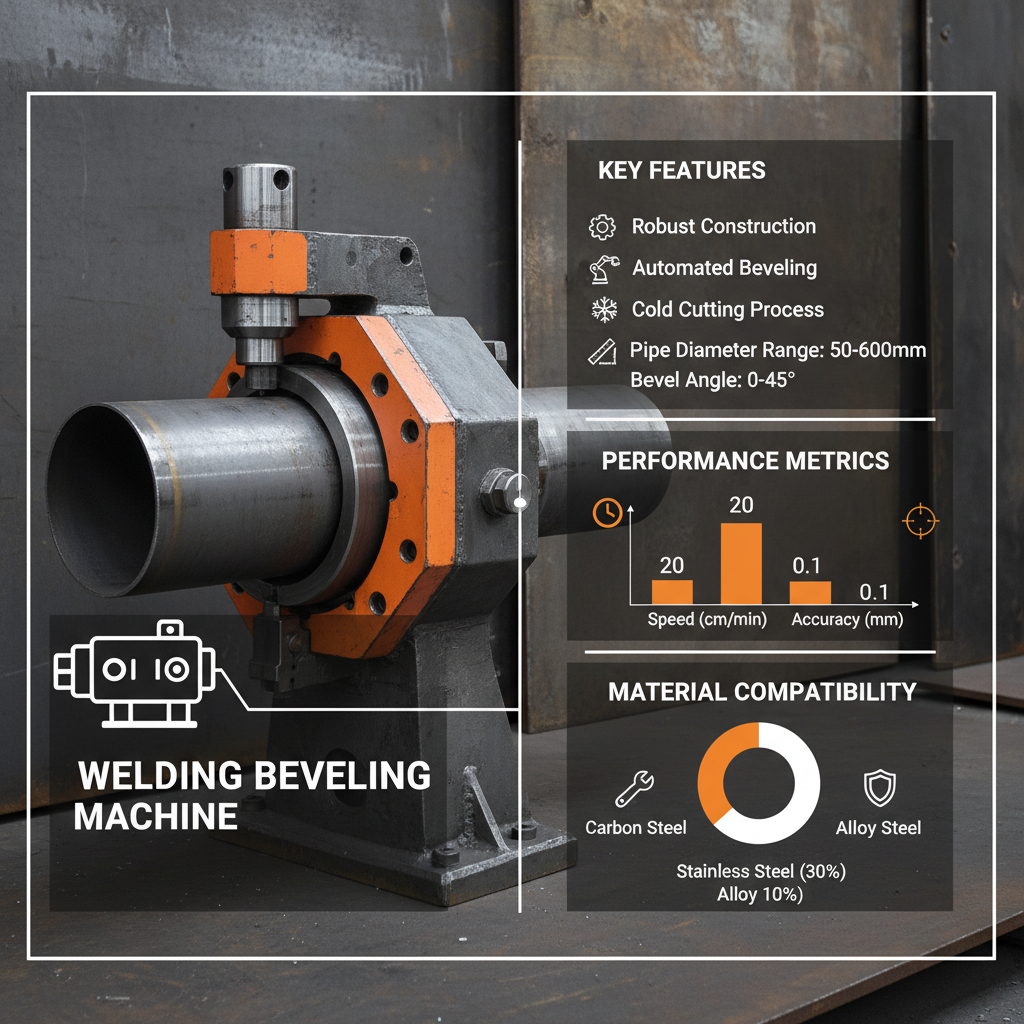
Modern iterations of these machines have moved far beyond simple cutting wheels. Today's equipment integrates high-torque motors, adjustable angle guides, and often CNC (Computer Numerical Control) interfaces to handle exotic alloys, stainless steel, and high-carbon piping. The connection to modern industry is profound: as we build thinner but stronger structures, the margin for error in beveling shrinks, necessitating the extreme accuracy provided by a professional welding beveling machine.
Furthermore, these machines address a critical humanitarian and safety need. In the construction of bridges, pressure vessels, and nuclear containment structures, the integrity of the weld is a matter of public safety. By ensuring a mathematically perfect bevel, the welding beveling machine minimizes the risk of stress corrosion cracking and fatigue, ensuring that critical infrastructure lasts for decades rather than years.
Core Components and Technical Factors
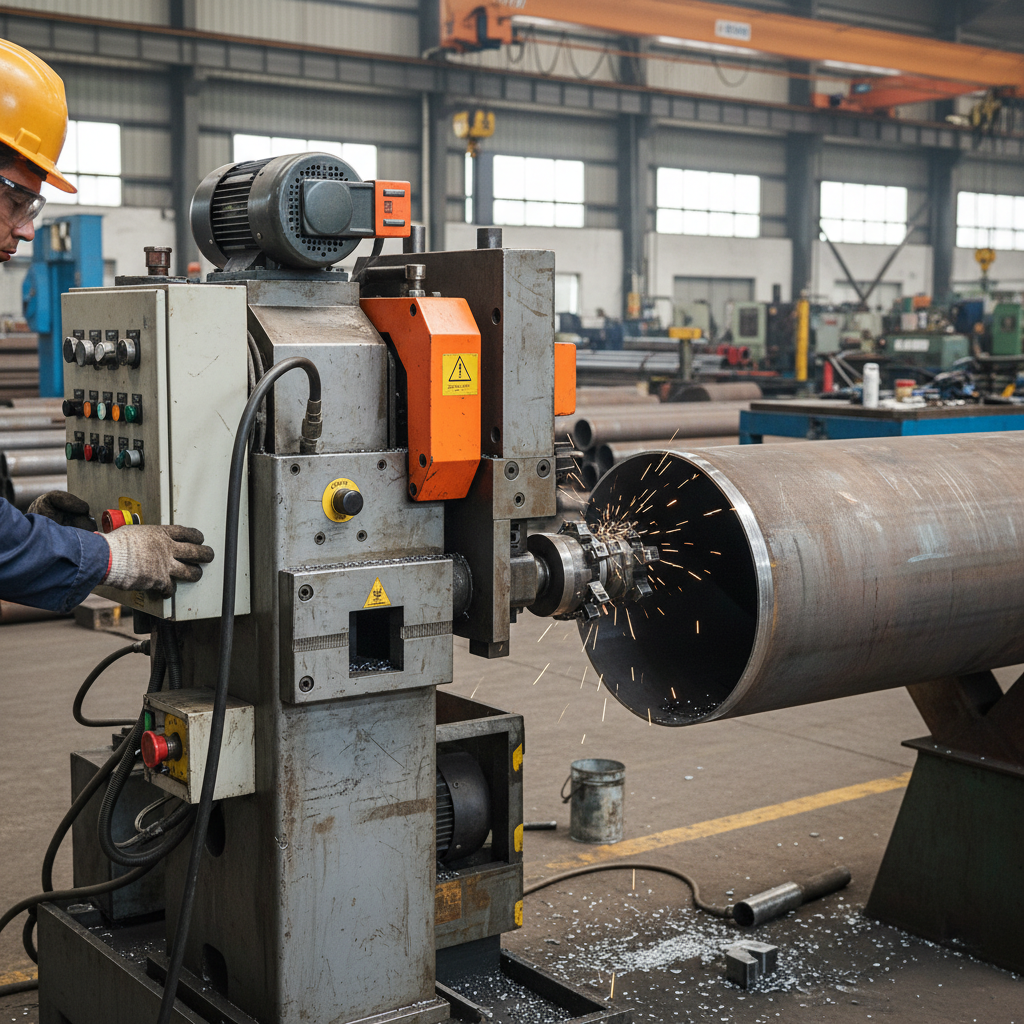
The efficiency of a welding beveling machine is primarily determined by its drive system and the quality of its cutting tooling. High-performance machines utilize carbide-tipped inserts that can withstand the immense heat and friction generated when cutting through hardened steel. The stability of the clamping mechanism is equally vital; any vibration during the beveling process can result in "chatter" marks, which create stress concentrators in the final weld.
Scalability and versatility are the hallmarks of a top-tier welding beveling machine. This includes the ability to switch between different bevel angles (typically from 20° to 45°) and the capacity to handle a wide range of pipe diameters. Whether the project requires a heavy-duty stationary setup for machining molds or a lightweight portable unit for field work, the machine must maintain a consistent feed rate to avoid overheating the workpiece.
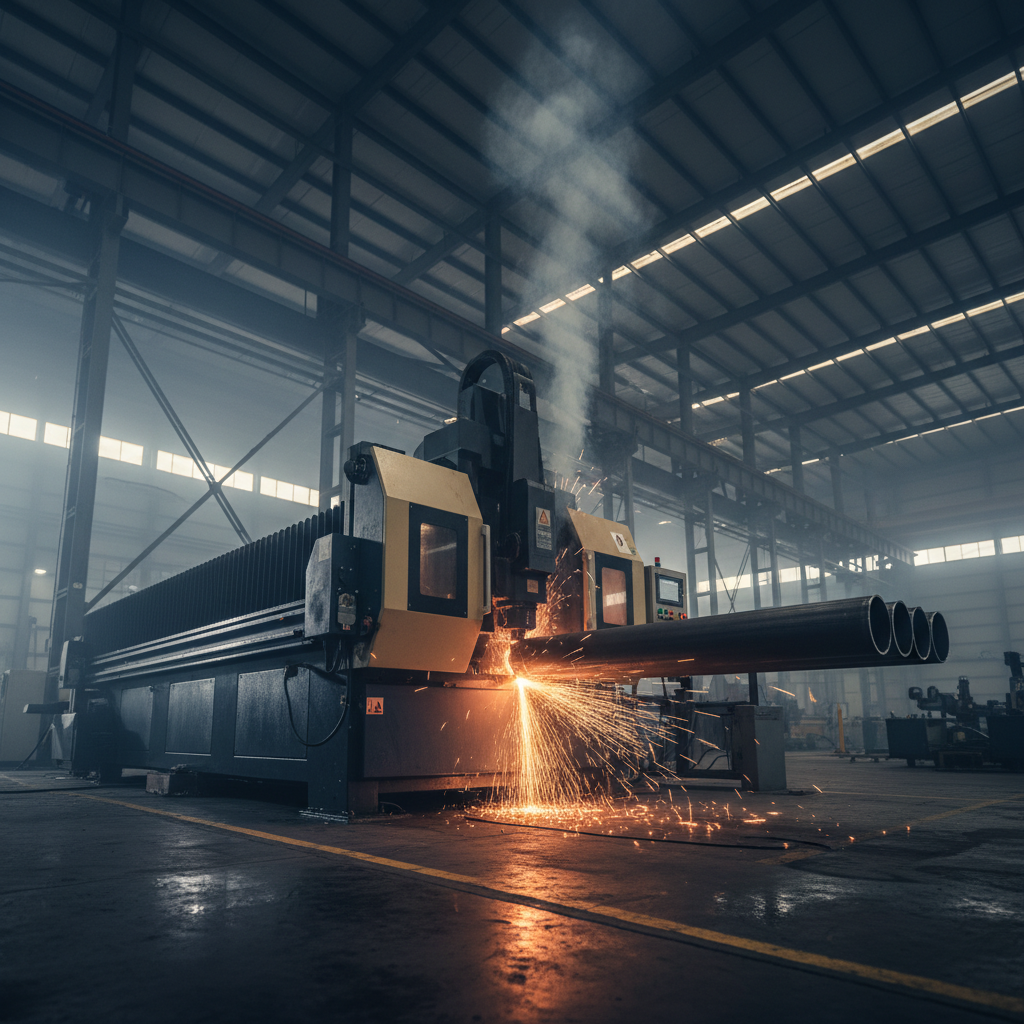
Lastly, cost-efficiency is realized through the reduction of waste and labor. Manual beveling is slow and consumes a vast amount of abrasive discs, which are costly and environmentally harmful. An automated welding beveling machine utilizes precise milling or shearing actions that produce minimal scrap and require far less operator intervention, drastically lowering the cost-per-joint in large-scale welded pipe equipment projects.
Industrial Applications and Use Cases
The practical application of a welding beveling machine spans various high-stakes environments. In the petrochemical industry, for instance, the fabrication of heat exchangers and distillation columns requires flawless U-bevels to ensure leak-proof seals. Here, the machine's ability to handle thick-walled pipes is essential, as any deviation in the bevel angle could lead to incomplete penetration in the root pass of the weld.
In more remote industrial zones, such as offshore oil rigs or mining sites in the Australian Outback, portable welding beveling machines are indispensable. These units allow technicians to prepare pipes on-site, eliminating the need to transport massive components back to a central workshop. This agility reduces project downtime and ensures that field welds meet the same quality standards as those produced in a controlled factory setting.
Efficiency Comparison of Beveling Methods
Tangible Advantages and Long-Term Value
Investing in a high-quality welding beveling machine yields immediate returns in terms of operational reliability. By removing the variability of human labor, companies can guarantee a consistent "fit-up" between two pieces of metal. This consistency reduces the amount of filler wire needed and shortens the welding time, leading to a direct reduction in consumable costs and energy consumption.
Beyond the numbers, there is a significant emotional and professional value: trust. When a client knows that every single joint in a project was prepared by a precision welding beveling machine, the level of confidence in the final product increases. This reliability fosters long-term partnerships and establishes the manufacturer as a leader in quality and innovation, providing a competitive edge in the global market for welded pipe equipment.
Future Trends in Beveling Automation
The future of the welding beveling machine is inextricably linked to the "Industry 4.0" movement. We are seeing a surge in the integration of IoT (Internet of Things) sensors that monitor tool wear in real-time. These smart machines can alert operators before a cutting insert fails, preventing ruined workpieces and optimizing maintenance schedules through predictive analytics.
Furthermore, the shift toward "green manufacturing" is driving the development of cold-cutting beveling technologies. Unlike flame cutting, which alters the metallurgy of the edge through heat, the next generation of welding beveling machines utilizes high-speed mechanical milling or laser ablation. This ensures the base material's properties remain intact, resulting in welds that are even more resistant to corrosion and fatigue.
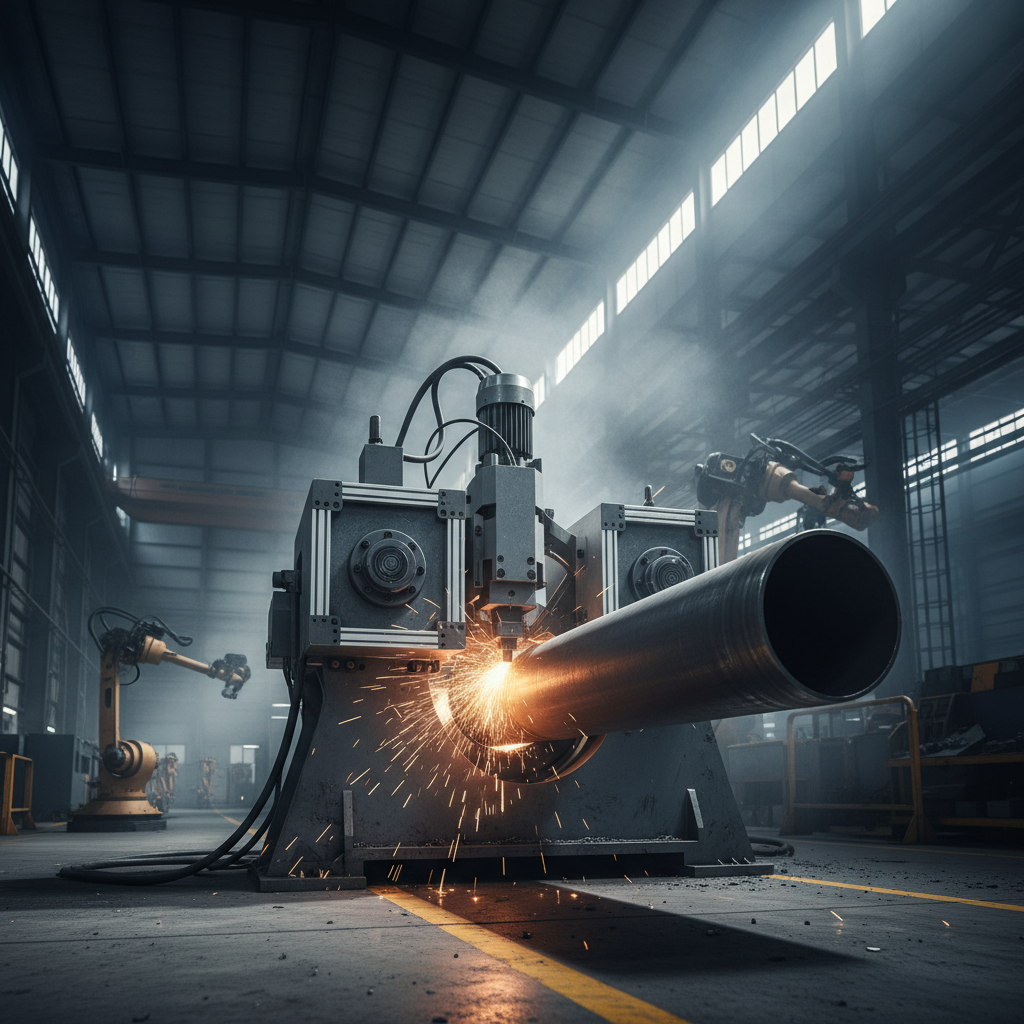
Digital transformation is also bringing collaborative robots (cobots) into the beveling process. These robots can be easily programmed to handle complex geometries that were previously impossible for standard machines. By combining the strength of a welding beveling machine with the flexibility of robotic arms, manufacturers can achieve total automation from raw pipe cutting to final weld inspection.
Overcoming Implementation Challenges
Despite the clear benefits, some manufacturers hesitate to adopt a welding beveling machine due to the initial capital expenditure. However, when viewed through the lens of Total Cost of Ownership (TCO), the investment pays for itself by eliminating the high cost of rework and weld failures. The solution lies in selecting a modular system that can grow with the company's production volume.
Another common challenge is the skill gap; operators accustomed to manual grinding may find CNC interfaces intimidating. To overcome this, leading equipment providers are now offering intuitive, touchscreen-based controllers and comprehensive training programs. When the operator understands how a welding beveling machine actually optimizes the weld root, they become advocates for the technology rather than resistors.
Finally, maintaining tool precision in harsh environments—such as dusty construction sites—can be difficult. The industry has responded by developing "ruggedized" versions of the welding beveling machine, featuring sealed electronics and reinforced chassis. These innovations ensure that precision is maintained whether the machine is in a clean-room lab or a muddy trench.
Technical Comparison of Beveling Machine Performance Metrics
| Machine Type |
Precision Level (1-10) |
Operating Speed |
Maintenance Need |
| Manual Beveler |
3 |
Very Slow |
Low (Consumables) |
| Portable Electric Machine |
7 |
Moderate |
Medium |
| Stationary CNC Beveler |
10 |
Fast |
High (Calibration) |
| Hydraulic Pipe Beveler |
8 |
Fast |
Medium |
| Automatic Laser Beveler |
10 |
Ultra Fast |
High (Technical) |
| Pneumatic Beveling Tool |
6 |
Moderate |
Low |
FAQS
The primary difference is consistency and precision. Manual beveling relies on the operator's eye and steady hand, which often leads to uneven angles and surface roughness. A welding beveling machine uses fixed guides and calibrated motors to ensure a perfectly uniform angle across the entire circumference of the pipe, which is critical for achieving full weld penetration and reducing the likelihood of defects.
Yes, provided the machine is equipped with the correct cutting inserts. Because stainless steel and titanium are prone to work-hardening, a high-quality welding beveling machine uses specialized carbide or diamond-tipped tools and optimized feed rates to prevent the material from overheating or galling, ensuring a clean edge for high-purity welding.
Replacement frequency depends on the material hardness and the volume of production. For mild steel, inserts can last for hundreds of joints. However, when working with hardened alloys, the tool wear is faster. Many modern welding beveling machines now feature wear-monitoring sensors that notify the operator exactly when the tool is no longer producing an optimal edge.
Absolutely. While the initial cost is higher than a handheld grinder, the reduction in labor hours and the near-elimination of weld rework make it highly cost-effective. For small shops, a portable welding beveling machine provides the perfect balance of versatility and precision, allowing them to compete with larger firms on quality standards.
The most common angles are 30° and 37.5°, which together create a 60° or 75° included angle for a V-groove. A professional welding beveling machine allows for quick adjustments between these standards, ensuring the preparation meets the specific requirements of the welding procedure specification (WPS).
Yes. By creating a precise and consistent groove, the welding beveling machine prevents the "over-filling" that often happens when welders try to compensate for uneven gaps or incorrect angles. This results in a leaner, more efficient welding process with significantly less wasted filler material.
Conclusion
The transition from manual edge preparation to the use of a professional welding beveling machine represents a fundamental shift toward quality-centric manufacturing. By ensuring geometric precision, reducing labor variability, and enhancing structural safety, these machines have become indispensable in the production of welded pipe equipment and machining molds. The synergy of high-grade tooling and automated control not only lowers production costs but elevates the overall standard of global infrastructure.
As we look toward a future of smarter, greener factories, the integration of AI and robotic automation into beveling technology will continue to push the boundaries of what is possible. For manufacturers aiming to stay competitive, adopting these precision tools is no longer optional—it is the only way to ensure reliability in an increasingly demanding market. To discover the right solution for your production needs, visit our website: www.xhequipment.com