The global demand for robust and efficient infrastructure continues to rise, driven by population growth, urbanization, and industrial expansion. Central to meeting this demand is the reliable production of piping systems for a vast array of applications, ranging from water and gas distribution to industrial processing and construction. The pipe extrusion machine stands as a critical technology enabling the cost-effective and high-volume manufacture of these essential components. Understanding the principles, applications, and advancements in pipe extrusion is, therefore, crucial for engineers, manufacturers, and policymakers alike.
Modern industries increasingly rely on consistent material quality and precise dimensions in their piping systems. Traditional methods often fall short in achieving the required standards for large-scale projects, highlighting the necessity of automated and controlled manufacturing processes. The pipe extrusion machine offers unparalleled control over material composition, wall thickness, and diameter, leading to improved performance, durability, and safety. This makes it a cornerstone of modern infrastructure development worldwide.
Beyond industrial applications, pipe extrusion technology plays a vital role in addressing global challenges such as access to clean water, sanitation, and disaster relief. Providing reliable piping solutions to underserved communities and rapidly deploying infrastructure in emergency situations requires efficient and adaptable manufacturing capabilities. The pipe extrusion machine, with its potential for both fixed installations and mobile units, is uniquely positioned to contribute to these critical humanitarian efforts.
The Fundamental Principles of pipe extrusion machine
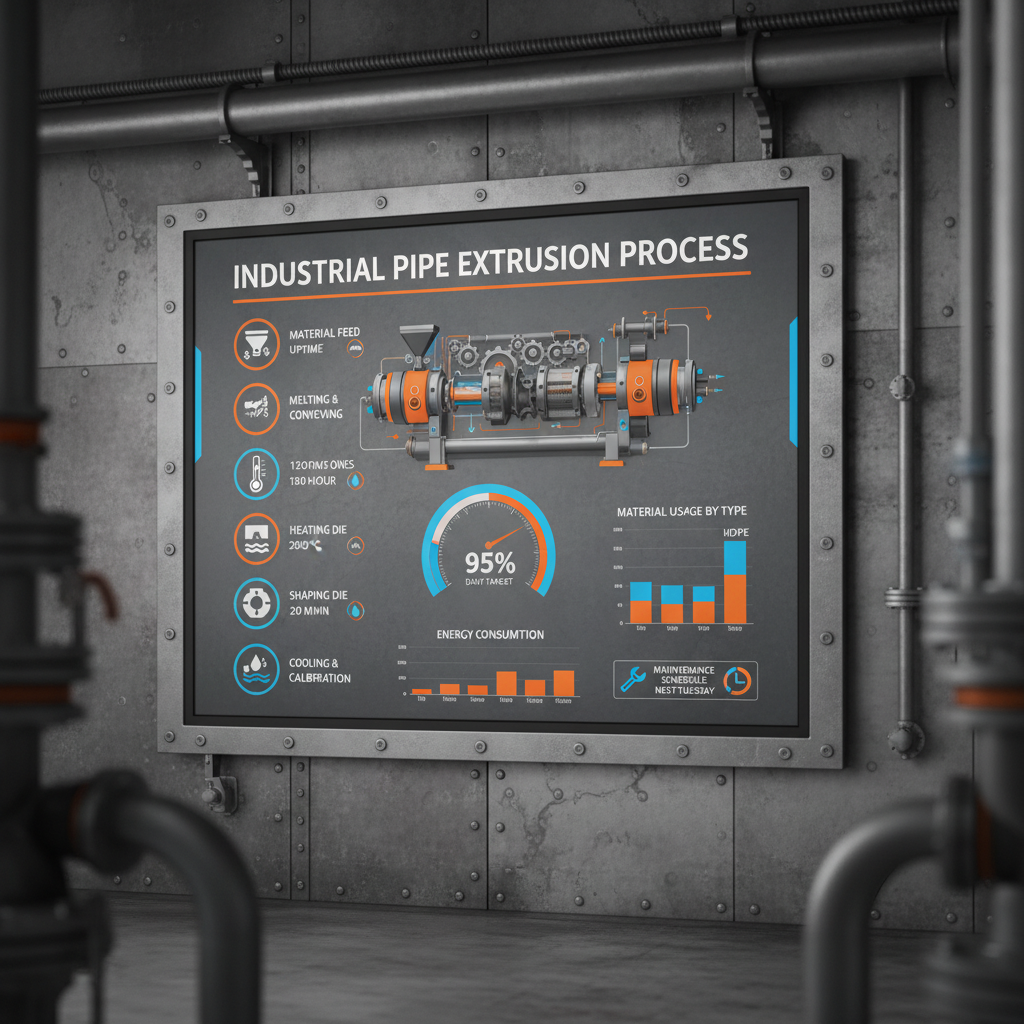
At its core, a pipe extrusion machine operates on the principle of forcing molten plastic through a shaped die, creating a continuous profile of the desired pipe dimensions. This process involves several critical stages, including material feeding, melting, pressurization, shaping, cooling, and hauling. The efficiency and precision of each stage directly impact the quality and consistency of the final product.
Understanding the interplay between material properties, processing parameters, and machine design is paramount for optimizing extrusion processes. Variables like screw speed, barrel temperature, die geometry, and cooling rate must be carefully controlled to achieve the desired mechanical properties, dimensional accuracy, and surface finish of the extruded pipe.
The Global Significance of pipe extrusion machine
The demand for plastic piping systems is intrinsically linked to global infrastructure development. As populations grow and economies expand, the need for reliable water supply, wastewater management, and industrial fluid transport increases exponentially. The pipe extrusion machine is therefore a crucial enabler of this growth, providing the means to manufacture the necessary piping infrastructure efficiently and cost-effectively.
According to the United Nations, access to safe water and sanitation is a fundamental human right. Plastic piping, produced by pipe extrusion machine, plays a vital role in delivering these essential services, particularly in developing countries where traditional materials like metal pipes are often unaffordable or susceptible to corrosion.
The global plastic pipe market is estimated to be worth billions of dollars, with significant growth projected in emerging economies. This growth is driven not only by infrastructure investments but also by the increasing adoption of plastic piping in agriculture, telecommunications, and other sectors. The efficient operation of pipe extrusion machine is essential for meeting this demand.
Defining a pipe extrusion machine: A Core Industry Component
A pipe extrusion machine is a specialized manufacturing system designed to create continuous lengths of plastic pipe with consistent dimensions and properties. It typically consists of a hopper for feeding raw plastic material, an extruder barrel containing a rotating screw for melting and pressurizing the plastic, a die to shape the molten plastic into a pipe, a cooling system to solidify the pipe, and a haul-off unit to pull the pipe through the system at a controlled rate.
The machine’s complexity can vary significantly, ranging from relatively simple models for producing small-diameter pipes to highly automated systems capable of manufacturing large-diameter, multi-layer pipes with integrated features like stripes or markings. The choice of machine depends on the specific application, production volume, and desired pipe characteristics.
In essence, a pipe extrusion machine bridges the gap between raw plastic resins and finished piping products, offering a scalable and efficient solution for producing this essential infrastructure component. Its impact resonates across numerous industries and contributes significantly to modern societal needs.
Key Factors Influencing pipe extrusion machine Performance
The performance of a pipe extrusion machine is governed by a combination of factors. Material selection is critical; different plastics (PVC, PE, PP, etc.) require specific processing parameters. The screw design within the extruder affects melting and mixing efficiency. Die design impacts dimensional accuracy and surface quality.
Furthermore, precise temperature control throughout the barrel and die is essential for achieving consistent material properties. Effective cooling systems are needed to solidify the pipe quickly and uniformly. Finally, the haul-off speed must be synchronized with the extrusion rate to maintain constant tension and prevent deformation.
Performance Metrics for Different pipe extrusion machine Methods
Applications and Use Cases of pipe extrusion machine Worldwide
The applications of pipes produced by a pipe extrusion machine are incredibly diverse. They are widely used in potable water distribution systems, ensuring access to clean drinking water for communities around the globe. They also form the backbone of irrigation systems, supporting agricultural productivity.
Furthermore, these pipes are essential components in wastewater treatment plants, managing and transporting sewage and industrial effluents. In the oil and gas industry, they are used for transporting crude oil, natural gas, and various petrochemicals. In post-disaster relief operations, lightweight and durable plastic pipes offer a rapid and effective solution for restoring water and sanitation infrastructure.
Advantages and Long-Term Value of pipe extrusion machine
Employing a pipe extrusion machine offers significant advantages over traditional pipe manufacturing methods. These include lower production costs, higher throughput rates, improved product quality, and greater design flexibility. Plastic pipes are also corrosion-resistant, lightweight, and easy to install, reducing maintenance costs and extending service life.
Beyond the economic benefits, the use of plastic pipes contributes to sustainability by reducing water leakage, minimizing energy consumption, and promoting the efficient use of resources. The durability and longevity of these pipes also translate to long-term social value, ensuring reliable infrastructure for generations to come.
Investing in advanced pipe extrusion machine technology fosters innovation and competitiveness, allowing manufacturers to meet the evolving demands of the global market and contribute to a more sustainable future.
Future Trends and Innovations in pipe extrusion machine Technology
The field of pipe extrusion machine technology is constantly evolving, driven by demands for increased efficiency, sustainability, and product performance. One key trend is the development of machines capable of processing recycled plastics, reducing reliance on virgin materials and promoting a circular economy.
Another area of innovation is the integration of advanced control systems and automation technologies, enabling real-time monitoring, optimization, and predictive maintenance. Digitalization and Industry 4.0 principles are also being applied to improve production processes and enhance traceability.
Furthermore, research is underway to develop new plastic materials with enhanced properties, such as increased strength, temperature resistance, and biodegradability, further expanding the applications of extruded pipes. These advancements will shape the future of the industry and drive continued growth in the years to come.
Core Challenges and Potential Solutions in pipe extrusion machine Technology
| Challenge |
Impact on Production |
Potential Solution |
Implementation Cost (1-10) |
| Material Degradation |
Reduced pipe strength and lifespan |
Optimized temperature control and screw design |
6 |
| Dimensional Instability |
Pipes not meeting required specifications |
Closed-loop control system with real-time feedback |
7 |
| Uneven Cooling |
Warping and internal stresses in the pipe |
Advanced cooling techniques (e.g., vacuum cooling) |
8 |
| Energy Consumption |
High operating costs and environmental impact |
Energy-efficient drive systems and process optimization |
5 |
| Material Waste |
Increased costs and environmental concerns |
In-line recycling systems and optimized start-up procedures |
6 |
| Lack of Skilled Operators |
Reduced efficiency and increased downtime |
Comprehensive training programs and operator assistance tools |
4 |
FAQS
The most common plastics used in pipe extrusion include Polyvinyl Chloride (PVC), Polyethylene (PE), Polypropylene (PP), and Chlorinated Polyvinyl Chloride (CPVC). Each material offers unique properties regarding strength, flexibility, temperature resistance, and chemical compatibility. The choice of material depends on the intended application of the pipe, such as potable water, drainage, or industrial processes. Modern pipe extrusion machine can often handle multiple resin types.
The lifespan of extruded pipes varies significantly depending on the material, environmental conditions, and application. PVC pipes, for example, can last for over 50 years with minimal degradation. PE pipes are also known for their durability and can withstand harsh underground environments. Proper installation and maintenance are crucial for maximizing the lifespan of any extruded pipe system. Modern materials and pipe extrusion machine techniques contribute to increasing longevity.
Generally, a larger pipe extrusion machine with a wider die and higher output capacity will produce pipes more quickly and efficiently. However, the optimal machine size depends on the specific production requirements and the diameter of the pipes being manufactured. Investing in a machine that is too large for your needs can result in wasted capacity and higher operating costs, while a machine that is too small may not be able to meet demand.
Regular maintenance is critical for ensuring the reliable operation of a pipe extrusion machine. This includes cleaning the extruder barrel and die, inspecting and replacing wear parts (such as screws and heating elements), lubricating moving components, and calibrating control systems. Following the manufacturer's recommended maintenance schedule is essential for preventing downtime and extending the life of the machine.
Safety is paramount when operating a pipe extrusion machine. Key considerations include ensuring proper guarding of moving parts, providing adequate ventilation to remove fumes, using appropriate personal protective equipment (PPE), and implementing lockout/tagout procedures during maintenance. Operators should receive thorough training on the machine's operation and safety protocols.
Several strategies can improve energy efficiency. Optimizing temperature profiles, using energy-efficient drive systems, recovering waste heat, and insulating the extruder barrel are all effective measures. Regularly monitoring energy consumption and implementing process controls can also help identify areas for improvement. Modern pipe extrusion machine often incorporate energy-saving features.
Conclusion
In conclusion, the pipe extrusion machine is a cornerstone of modern infrastructure, enabling the cost-effective and reliable production of essential piping systems. From providing access to clean water and sanitation to supporting industrial growth and disaster relief efforts, its impact is far-reaching and continuously expanding. Understanding its principles, applications, and evolving technologies is vital for professionals across a diverse range of industries.
As we look to the future, continued innovation in materials science, automation, and sustainability will drive further advancements in pipe extrusion machine technology. Embracing these advancements is crucial for meeting the growing global demand for infrastructure and creating a more resilient and sustainable world. Visit our website at www.xhequipment.com to learn more about our solutions.