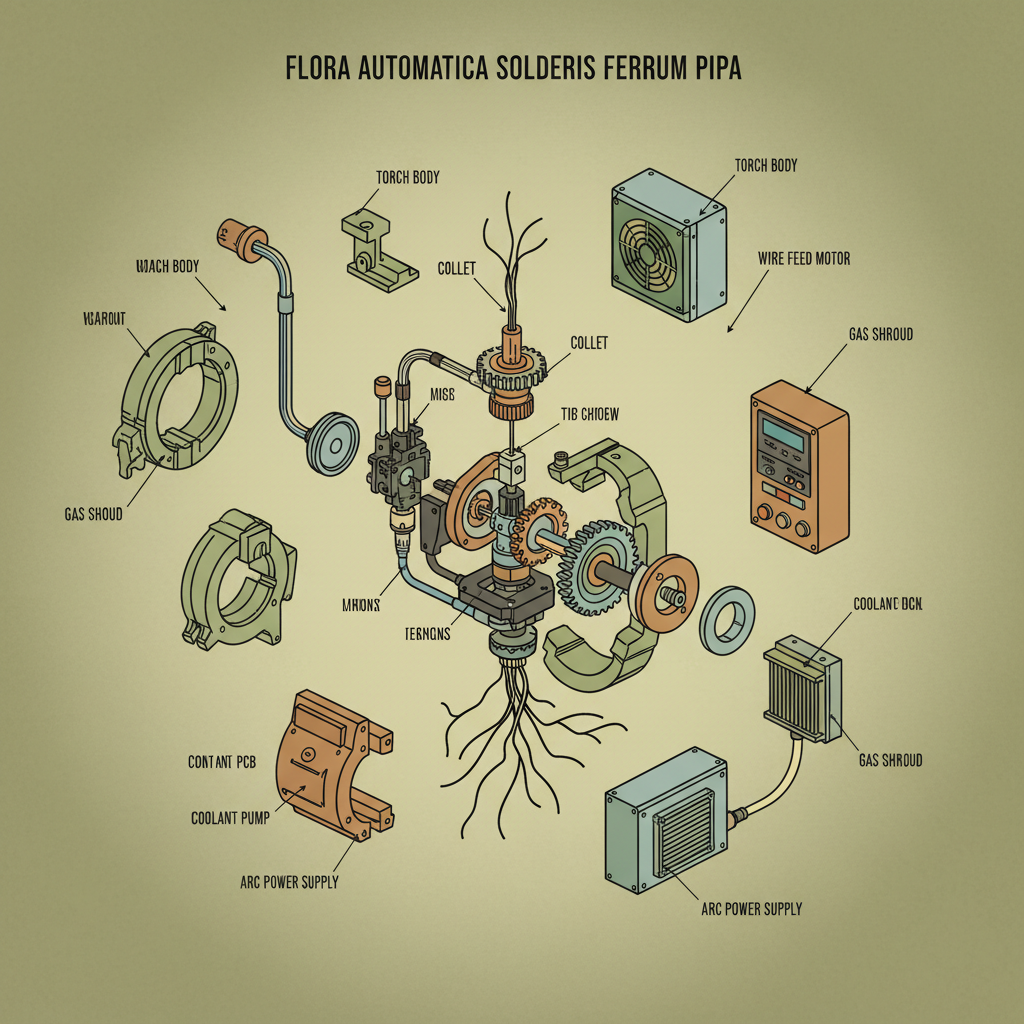
You know, lately everyone’s talking about full automation, robots doing everything. Honestly, I’ve seen a lot of those systems, and a lot of them… well, they don’t survive a week on a real construction site. Too delicate, too fussy. Give me something robust, something you can drop and it’ll still work, that’s what matters. The demand for automatic tig pipe welding machine is growing, but not just because it’s ‘the future’. It’s because good welders are getting harder to find, and the quality control issues with manual welding are costing companies serious money.
The biggest problem I see? People over-engineer things. They get lost in the specs and forget about the actual use. I was at a factory in Shanghai last year, and they'd designed this incredibly complex automatic tig pipe welding machine, all bells and whistles… but the access panels were too small to actually service the thing. You couldn’t even get a wrench in there. And the weight! It needed a forklift just to move it. Seriously.
It's not glamorous work, this stuff. It's about getting it done, safely and reliably. And frankly, a lot of the ‘innovation’ I see misses that point.
Industry Trends and Common Pitfalls
Have you noticed everything’s going towards lighter materials? Aluminum alloys, high-strength steels… they’re trying to save weight, increase efficiency. But that also means you need to be extra careful with the welding parameters. Too much heat, and you’ll warp the material. Too little, and you’ll get a weak joint. It's a balancing act, constantly tweaking settings.
And the biggest pitfall? Assuming the automatic tig pipe welding machine will solve everything. It won’t. It’s a tool, a very expensive tool, and it still needs a skilled operator. You still need someone who understands metallurgy, who can read a blueprint, and who can troubleshoot problems when they inevitably arise.
Materials: The Feel, The Smell, and The Handling
The steel itself... there's a difference. You can tell a good grade of 304 stainless just by the way it feels in your hand. It's got a weight to it, a smoothness. The cheaper stuff feels… gritty. And the smell! When you start welding, you can tell if it’s got a high sulfur content. It'll stink something awful. I’ve seen guys walk away from a weld just based on the smell. Then there's the filler metal, the tungsten… it all matters. You need to choose the right combination for the base metal and the application. Strangely, some of the older guys, they can just tell what's right. No fancy testing, just years of experience.
We’re seeing a lot more duplex stainless steel these days. It’s strong, corrosion-resistant… but it’s a pain to weld. It needs very precise control of the heat input, and it’s prone to cracking if you don’t do it right. It’s also expensive. Really expensive.
And don’t even get me started on the shielding gas. Argon, helium, mixtures… it impacts the weld quality significantly. You need a consistent flow rate, and you need to make sure the gas is dry. Moisture will ruin a weld faster than anything.
Real-World Testing: Beyond the Lab
Lab tests are fine, I guess. But they don't tell you anything about what happens when you're welding a pipe in the middle of a wind farm, in freezing temperatures, with a generator that’s sputtering and a guy breathing down your neck. That’s where things get real.
We do a lot of hydrostatic testing. Basically, we pressurize the welded pipe to several times its working pressure and look for leaks. It’s simple, but effective. Also, dye penetrant inspection – spraying a liquid on the weld and looking for cracks. It's not high-tech, but it finds flaws. I encountered this at an oil refinery last time, and they had a whole team dedicated to just that – inspecting every single weld.
Then there’s the radiography, the X-ray stuff. It’s good for finding internal defects, but it’s slow and expensive. And frankly, sometimes the guys reading the X-rays miss things. It happens. You need a combination of testing methods to be sure.
How Users Actually Use Automatic Tig Pipe Welding Machine
You’d think they’d use these things exactly as the manual says, right? Wrong. Everyone has their own little tweaks and adjustments. Some guys crank up the amperage for a faster weld, even if it means sacrificing a bit of quality. Others slow it down to get a cleaner finish. It depends on the application, the material, and their personal preference.
And the maintenance! People neglect the maintenance. They don’t clean the gas nozzles, they don’t replace the tungsten electrodes, they don’t lubricate the moving parts. Then they wonder why the machine breaks down. It’s like not changing the oil in your car – eventually, something’s going to go wrong.
Automatic Tig Pipe Welding Machine Performance Metrics
Advantages and Disadvantages: A Balanced View
The advantages are obvious: consistency, speed, reduced labor costs. A good automatic tig pipe welding machine can crank out welds all day long, with minimal variation. But it's not a magic bullet. The initial investment is high, and the training required to operate and maintain it is significant. Anyway, I think it's more a matter of 'does the investment make sense for the application?'
And let's be honest, these things aren't always easy to move around. They're often bulky and require a dedicated power supply. That’s a problem if you’re working on a remote site. Plus, they’re susceptible to power surges and other electrical problems. I've seen machines fried by a simple lightning strike.
Customization and Flexibility
I had a client, a shipbuilder, who needed a machine that could weld pipes with a very tight radius. The standard models couldn't do it. So, we worked with the manufacturer to design a custom head with a smaller diameter. It wasn’t cheap, but it solved their problem.
That’s the key – finding a manufacturer who’s willing to work with you. Not everyone is. Some just want to sell you what they have on the shelf. But a good manufacturer will understand your needs and be willing to customize the machine to meet them.
A Customer Story: Shenzhen and the Interface
Last month, that small boss in Shenzhen who makes smart home devices insisted on changing the interface to . He thought it looked more modern. So he bought this really fancy automatic tig pipe welding machine with a power connector. The result? It blew the power supply within a week. Turns out, the voltage wasn't compatible.
He spent more money on a replacement power supply than the whole machine was worth. And he was furious. He blamed the manufacturer, but honestly, it was his own fault for wanting something that wasn’t practical. Later... Forget it, I won't mention it.
It’s a reminder that sometimes, the simplest solution is the best. And that you should always listen to the guys who actually use the equipment. They know what works and what doesn’t.
Comparison of Automatic Tig Pipe Welding Machine Features and Suitability
| Machine Type |
Pipe Diameter Capacity |
Portability |
Typical Applications |
| Benchtop Automatic Tig |
Up to 6 inches |
Limited - Requires fixed location |
Small-scale fabrication, prototyping |
| Orbital Automatic Tig |
2 inches to 12 inches |
Moderate - Can be moved with a forklift |
Aerospace, pharmaceutical, food processing |
| Crawler Automatic Tig |
4 inches to 48 inches |
Good - Self-propelled on pipes |
Pipeline construction, large-diameter pipe welding |
| Portable Automatic Tig |
Up to 8 inches |
Excellent - Lightweight and maneuverable |
Field repairs, on-site welding |
| Multi-Process Automatic Tig |
2 inches to 10 inches |
Moderate |
Versatile applications – Tig, MIG, Stick |
| Custom-Built Automatic Tig |
Variable - Based on design |
Dependent on design |
Specific and complex welding tasks |
FAQS
Simply put, consistency and speed. Manual welding relies on the skill of the welder, which can vary. An automatic machine delivers a consistent weld every time, and it's significantly faster, especially on long runs. This reduces labor costs and improves overall quality control. The reduction in rework is huge. It's not about replacing welders, it's about freeing them up for more complex tasks.
More than you’d think, honestly. It’s not just turning it on and letting it run. You need to regularly clean the gas nozzles, check the tungsten electrode, lubricate the moving parts, and inspect the wiring. Neglect that and you'll be facing downtime. A preventative maintenance schedule is crucial, and having a skilled technician on hand is essential. I've seen machines go down because of a clogged gas filter - simple stuff, but easily overlooked.
Most metals, but it really depends on the machine and the specific setup. Stainless steel, carbon steel, aluminum, titanium—all are weldable with the right parameters. However, some materials, like duplex stainless steel, require specialized techniques and equipment. Proper filler metal selection and shielding gas are also critical. It's not a one-size-fits-all situation.
Safety first, always. You're dealing with high voltages, high temperatures, and potentially hazardous fumes. Wear appropriate personal protective equipment – welding helmet, gloves, fire-resistant clothing. Ensure proper ventilation to avoid inhaling fumes. Follow all manufacturer’s safety guidelines, and never operate the machine if it’s damaged or malfunctioning. Common sense goes a long way.
Absolutely. Many manufacturers offer customization options, such as different weld heads, pipe sizes, and control systems. You can even get machines designed for specific geometries or materials. As I mentioned earlier, I had a client who needed a machine with a smaller diameter head for tight-radius bends. It's worth exploring those options if your needs aren't met by standard models.
That’s a loaded question! It varies wildly depending on the features, capacity, and level of automation. You can find basic benchtop models for around $10,000, but a fully automated orbital or crawler machine can easily cost $50,000 or more. And then you have to factor in the cost of training, maintenance, and consumables. It’s a significant investment, so do your research and make sure it’s the right fit for your needs.
Conclusion
So, ultimately, the automatic tig pipe welding machine is about more than just automation. It's about improving quality, reducing costs, and addressing the skilled labor shortage. It's not a silver bullet, and it requires careful planning, training, and maintenance. But when implemented correctly, it can be a game-changer.
But let's be real – all the fancy tech in the world doesn’t matter if the fundamentals aren't solid. Whether this thing works or not, the worker will know the moment he tightens the screw. That’s the truth of it.