

Flying Saw: High-Speed, Burr-Free—Why Our Flying Shear?
Cold Cutting Flying Saw: What’s Changing on the Tube Mill Line
If you’ve spent time on a tube mill, you know the exact moment the line hits speed: the flying saw determines whether your shift is calm, or… not. Lately, cold-cut CNC machines have been quietly taking over, and to be honest, the results are hard to ignore—clean edges, less dust, better length control. The unit I’ve been watching closely is the Cold Cutting flying saw from XH Equipment out of Liuzhuang Village industrial zone, Chaheji Township, Bazhou, Hebei. Solid build, pragmatic engineering, not flashy.
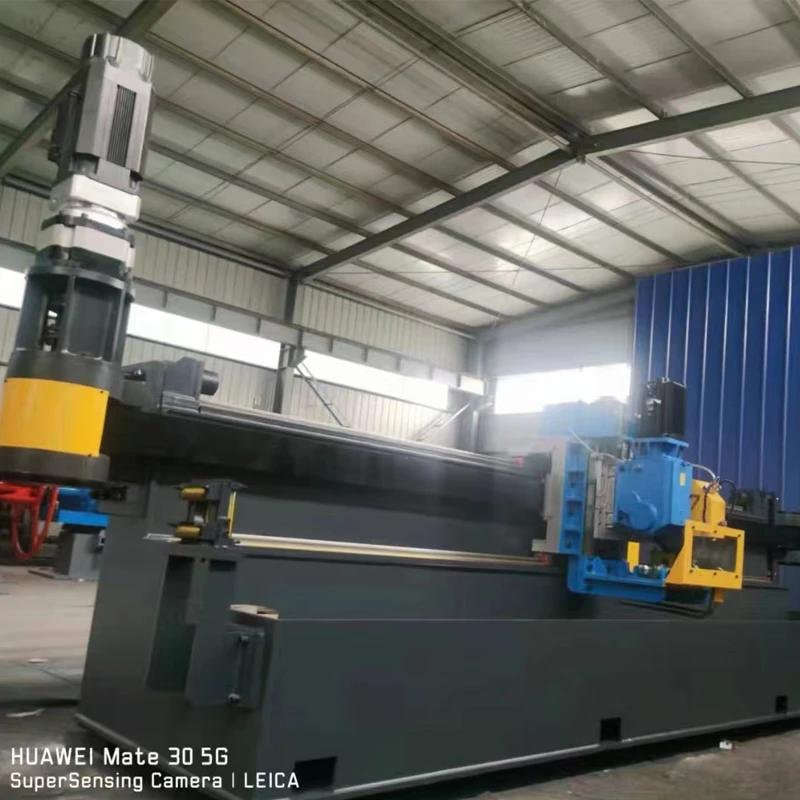
Where it fits and why it matters
Applications span furniture tubing, light structural Q235 lines, automotive sub-assemblies, and small HVAC tubes. Many customers say the cold cut approach cuts their post-processing time dramatically—deburrers idle more, operators breathe easier. And yes, noise levels drop, surprisingly.
Core specs (real-world oriented)
| Product | Cold Cutting flying saw (CNC) |
| Materials | Q195 / Q235 / Q355 steel (per GB/T 700) |
| Range | Round pipe Ø19.5–32 mm; thickness 2.0–2.75 mm |
| Cutting method | Carbide TCT cold-cut blade, servo synchronized |
| Typical line speed | ≈60–120 m/min (depends on tube & blade) |
| Length tolerance | ±0.5 mm typical; ±0.3 mm achievable after tuning |
| Edge quality | Low burr, cool surface; burr height ≈ ≤0.05 mm |
| Noise | ≈75–80 dB at operator position (real-world may vary) |
| Power | ≈12–18 kW installed, energy use depends on speed/load |
Process flow, testing, and life cycle
- Materials: Q195/Q235/Q355 welded tube from the mill, incoming verified with EN 10204 3.1 certs.
- Method: Tube encoder tracks speed; servo carriage matches velocity; TCT blade engages; mist coolant; clamp set prevents end deformation.
- Controls: CNC length setting, recipe-based blade RPM, automatic kerf compensation, encoder feedback.
- Testing standards: Factory FAT includes 100-cut length study (ISO 230-2 methods), edge burr checks, thermal drift observation.
- Service life: Machine frame 10+ years typical; gearbox/bearings 3–5 years; TCT blade ≈30,000–60,000 cuts before regrind (depends on grade/thickness).
- Industries: Furniture tube, racking, bicycle parts, small chassis, HVAC, light construction profiles.
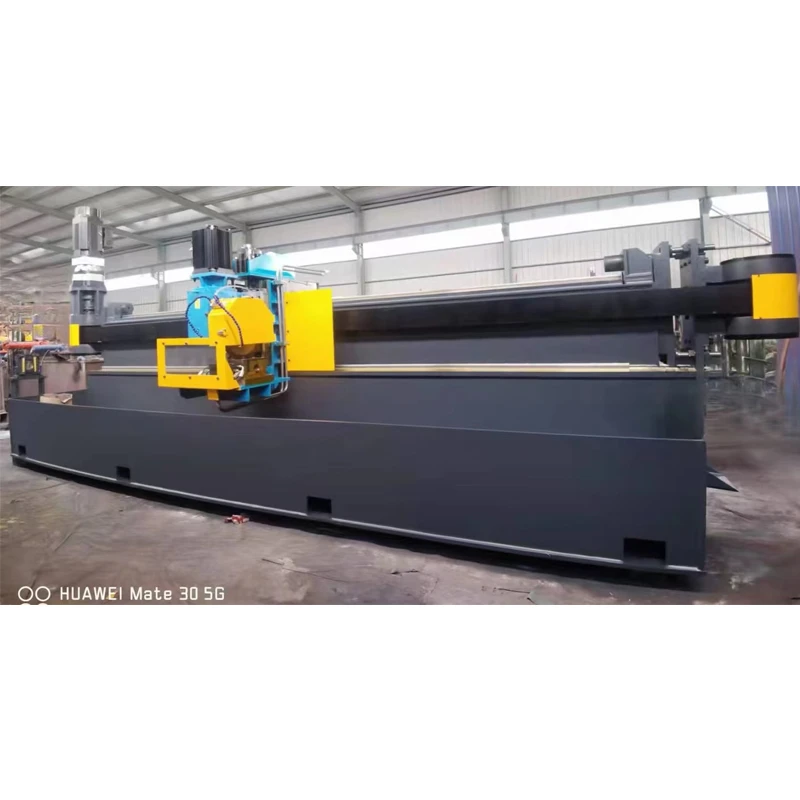
Advantages I keep hearing about
Cleaner cuts (less rework), stable length, and a calmer line. Operators like the quieter tone. Maintenance is predictable: blade swaps, coolant filter, standard lubrication. The flying saw pairs nicely with modern tube mills using closed-loop speed control.
Vendor snapshot (quick comparison)
| Vendor / Type | Method | Edge quality | Consumables (≈/yr) | Notes |
|---|---|---|---|---|
| XH Equipment Cold Cutting flying saw | TCT cold cut | Low burr, cool | Medium (blade regrinds) | CE-ready, good integration, quiet |
| Vendor M (abrasive) | Abrasive wheel | Hot, more burr | High (discs, dust) | Lower capex; higher cleanup |
| Vendor S (hot-cut) | Torch/hot | Heat-affected, scaling | Gas tips/consumables | Fast on large sizes; not ideal for 19.5–32 mm |
Customization checklist
- Blade diameter/kerf options to match Q195 vs Q355.
- Special clamps for thin-wall 2.0 mm to limit ovality.
- Downstream kicker, length-sort bins, barcode ID.
- Safety package: light curtains, CE documentation, e-stops.
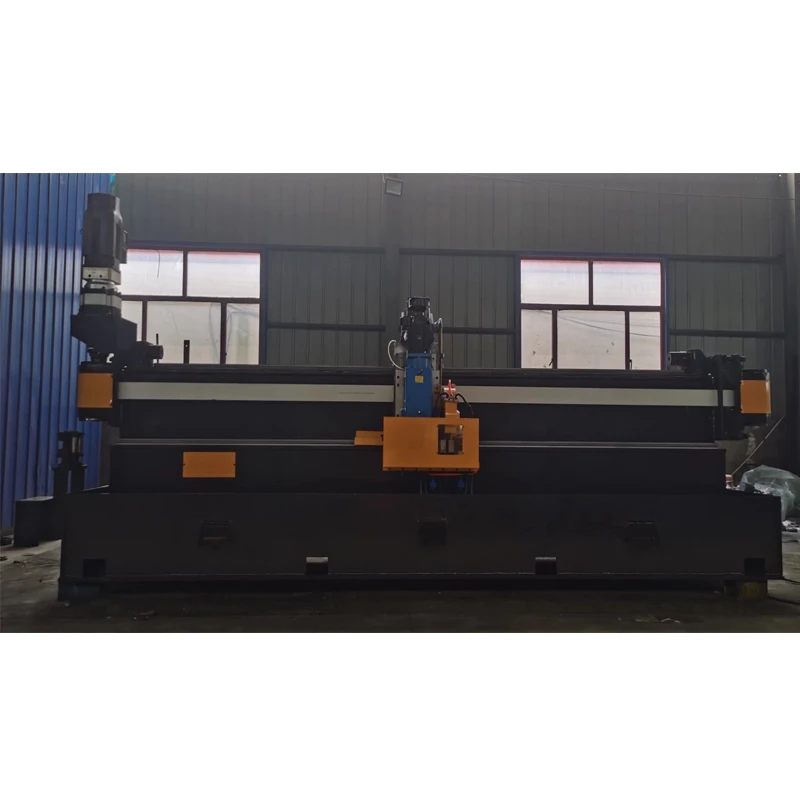
Mini case study: Bazhou furniture tube line
On a Q235 Ø25.4 × 2.3 mm line, swapping an abrasive unit for a cold-cut flying saw cut deburr time by ≈40%, reduced scrap by 0.7%, and bumped OEE about 5% over a month. Operators mentioned easier blade changeovers and “less dust on everything,” which tracks with what I saw.
Compliance and documentation
Look for ISO 9001 QA, CE conformity (Machinery Directive), and material traceability via EN 10204 3.1. Routine capability studies (Cp/Cpk) on length are worth doing quarterly—simple, and calming for auditors.
Authoritative citations:
- GB/T 700 — Carbon structural steels (Q195/Q235/Q355). http://openstd.samr.gov.cn
- ISO 230-2 — Tests for machine tools: positioning accuracy. https://www.iso.org/standard/55465.html
- EN 10204 — Metallic products: Types of inspection documents (3.1). https://standards.iteh.ai
- ISO 9001:2015 — Quality management systems. https://www.iso.org/iso-9001-quality-management.html
- Directive 2006/42/EC — Machinery Directive (CE). https://eur-lex.europa.eu
-
High Precision Ridge Cap Roll Forming Machine for Modern RoofingNewsApr.16,2026
-
Professional Ridge Cap Roll Forming Solutions for Metal RoofingNewsApr.09,2026
-
Comprehensive Guide to Ridge Cap Machine Functionality and ApplicationsNewsApr.07,2026
-
Comprehensive Guide to Reidius Roll Forming Machineries and Their Diverse ApplicationsNewsApr.04,2026
-
Comprehensive Guide to Rack Roll Forming Machines for Efficient ProductionNewsMar.31,2026
-
Comprehensive Guide to R Panel Roll Forming Machine Applications and SelectionNewsMar.28,2026
