

Precision Flying Saw & Shear: High-Speed Metal Cutting Solutions
In high-speed, continuous production lines, achieving precise and clean cuts without interrupting material flow is paramount. The flying saw stands as a critical innovation in this domain, delivering superior cutting performance for various metal profiles and tubes. This advanced cold cutting technology enables on-the-fly length measurement and cutting, significantly enhancing productivity and material utilization in demanding industrial environments. Our focus here is on the Cold Cutting Flying Saw, a robust solution engineered for unparalleled accuracy and efficiency in modern manufacturing.
Industry Trends in Metal Processing
The metal processing industry is in a perpetual state of evolution, driven by the demand for higher precision, greater automation, and enhanced material integrity. Current trends indicate a significant shift towards technologies that minimize waste, reduce energy consumption, and ensure operator safety while maintaining high throughput. For instance, the global steel industry, a major consumer of cutting equipment, is increasingly adopting cold cutting solutions to meet stringent quality requirements for finished products. Modern production lines, especially in tube and pipe manufacturing, require seamless integration of cutting tools that can keep pace with high extrusion or rolling speeds. This has propelled the development of sophisticated flying saw systems capable of real-time synchronization, advanced diagnostic capabilities, and robust construction to withstand continuous operation. Furthermore, the push for Industry 4.0 and smart manufacturing necessitates cutting solutions that offer data acquisition, remote monitoring, and predictive maintenance features, moving away from manual and less efficient methods.
The demand for specific cutting accuracy, for example, for automotive frame components or critical infrastructure piping, has also driven innovations in saw blade technology and motion control systems. With materials becoming more diverse and specialized, from high-strength low-alloy steels to various non-ferrous alloys, the versatility of the flying saw has become increasingly important.
Technical Specifications and Principles of the Cold Cutting Flying Saw
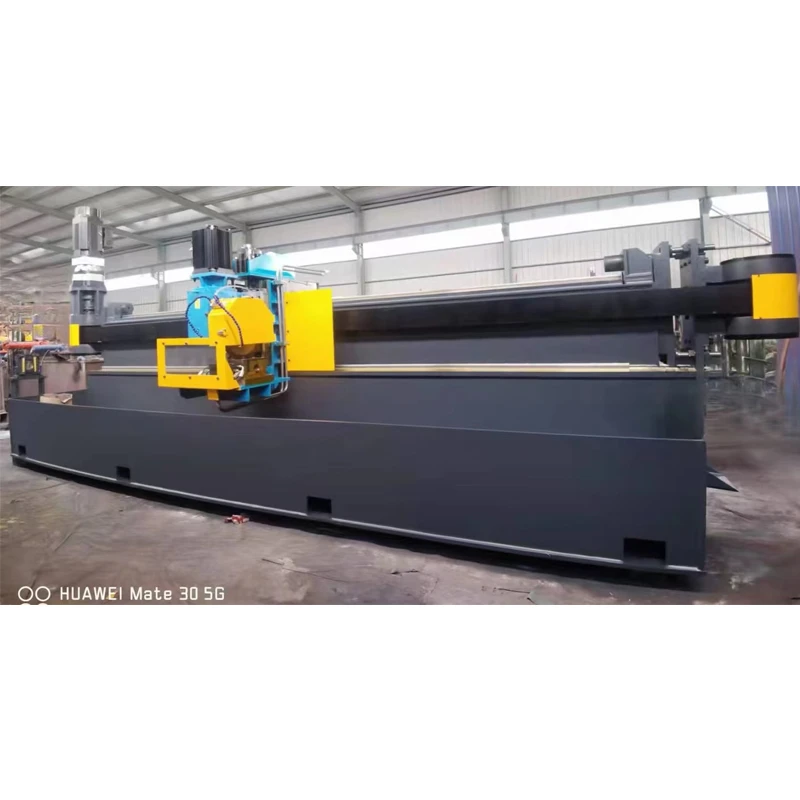
The Cold Cutting Flying Saw operates on a sophisticated principle where the saw carriage moves in sync with the continuously advancing material, executing a precise cut without stopping the production line. This synchronous movement is achieved through advanced servo drive systems and precise optical or encoder-based length measurement. The core components include a high-speed saw blade, a robust saw carriage, a precision clamping system, a powerful drive mechanism, and an intelligent control system.
Working Principle:
- Synchronization: As the material (e.g., tube, pipe, profile) exits the mill, its speed is continuously measured. The saw carriage accelerates to match the material's speed precisely.
- Clamping: Once synchronized, the material is securely clamped, often hydraulically or pneumatically, ensuring no movement relative to the saw carriage during the cut.
- Cutting: The saw blade rapidly traverses the material, performing a clean, cold cut. Cold cutting minimizes heat-affected zones (HAZ), prevents material distortion, and reduces burr formation compared to hot cutting methods.
- Return: After the cut, the blade retracts, the clamps release, and the saw carriage rapidly returns to its starting position to await the next cutting cycle.
Key Technical Parameters:
| Parameter | Typical Range/Value | Unit |
|---|---|---|
| Cutting Speed | Up to 150 | m/min |
| Material Diameter/Profile Size | Ø10 - Ø600 | mm |
| Cutting Length Accuracy | ±0.5 to ±1.0 | mm |
| Saw Blade Diameter | 300 - 1200 | mm |
| Max. Wall Thickness | Up to 30 | mm |
| Power Consumption | 30 - 150 | kW (depending on model) |
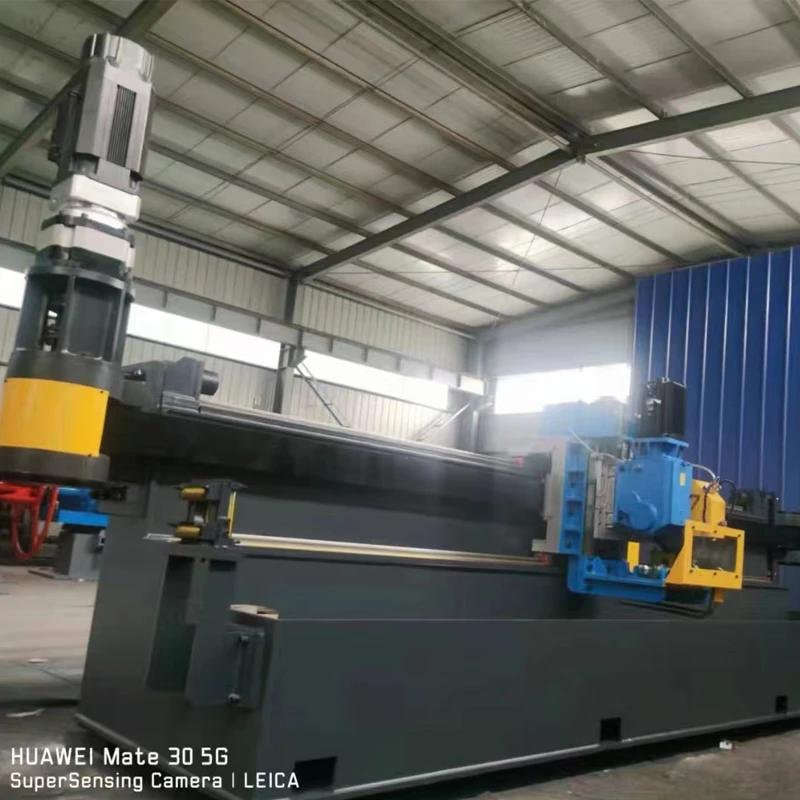
The robust construction and high-grade materials used in the manufacture of these systems ensure reliability and extended service life, even under continuous heavy-duty operation.
Manufacturing Process Flow of the Cold Cutting Flying Saw
The production of a high-performance Cold Cutting Flying Saw involves a meticulous multi-stage process, ensuring precision, durability, and operational reliability.
Schematic Process Steps:
- Material Selection: High-grade structural steel (e.g., Q345B, S355JR) for main frames and support structures, alloy steels (e.g., CrMoV, HSS) for critical moving parts and gearing, and specialized tungsten carbide-tipped (TCT) or cermet saw blades for cutting. Electrical components are sourced from reputable global suppliers (e.g., Siemens, Schneider, Allen-Bradley) for reliability and widespread support.
-
Fabrication & Machining:
- Casting/Forging: Large structural components, such as the main carriage frame and gearboxes, undergo precision casting or forging to achieve superior strength and rigidity.
- CNC Machining: All critical components—guideways, gears, saw head mounts, clamping jaws—are manufactured using multi-axis CNC machining centers. This ensures tolerances as fine as ±0.01mm, vital for smooth motion and cutting accuracy.
- Heat Treatment: Components subjected to high stress or wear, like gears and shafts, undergo various heat treatment processes (e.g., carburizing, quenching, tempering) to enhance hardness, toughness, and wear resistance.
- Surface Finishing: Precision grinding, chrome plating, or specialized coatings are applied to guideways and contact surfaces to minimize friction, protect against corrosion, and extend service life.
- Assembly: Highly skilled technicians meticulously assemble the mechanical, electrical, and hydraulic/pneumatic systems. This includes precise alignment of linear guides, installation of servo motors, gearboxes, and the saw head, followed by cabling and piping.
-
Testing & Calibration: Each Cold Cutting Flying Saw undergoes rigorous testing.
- Functional Testing: Verifying all movements, clamping actions, and safety interlocks.
- Performance Testing: Running actual cutting cycles on various material types and speeds to confirm cutting accuracy, burr-free finish, and synchronization capability.
- Testing Standards: Adherence to international standards such as ISO 9001 for quality management, ANSI B11.1 for machine tool safety, and relevant CE directives for European markets. Material certifications are provided in accordance with ASTM/EN standards.
- Service Life Expectation: Designed for an operational service life of 15-20 years with proper maintenance, leveraging robust components and engineering.
- Final Inspection & Shipment: A final quality check ensures all documentation, spare parts, and packaging meet specified requirements before shipment.
Application Scenarios and Advantages
The versatility and precision of the Cold Cutting Flying Saw make it indispensable across a wide range of heavy industries. Its ability to maintain continuous production while delivering high-quality cuts offers significant operational advantages.
Target Industries:
- Metallurgy & Steel Mills: Essential for tube mills, pipe mills, and profile rolling lines, enabling continuous production of products like round, square, and rectangular tubes, as well as structural beams. It handles high output speeds seamlessly.
- Petrochemical: Critical for cutting high-grade pipes used in oil and gas pipelines, ensuring precise lengths and clean ends for subsequent welding and assembly.
- Water Supply & Drainage: Used for processing large diameter pipes for municipal water infrastructure, where precision and material integrity are vital for long-term reliability.
- Automotive: For continuous cutting of specific profiles and tubes used in chassis, exhaust systems, and structural components, demanding high accuracy and consistency.
- Construction: Fabrication of structural components like purlins, girts, and various support profiles in steel frame construction.
Demonstrated Advantages in Typical Application Scenarios:
- Energy Saving: Cold cutting processes typically consume less energy compared to energy-intensive hot cutting methods, contributing to lower operational costs and a reduced carbon footprint. For instance, cold saws eliminate the need for pre-heating or post-cooling of material.
- Corrosion Resistance & Material Integrity: By minimizing the heat-affected zone (HAZ), cold cutting preserves the original metallurgical properties of the material, which is crucial for applications where corrosion resistance or specific mechanical properties (e.g., tensile strength, hardness) are critical. This is particularly beneficial for stainless steel or coated pipe applications.
- Superior Cut Quality: Produces a clean, burr-free, and precise cut surface, often eliminating secondary finishing operations like deburring or grinding. This reduces processing time and labor costs.
- High Productivity: Its "on-the-fly" operation ensures uninterrupted production, significantly boosting throughput compared to start-stop cutting methods.
- Reduced Material Waste: High precision cutting with minimal kerf width optimizes material utilization, leading to cost savings.
- Enhanced Safety: Enclosed cutting areas and automated operation reduce operator exposure to moving parts, sparks, and noise.
Vendor Comparison and Customized Solutions
Selecting the right flying saw vendor is a critical decision that impacts long-term operational efficiency and profitability. While many manufacturers offer cutting solutions, distinguishing factors lie in technological depth, customization capabilities, and after-sales support.
Key Considerations for Vendor Comparison:
| Feature/Aspect | High-Performance Vendor | Standard Vendor |
|---|---|---|
| Synchronization Accuracy | Advanced servo control, ±0.1mm length accuracy | Stepper/AC motor, ±1.0mm length accuracy |
| Cutting Speed (max) | 150 m/min | 60 m/min |
| Material Versatility | Wide range (carbon steel, stainless, alloys, non-ferrous) | Limited to common carbon steel profiles |
| Control System | Integrated PLC/CNC with HMI, diagnostic tools, remote access | Basic PLC, manual parameter adjustment |
| Component Quality | Premium global brands (Rexroth, Siemens, THK) | Local/generic brands |
| Customization | High degree of engineering customization for specific lines | Limited modular options |
| After-Sales Support | Global network, 24/7 remote support, rapid parts delivery | Regional, limited scope |
Customized Solutions:
Recognizing that every production line has unique requirements, leading manufacturers offer highly customized Cold Cutting Flying Saw solutions. This customization can involve:
- Material-Specific Design: Optimizing clamping mechanisms and saw blade parameters for specific alloys (e.g., specialized coatings for aluminum, heavier duty for thick-wall carbon steel).
- Integration with Existing Lines: Tailoring mechanical interfaces and control system protocols for seamless integration with upstream mills (e.g., forming, welding) and downstream handling systems (e.g., stacking, bundling).
- Speed & Throughput Optimization: Engineering higher acceleration/deceleration rates and faster cutting cycles to match exceptionally high production speeds.
- Specialized Cut Geometry: Capabilities for angular cuts, chamfering, or specific end-prep requirements.
- Automation & Intelligence: Integration with facility-wide MES/ERP systems, advanced sensor packages for predictive maintenance, and remote diagnostics.
Application Case Studies
Case Study 1: Large Diameter Pipe Production
A leading international steel producer required a solution to cut large diameter (up to Ø600mm) seamless pipes exiting their hot mill at speeds up to 80 m/min. Their existing hot saw system produced significant burrs, requiring extensive post-processing, and struggled with consistent length accuracy for critical pipeline projects. Implementing a custom-engineered Cold Cutting Flying Saw with a high-torque servo drive and an advanced optical length measurement system resulted in a dramatic improvement. The client achieved a length accuracy of ±0.8mm consistently, reduced post-cut finishing time by 70%, and eliminated the need for a dedicated deburring station, leading to estimated annual operational savings of over $500,000. Customer feedback highlighted the exceptional cut quality and the seamless integration into their existing line, minimizing downtime during installation.
Case Study 2: High-Speed Automotive Profile Line
An automotive component manufacturer needed to cut intricate, thin-walled steel profiles for vehicle chassis at high production speeds (100 m/min) with extremely tight length tolerances (±0.3mm). Conventional cutting methods introduced unacceptable material deformation and heat distortion. A specialized Cold Cutting Flying Saw, featuring a multi-clamp system to prevent profile distortion and a high-frequency spindle with a fine-tooth cermet blade, was deployed. This system not only met the stringent length accuracy requirements but also preserved the material's structural integrity, which was vital for subsequent hydroforming processes. The client reported a 15% increase in line efficiency due to the elimination of production stops for cutting, along with a significant reduction in rejected parts, leading to an ROI within 18 months.
Trustworthiness & Support
FAQ Module:
-
Q: What materials can the Cold Cutting Flying Saw process?
A: Our systems are engineered to cut a wide array of materials, including carbon steel, stainless steel, various alloy steels, and non-ferrous metals like aluminum, depending on the specific model and blade configuration. -
Q: What is the typical lead time for a custom flying saw solution?
A: Lead times vary based on customization complexity, ranging from 16 to 24 weeks from design finalization to factory acceptance testing. Project timelines are detailed in the proposal phase. -
Q: How does this system compare to traditional hot cutting methods?
A: Cold cutting offers superior cut quality (burr-free), preserves material properties by minimizing HAZ, reduces energy consumption, and provides higher length accuracy. Hot cutting is often faster for extremely thick sections but at the expense of quality and material integrity. -
Q: What level of automation is available?
A: Our systems range from semi-automatic with operator input for parameters to fully automated, integrated solutions with material handling, data logging, and remote diagnostic capabilities.
Lead Time & Fulfillment:
Our streamlined project management process ensures efficient delivery. Following initial consultation and technical specification approval, detailed design and manufacturing commence. Typical lead times for standard Cold Cutting Flying Saw models are 16-20 weeks, with customized solutions requiring 20-24 weeks, depending on complexity. We provide transparent timelines and regular progress updates throughout the project lifecycle.
Warranty Commitments:
We stand behind the quality and reliability of our equipment. All Cold Cutting Flying Saws come with a standard 12-month warranty on parts and labor, effective from the date of commissioning or 18 months from shipment, whichever comes first. Extended warranty options and comprehensive service contracts are available to provide continuous peace of mind and minimize unexpected downtime.
Customer Support:
Our commitment extends beyond delivery. We offer comprehensive after-sales support including:
- Technical Assistance: 24/7 remote technical support via phone and online channels, supplemented by on-site field service engineers globally.
- Spare Parts Management: A readily available inventory of critical spare parts ensures minimal disruption during maintenance.
- Training Programs: On-site and remote training for operators and maintenance personnel to ensure optimal use and upkeep of the equipment.
- Preventive Maintenance Services: Scheduled maintenance plans designed to extend equipment life and ensure peak performance.
Certifications & Authoritative References:
Our manufacturing processes and products adhere to stringent international standards, including ISO 9001:2015 for Quality Management Systems, CE certification for compliance with European safety, health, and environmental protection requirements, and relevant ANSI standards for machine safety. We have partnered with major industry players globally for over 20 years, a testament to our enduring quality and service.
Conclusion
The Cold Cutting Flying Saw represents the pinnacle of on-the-fly metal cutting technology, offering an unparalleled combination of speed, precision, and material integrity. Its ability to seamlessly integrate into high-speed production lines, coupled with its energy efficiency and reduced operational costs, makes it an indispensable asset for manufacturers striving for excellence in metallurgy, petrochemical, automotive, and other heavy industries. As industries continue to evolve, demanding higher standards for quality and efficiency, the advanced capabilities and customizable nature of the Cold Cutting Flying Saw position it as a strategic investment for sustained competitive advantage.
Citations
- International Organization for Standardization (ISO). ISO 9001:2015 - Quality management systems - Requirements. Available at: iso.org
- American National Standards Institute (ANSI). ANSI B11.1-2019 Safety Requirements for Machine Tools. Available at: ansi.org
- Eurostat. Industrial production statistics. Available at: ec.europa.eu/eurostat
- Modern Steel Construction. Cold Sawing Benefits. Available at: modernsteel.com
-
High Precision Ridge Cap Roll Forming Machine for Modern RoofingNewsApr.16,2026
-
Professional Ridge Cap Roll Forming Solutions for Metal RoofingNewsApr.09,2026
-
Comprehensive Guide to Ridge Cap Machine Functionality and ApplicationsNewsApr.07,2026
-
Comprehensive Guide to Reidius Roll Forming Machineries and Their Diverse ApplicationsNewsApr.04,2026
-
Comprehensive Guide to Rack Roll Forming Machines for Efficient ProductionNewsMar.31,2026
-
Comprehensive Guide to R Panel Roll Forming Machine Applications and SelectionNewsMar.28,2026
Precision Flying Saw & Shear: High-Speed Metal Cutting Solutions
In high-speed, continuous production lines, achieving precise and clean cuts without interrupting material flow is paramount. The flying saw stands as a critical innovation in this domain, delivering superior cutting performance for various metal profiles and tubes. This advanced cold cutting technology enables on-the-fly length measurement and cutting, significantly enhancing productivity and material utilization in demanding industrial environments. Our focus here is on the Cold Cutting Flying Saw, a robust solution engineered for unparalleled accuracy and efficiency in modern manufacturing.
Industry Trends in Metal Processing
The metal processing industry is in a perpetual state of evolution, driven by the demand for higher precision, greater automation, and enhanced material integrity. Current trends indicate a significant shift towards technologies that minimize waste, reduce energy consumption, and ensure operator safety while maintaining high throughput. For instance, the global steel industry, a major consumer of cutting equipment, is increasingly adopting cold cutting solutions to meet stringent quality requirements for finished products. Modern production lines, especially in tube and pipe manufacturing, require seamless integration of cutting tools that can keep pace with high extrusion or rolling speeds. This has propelled the development of sophisticated flying saw systems capable of real-time synchronization, advanced diagnostic capabilities, and robust construction to withstand continuous operation. Furthermore, the push for Industry 4.0 and smart manufacturing necessitates cutting solutions that offer data acquisition, remote monitoring, and predictive maintenance features, moving away from manual and less efficient methods.
The demand for specific cutting accuracy, for example, for automotive frame components or critical infrastructure piping, has also driven innovations in saw blade technology and motion control systems. With materials becoming more diverse and specialized, from high-strength low-alloy steels to various non-ferrous alloys, the versatility of the flying saw has become increasingly important.
Technical Specifications and Principles of the Cold Cutting Flying Saw
The Cold Cutting Flying Saw operates on a sophisticated principle where the saw carriage moves in sync with the continuously advancing material, executing a precise cut without stopping the production line. This synchronous movement is achieved through advanced servo drive systems and precise optical or encoder-based length measurement. The core components include a high-speed saw blade, a robust saw carriage, a precision clamping system, a powerful drive mechanism, and an intelligent control system.
Working Principle:
- Synchronization: As the material (e.g., tube, pipe, profile) exits the mill, its speed is continuously measured. The saw carriage accelerates to match the material's speed precisely.
- Clamping: Once synchronized, the material is securely clamped, often hydraulically or pneumatically, ensuring no movement relative to the saw carriage during the cut.
- Cutting: The saw blade rapidly traverses the material, performing a clean, cold cut. Cold cutting minimizes heat-affected zones (HAZ), prevents material distortion, and reduces burr formation compared to hot cutting methods.
- Return: After the cut, the blade retracts, the clamps release, and the saw carriage rapidly returns to its starting position to await the next cutting cycle.
Key Technical Parameters:
| Parameter | Typical Range/Value | Unit |
|---|---|---|
| Cutting Speed | Up to 150 | m/min |
| Material Diameter/Profile Size | Ø10 - Ø600 | mm |
| Cutting Length Accuracy | ±0.5 to ±1.0 | mm |
| Saw Blade Diameter | 300 - 1200 | mm |
| Max. Wall Thickness | Up to 30 | mm |
| Power Consumption | 30 - 150 | kW (depending on model) |
The robust construction and high-grade materials used in the manufacture of these systems ensure reliability and extended service life, even under continuous heavy-duty operation.
Manufacturing Process Flow of the Cold Cutting Flying Saw
The production of a high-performance Cold Cutting Flying Saw involves a meticulous multi-stage process, ensuring precision, durability, and operational reliability.
Schematic Process Steps:
- Material Selection: High-grade structural steel (e.g., Q345B, S355JR) for main frames and support structures, alloy steels (e.g., CrMoV, HSS) for critical moving parts and gearing, and specialized tungsten carbide-tipped (TCT) or cermet saw blades for cutting. Electrical components are sourced from reputable global suppliers (e.g., Siemens, Schneider, Allen-Bradley) for reliability and widespread support.
-
Fabrication & Machining:
- Casting/Forging: Large structural components, such as the main carriage frame and gearboxes, undergo precision casting or forging to achieve superior strength and rigidity.
- CNC Machining: All critical components—guideways, gears, saw head mounts, clamping jaws—are manufactured using multi-axis CNC machining centers. This ensures tolerances as fine as ±0.01mm, vital for smooth motion and cutting accuracy.
- Heat Treatment: Components subjected to high stress or wear, like gears and shafts, undergo various heat treatment processes (e.g., carburizing, quenching, tempering) to enhance hardness, toughness, and wear resistance.
- Surface Finishing: Precision grinding, chrome plating, or specialized coatings are applied to guideways and contact surfaces to minimize friction, protect against corrosion, and extend service life.
- Assembly: Highly skilled technicians meticulously assemble the mechanical, electrical, and hydraulic/pneumatic systems. This includes precise alignment of linear guides, installation of servo motors, gearboxes, and the saw head, followed by cabling and piping.
-
Testing & Calibration: Each Cold Cutting Flying Saw undergoes rigorous testing.
- Functional Testing: Verifying all movements, clamping actions, and safety interlocks.
- Performance Testing: Running actual cutting cycles on various material types and speeds to confirm cutting accuracy, burr-free finish, and synchronization capability.
- Testing Standards: Adherence to international standards such as ISO 9001 for quality management, ANSI B11.1 for machine tool safety, and relevant CE directives for European markets. Material certifications are provided in accordance with ASTM/EN standards.
- Service Life Expectation: Designed for an operational service life of 15-20 years with proper maintenance, leveraging robust components and engineering.
- Final Inspection & Shipment: A final quality check ensures all documentation, spare parts, and packaging meet specified requirements before shipment.
Application Scenarios and Advantages
The versatility and precision of the Cold Cutting Flying Saw make it indispensable across a wide range of heavy industries. Its ability to maintain continuous production while delivering high-quality cuts offers significant operational advantages.
Target Industries:
- Metallurgy & Steel Mills: Essential for tube mills, pipe mills, and profile rolling lines, enabling continuous production of products like round, square, and rectangular tubes, as well as structural beams. It handles high output speeds seamlessly.
- Petrochemical: Critical for cutting high-grade pipes used in oil and gas pipelines, ensuring precise lengths and clean ends for subsequent welding and assembly.
- Water Supply & Drainage: Used for processing large diameter pipes for municipal water infrastructure, where precision and material integrity are vital for long-term reliability.
- Automotive: For continuous cutting of specific profiles and tubes used in chassis, exhaust systems, and structural components, demanding high accuracy and consistency.
- Construction: Fabrication of structural components like purlins, girts, and various support profiles in steel frame construction.
Demonstrated Advantages in Typical Application Scenarios:
- Energy Saving: Cold cutting processes typically consume less energy compared to energy-intensive hot cutting methods, contributing to lower operational costs and a reduced carbon footprint. For instance, cold saws eliminate the need for pre-heating or post-cooling of material.
- Corrosion Resistance & Material Integrity: By minimizing the heat-affected zone (HAZ), cold cutting preserves the original metallurgical properties of the material, which is crucial for applications where corrosion resistance or specific mechanical properties (e.g., tensile strength, hardness) are critical. This is particularly beneficial for stainless steel or coated pipe applications.
- Superior Cut Quality: Produces a clean, burr-free, and precise cut surface, often eliminating secondary finishing operations like deburring or grinding. This reduces processing time and labor costs.
- High Productivity: Its "on-the-fly" operation ensures uninterrupted production, significantly boosting throughput compared to start-stop cutting methods.
- Reduced Material Waste: High precision cutting with minimal kerf width optimizes material utilization, leading to cost savings.
- Enhanced Safety: Enclosed cutting areas and automated operation reduce operator exposure to moving parts, sparks, and noise.
Vendor Comparison and Customized Solutions
Selecting the right flying saw vendor is a critical decision that impacts long-term operational efficiency and profitability. While many manufacturers offer cutting solutions, distinguishing factors lie in technological depth, customization capabilities, and after-sales support.
Key Considerations for Vendor Comparison:
| Feature/Aspect | High-Performance Vendor | Standard Vendor |
|---|---|---|
| Synchronization Accuracy | Advanced servo control, ±0.1mm length accuracy | Stepper/AC motor, ±1.0mm length accuracy |
| Cutting Speed (max) | 150 m/min | 60 m/min |
| Material Versatility | Wide range (carbon steel, stainless, alloys, non-ferrous) | Limited to common carbon steel profiles |
| Control System | Integrated PLC/CNC with HMI, diagnostic tools, remote access | Basic PLC, manual parameter adjustment |
| Component Quality | Premium global brands (Rexroth, Siemens, THK) | Local/generic brands |
| Customization | High degree of engineering customization for specific lines | Limited modular options |
| After-Sales Support | Global network, 24/7 remote support, rapid parts delivery | Regional, limited scope |
Customized Solutions:
Recognizing that every production line has unique requirements, leading manufacturers offer highly customized Cold Cutting Flying Saw solutions. This customization can involve:
- Material-Specific Design: Optimizing clamping mechanisms and saw blade parameters for specific alloys (e.g., specialized coatings for aluminum, heavier duty for thick-wall carbon steel).
- Integration with Existing Lines: Tailoring mechanical interfaces and control system protocols for seamless integration with upstream mills (e.g., forming, welding) and downstream handling systems (e.g., stacking, bundling).
- Speed & Throughput Optimization: Engineering higher acceleration/deceleration rates and faster cutting cycles to match exceptionally high production speeds.
- Specialized Cut Geometry: Capabilities for angular cuts, chamfering, or specific end-prep requirements.
- Automation & Intelligence: Integration with facility-wide MES/ERP systems, advanced sensor packages for predictive maintenance, and remote diagnostics.
Application Case Studies
Case Study 1: Large Diameter Pipe Production
A leading international steel producer required a solution to cut large diameter (up to Ø600mm) seamless pipes exiting their hot mill at speeds up to 80 m/min. Their existing hot saw system produced significant burrs, requiring extensive post-processing, and struggled with consistent length accuracy for critical pipeline projects. Implementing a custom-engineered Cold Cutting Flying Saw with a high-torque servo drive and an advanced optical length measurement system resulted in a dramatic improvement. The client achieved a length accuracy of ±0.8mm consistently, reduced post-cut finishing time by 70%, and eliminated the need for a dedicated deburring station, leading to estimated annual operational savings of over $500,000. Customer feedback highlighted the exceptional cut quality and the seamless integration into their existing line, minimizing downtime during installation.
Case Study 2: High-Speed Automotive Profile Line
An automotive component manufacturer needed to cut intricate, thin-walled steel profiles for vehicle chassis at high production speeds (100 m/min) with extremely tight length tolerances (±0.3mm). Conventional cutting methods introduced unacceptable material deformation and heat distortion. A specialized Cold Cutting Flying Saw, featuring a multi-clamp system to prevent profile distortion and a high-frequency spindle with a fine-tooth cermet blade, was deployed. This system not only met the stringent length accuracy requirements but also preserved the material's structural integrity, which was vital for subsequent hydroforming processes. The client reported a 15% increase in line efficiency due to the elimination of production stops for cutting, along with a significant reduction in rejected parts, leading to an ROI within 18 months.
Trustworthiness & Support
FAQ Module:
-
Q: What materials can the Cold Cutting Flying Saw process?
A: Our systems are engineered to cut a wide array of materials, including carbon steel, stainless steel, various alloy steels, and non-ferrous metals like aluminum, depending on the specific model and blade configuration. -
Q: What is the typical lead time for a custom flying saw solution?
A: Lead times vary based on customization complexity, ranging from 16 to 24 weeks from design finalization to factory acceptance testing. Project timelines are detailed in the proposal phase. -
Q: How does this system compare to traditional hot cutting methods?
A: Cold cutting offers superior cut quality (burr-free), preserves material properties by minimizing HAZ, reduces energy consumption, and provides higher length accuracy. Hot cutting is often faster for extremely thick sections but at the expense of quality and material integrity. -
Q: What level of automation is available?
A: Our systems range from semi-automatic with operator input for parameters to fully automated, integrated solutions with material handling, data logging, and remote diagnostic capabilities.
Lead Time & Fulfillment:
Our streamlined project management process ensures efficient delivery. Following initial consultation and technical specification approval, detailed design and manufacturing commence. Typical lead times for standard Cold Cutting Flying Saw models are 16-20 weeks, with customized solutions requiring 20-24 weeks, depending on complexity. We provide transparent timelines and regular progress updates throughout the project lifecycle.
Warranty Commitments:
We stand behind the quality and reliability of our equipment. All Cold Cutting Flying Saws come with a standard 12-month warranty on parts and labor, effective from the date of commissioning or 18 months from shipment, whichever comes first. Extended warranty options and comprehensive service contracts are available to provide continuous peace of mind and minimize unexpected downtime.
Customer Support:
Our commitment extends beyond delivery. We offer comprehensive after-sales support including:
- Technical Assistance: 24/7 remote technical support via phone and online channels, supplemented by on-site field service engineers globally.
- Spare Parts Management: A readily available inventory of critical spare parts ensures minimal disruption during maintenance.
- Training Programs: On-site and remote training for operators and maintenance personnel to ensure optimal use and upkeep of the equipment.
- Preventive Maintenance Services: Scheduled maintenance plans designed to extend equipment life and ensure peak performance.
Certifications & Authoritative References:
Our manufacturing processes and products adhere to stringent international standards, including ISO 9001:2015 for Quality Management Systems, CE certification for compliance with European safety, health, and environmental protection requirements, and relevant ANSI standards for machine safety. We have partnered with major industry players globally for over 20 years, a testament to our enduring quality and service.
Conclusion
The Cold Cutting Flying Saw represents the pinnacle of on-the-fly metal cutting technology, offering an unparalleled combination of speed, precision, and material integrity. Its ability to seamlessly integrate into high-speed production lines, coupled with its energy efficiency and reduced operational costs, makes it an indispensable asset for manufacturers striving for excellence in metallurgy, petrochemical, automotive, and other heavy industries. As industries continue to evolve, demanding higher standards for quality and efficiency, the advanced capabilities and customizable nature of the Cold Cutting Flying Saw position it as a strategic investment for sustained competitive advantage.
Citations
- International Organization for Standardization (ISO). ISO 9001:2015 - Quality management systems - Requirements. Available at: iso.org
- American National Standards Institute (ANSI). ANSI B11.1-2019 Safety Requirements for Machine Tools. Available at: ansi.org
- Eurostat. Industrial production statistics. Available at: ec.europa.eu/eurostat
- Modern Steel Construction. Cold Sawing Benefits. Available at: modernsteel.com
